A 9-year-old girl lost her life in the waters of Lake Comoafter having dived without resurfacing again. The body, unfortunately, was found by the Fire Brigade after a few hours of research. According to the first information available, the little girl dived into the waters of the lake in front of the Volta Temple, in an area where episodes of drowning had already been recorded in the past: also for this reason, the bathing ban.
Lakes and rivers can appear calm and confidentbut they have characteristics that make them intrinsically dangerous not only for children, but also for expert people and in good physical condition. The numbers, however, unfortunately show that in many cases the risks are underestimated: according to the 2026 Report of the Ministry of Health’s Observatory for the Prevention of Drowning, in Italy overall more than 300 fatal drownings per yeara number that has remained constant for more than ten years.
And the internal waters they weigh as much as the sea: in two-year period 2024-2025 The drownings in inland waters numbered 277practically the same as the sea (281), compared however to a number of significantly lower attendance. Of these 277, 89 occurred in lakes (approximately 32.1% of drownings).
So let’s look at a series of instructions to always respect to be able to take a bath safely and reduce the risks as much as possible.
Fresh water and eddies: the dangers of lakes
The reason lies in some physical characteristics of fresh water which we usually ignore. The first concerns the buoyancy: le waters there are lakes less dense compared to marine ones, therefore it is more difficult and tiring to swim and stay afloat.
The second instead has to do with the temperature. The inland waters are decidedly colder of the marine ones (according to estimates, up to about ten degrees less) and after an exhibition prolonged to suna entrance rough in the water can cause confusion or deterioration of decision-making capacity, up to the so-called “cold water response” (cold water shock), which can be fatal.
As reported by SIMSI (Italian Society of Underwater and Hyperbaric Medicine), when yes quickly enters very cold water, the cold receptors present on the skin, having received a stimulus linked to the drastic drop in temperature, send signals to the brain which cause two types of variations: at a cardiovascular level and in the respiratory system. In the first case, a conflict is created between the sympathetic nervous system that produces peripheral vasoconstriction, increased output and heart rate with the parasympathetic nervous system which tends to cause a slowing down of the frequency.
On the other hand, the stimulus from rapid immersion in cold water (especially if the face is involved) acts on the cerebral respiratory center with increased breathing rate and “gasping”therefore decreasing the ability to hold one’s breath and increasing the possibility of involuntary inhalation of water.
Being in water, therefore, the main danger is that of drowning, also because fresh water does not help to support the body. This is why the health workers’ advice is bathe calmly and graduallystarting from arms and legs, to lower body temperature without suffering thermal shock. It is also worth recognizing the warning signs: nausea, fatigue, sudden sensation of cold, buzzing or reduction of the visual field.
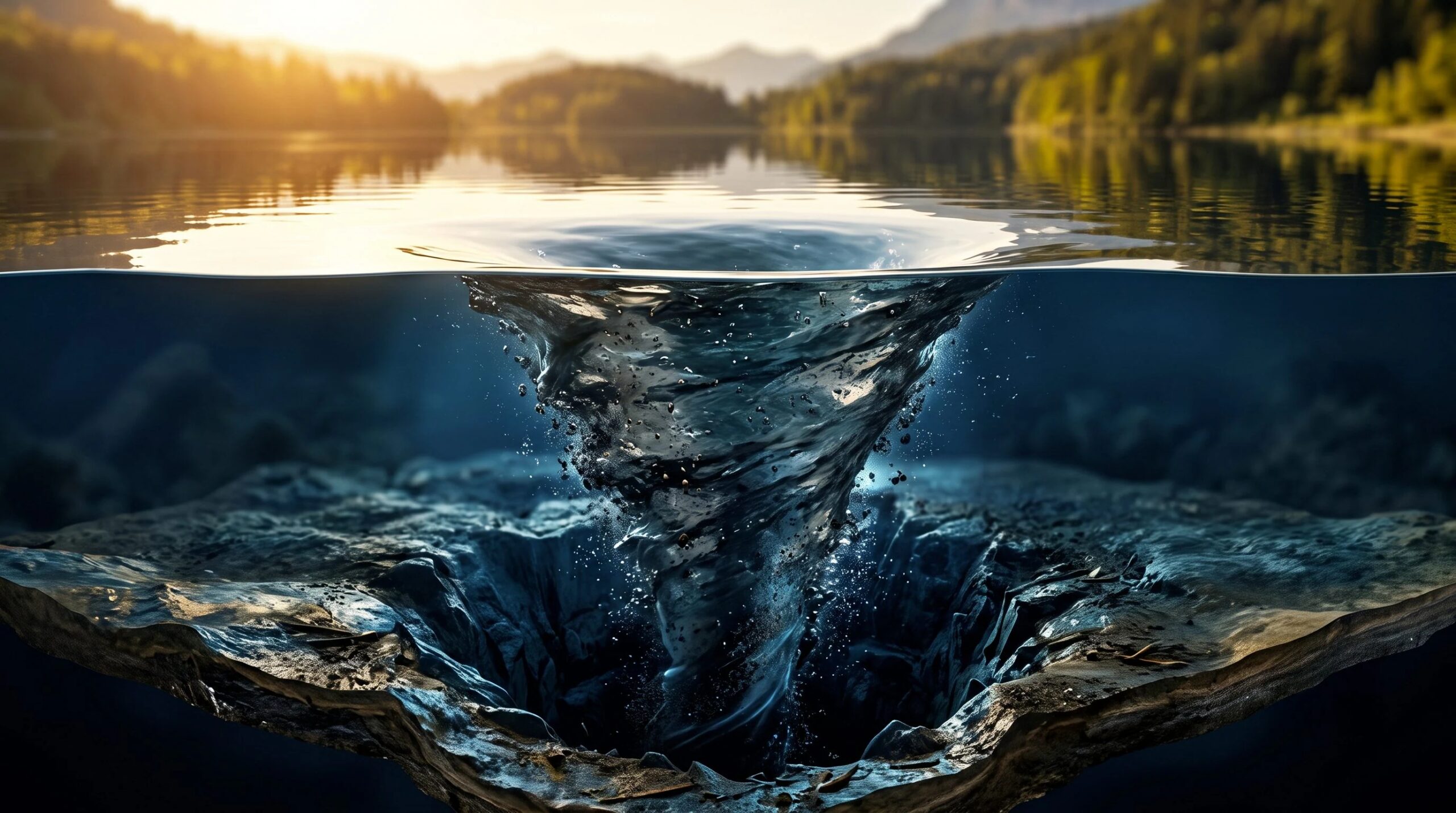
Finally there is the chapter reelsthat is, the vortices that are also created in lakes. To understand how they are born, just imagine two currents of water traveling in opposite directions: when they meet and can’t find a way forward, they begin to revolve around each other creating a sort of funnel, a suction.
In the lakes they come into play multiple factors which often combine with each other: the strength of windthe conformation of the backdropthe difference in water temperature and the currents generated by the entry of rivers or streams. The wind, for example, displaces surface water creating a current which, when it encounters obstacles such as banks or an uneven seabed, can begin to rotate and give rise to a spiral movement.
What a river really hides: currents, holes and thermal shock
Even streams and rivers have specific and often little-known characteristics, very different from those of the sea: the river changes continuouslycan have unexpectedly low temperatures even in hot periods, slippery, stony or muddy surfaces and sudden eddies. These waterways, then, are characterized by a currentmore or less intense, which however is rarely seen from the surface.
In fact, natural riverbeds present a irregular morphologywith sudden changes in depth, potholes not visible from the surface, emerging rocks or completely submerged: it is precisely these conditions that can cause falls and emergency situations. Then there is a factor that depends on man and that few consider: where there are hydroelectric power plants, the flow of water can suddenly increase. In the spring and summer months, the increase in energy production from renewable sources may make it necessary to modulate or temporarily reduce the production of some hydroelectric plants, with the consequence that the river level may change without warning.
Added to this is the fact that, in most cases, rivers are without lifeguards or rescue services.
The instructions to follow to avoid taking risks
All this does not mean that we should stop bathing in lakes and rivers: however, it is essential to be well aware of the risks and respect a series of safety rules, so as to minimize the dangers. Among these, there are some indications that come directly from Civil Protection and regional health companies:
- Respect the bathing bans and inform yourself beforehand. Observe local bans and inform yourself in advance about particular dangers; if you can, ask those who know the area for information before diving in an unmanned area with apparently shallow water, which can hide whirlpools or holes several meters long, perhaps barely visible from the shore.
- Do not enter the water if you are not in the right conditions. Avoid swimming if you don’t feel physically capable of doing so, because you don’t know how to swim or are tired, and if you have used alcohol or other substances.
- Enter gradually, never suddenly. Avoid diving into the water suddenly after eating or after prolonged exposure to the sun, to prevent thermal shock.
- Don’t swim alone. It is advisable not to swim alone or make sure someone is watching, and this also applies to adults. It is also better not to swim after sunset and not to dive into unknown waters, correctly assessing your strength.
- Pay attention to current, temperature and structures. Pay attention to the current and water temperature and do not swim near bridges, dams or bridles.
- Supervise children closely at all times. Children must be kept under close supervision, at most at arm’s length from the parent; for safety it is however preferable to take the little ones to places where a rescue service is ensured.
- Don’t camp in a creek bed. Camping on the banks of streams and rivers, on islands in flowing water and in the bed of a stream, even if dry, is prohibited: conditions can change suddenly, for example due to a storm or the opening of floodgates, and the bed of the stream can become a death trap.
- In case of emergency, call for help. In the event of an accident, alert 112 promptly. If you are alone and see someone in danger, call for help instead of acting alone, otherwise two lives are put at risk: rather throw a life jacket or a rope, or hold out a stick to the person in difficulty.
