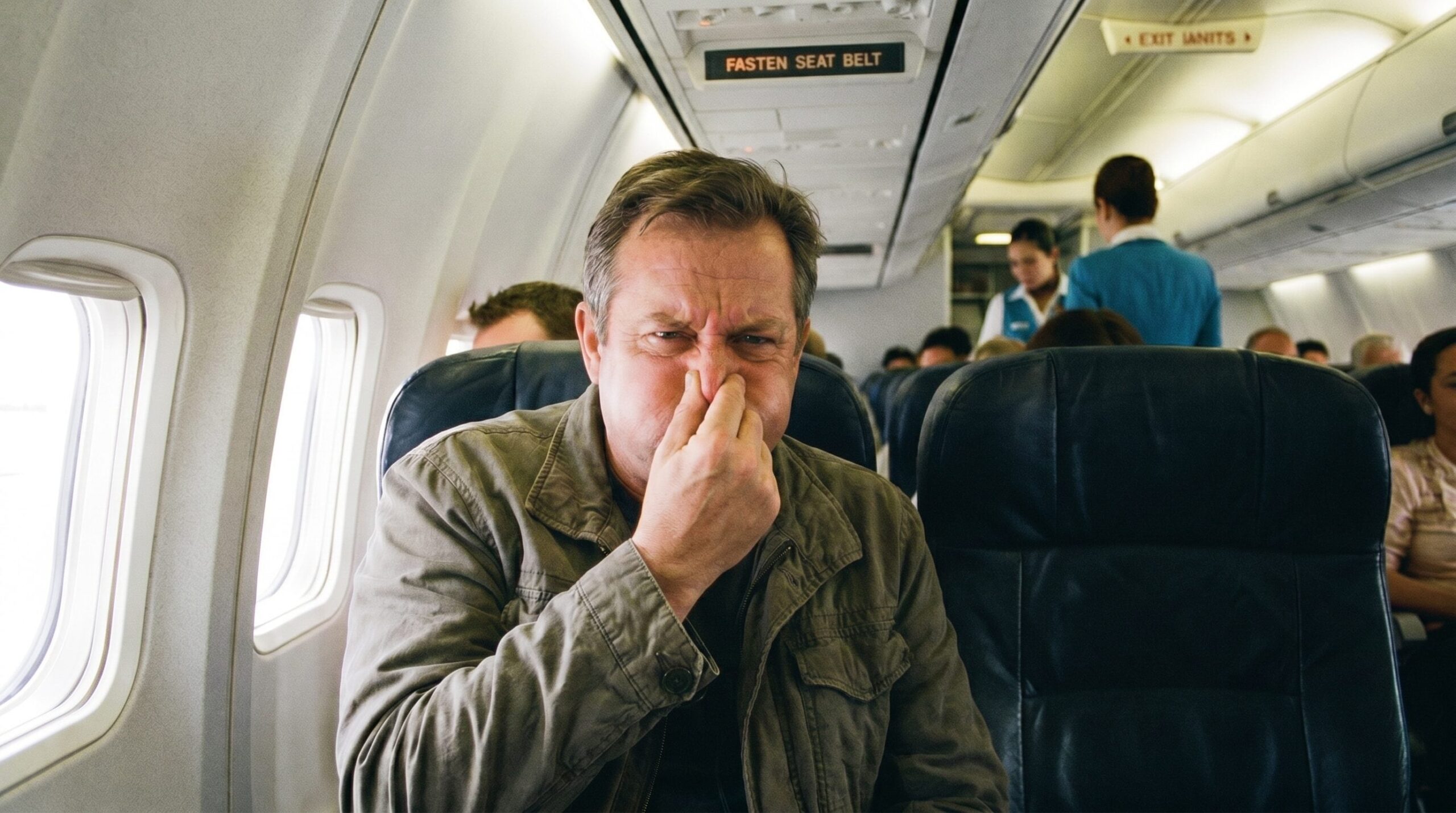
When traveling by plane, it happens that your ears feel “muffled” as if you had two rubber plugs, and then when you yawn, swallow, chew gum… you hear a “pop” that restores your hearing. Who knows the exact same annoyance well driving in the mountainswho takes an elevator in a skyscraper or who dives into water. The culprit is the pressure difference between the inside and outside of the ear. To solve the problem, as the Cleveland Clinica small tube of a few centimeters takes care of it, the Eustachian tube or auditory tubea small canal that connects the middle ear to the upper part of the palate (nasopharynx) and which in this context has the task of keeping the pressures on the two sides of the eardrum in balance.
Disclaimer: This article is for informational purposes only. For any medical information it is essential to contact your doctor.
The role of the eardrum
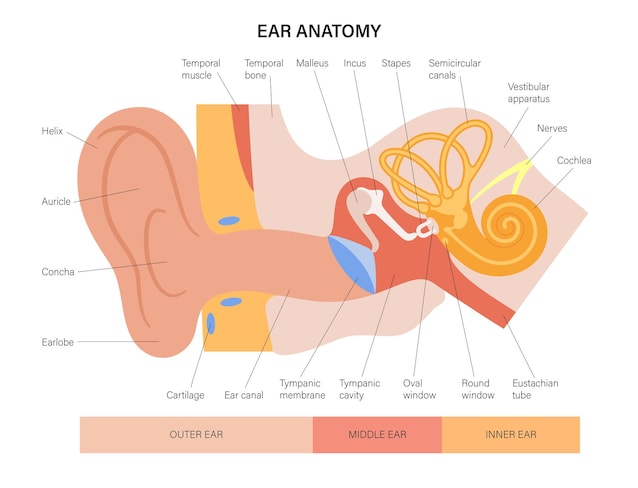
To understand what happens, we need to take a little journey inside the ear. The ear is divided into three areas: external (what you see, plus the ear canal), medium (a small air-filled cavity containing the malleus, incus and stapes ossicles) e internal (where the transformation of sound into a nervous signal occurs).
Between the external ear and the middle ear there is a very thin and tense membrane, the eardrumwhose structure resembles the skin of a drum. On one side (the external one) there is the air of the environment you are in, on the other (the internal one, the middle ear), there is a “trapped” air bubble. As long as the two pressures are equal, the eardrum is distended and vibrates freely when the sound waves arrive. The problem arises when the two pressures become different.
What happens to your ear when you get on a plane or mountain
As reported by the Mayo Clinicwhen a plane takes off or when you drive over an Alpine pass, you gain altitude and external atmospheric pressure decreases. But what happens inside the middle ear? There the pressure is still the same as before, that of when you were “on the ground”. The result is that the internal pressure is higher than the external pressureand thus pushes the eardrum outward, causing it to “bomb”. A taut and domed membrane it no longer vibrates as it should and here we feel the classic sensation of a blocked, muffled, deaf ear.
In descent (landing, or when returning to the valley in the mountains) the exact opposite happens. There external pressure increases rapidly and crushes the eardrum inwards. This is generally the most annoying phase, and in many cases also the most painful, because the external pressure that “presses” tends to close the compensation mechanism which we will talk about in a moment.
The same phenomenon is what people experience scuba diver where every 10 meters of depth the pressure increases by about 1 atmosphere, and this is why divers learn to “compensate“actively from the first lessons.
At this point the Eustachian tube. According to the description of MedlinePlus (the portal of the National Library of Medicine, NIH), is a small channel, approximately 3-4 cmwhich connects the middle ear to the nasopharynx, the area behind the nasal passages. Its task is to put the middle ear in communication with the external environment balance the pressures. Under normal conditions it is closed, but opens briefly every time you swallow, yawn or sneeze, letting air pass through to rebalance the system. That “pop” you hear is the eardrum which, receiving compensation air, returns to its neutral position.
How to unplug your ears
The change in pressure, especially when taking off, landing or descending from a mountain pass, occurs more rapidly than the Eustachian tubes can react on their own. For this reason there are small “tricks” – actually strategies also documented in medical literature – which serve to mechanically open the Eustachian tube to let the compensation air pass. The most effective are those already mentioned in the text; swallow (even drinking in small sips), yawn (even forcibly), chew gumand the so-called Valsalva maneuverthat is, blowing your nose while keeping it plugged, without letting the air out and thus forcing it to push towards the middle ear. The latter, as a review published in AIMS Public Health explains, must be performed with caution since blowing too hard can damage the inner ear instead of helping it.
If none of these strategies work and the Eustachian tube remains “closed”, you could face the so-called ear barotraumaalso known as “airplane ear infection” (in English airplane ear or ear barotrauma), a condition well documented in the medical literature and described in detail by bodies such as Mayo Clinic and Cleveland Clinic. In these cases the eardrum, subjected to an unbalanced pressure that it is unable to relieve, can remain muffled and painful even for hours after the flight, accumulate fluid in the middle ear or, in the most severe cases, tear. As Humanitas also specifies, barotrauma is more likely when flying with a cold, sinusitis, allergies or ear infections and the inflammation swells the mucous membranes of the nasopharynx – right where the auditory tube opens – and hinders its opening. If the discomfort persists for a long time after the flight, or if acute pain, loss of hearing or dizziness appear, it is time to see an ear doctor.
