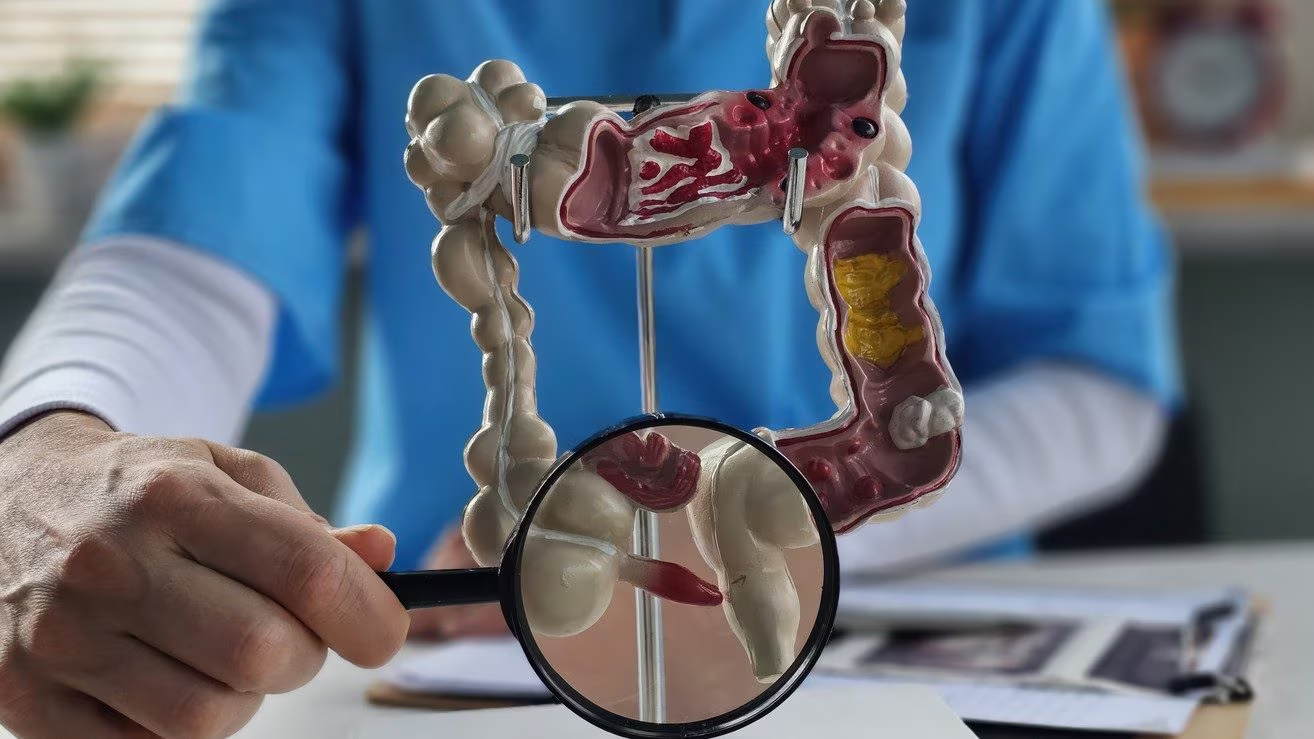
The appendix appears not to be a useless evolutionary residue, as Darwin hypothesized, but a “bunker” for the microbiota. A 2017 study of 500 mammals shows that it has evolved multiple times. An article in Current Opinion in Gastroenterology highlights its possible immune role: protecting and repopulating the intestinal flora in case of infections.
A strong stomach ache, nausea and maybe even a few tenths of fever: these are the symptoms of appendicitis, the painful inflammation of thevermiform appendix. This small organ is a segment of the blindthe initial section of the large intestine, with a tubular and thinned shape. A peculiarity of the appendix is that it has only one opening, which acts as both an entrance and an exit: it is in effect a dead end in our intestine.
However, despite being part of the intestine, it does not perform any digestive functionalso because its mouth, which connects it to the rest of the digestive tract, is too small to allow food to enter.
In fact, in the appendix there are no food residues, but rather bacteria, as the study reports “The Vermiform Appendix and Its Pathologies” of 2023. The appendix welcomes many different species of commensals of our microbiota, secreting a protective mucus which makes it an ideal environment for their growth.
Due to some infections or blockage by hardened feces, the pressure in the appendix can increase to the point of compressing the vascular circulation, causing inflammation or even a organ infarctionthat is, the death of a part of her because no more blood reaches her. For many years, therefore, the presence and function of the appendix was a “mystery” which even one of the fathers of the theory of evolution attempted to answer: Charles Darwin.
In 1871, the scientist hypothesized that our ancestors needed a very large cecum for ferment the leaves which made up a large part of their diet. Therefore the presence of the appendix would have been caused by a reduction of this trait now made obsolete by the transition to easier to digest foods.
However, a 2013 study later extended and republished in 2017 compared the anatomy of over 500 mammal species showing that the appendix it’s not disappearing: it has evolved independently about thirty times, in very distant branches of the evolutionary tree, from primates to rodents to marsupials, and has been lost much more rarely than previously thought. So things are not exactly as Darwin had hypothesized.
The organs and tissues of an organism require a energy expenditure. Therefore, when they are of little use, they can become an energy “burden” and cause a disadvantage. Under this assumption it is legitimate to ask why the appendix is so widespread even in animals that, like us, would not need it. A hypothesis now supported, explained in an article in the magazine Current Opinion in Gastroenterologyis that it performs another important function: that of support for the immune system and in cases of intestinal infections.
According to this hypothesis the appendix would serve as “security bunker“, in which bacterial species important to our intestinal microbiota are free to proliferate in safety. When a serious infection hits our microbiota decimating these allied microorganisms, the appendix would then act as secure base from which to start repopulation. Today, thanks to medical developments and changes in our habitat, we are able to guarantee adequate defense against these serious infections, so often when it is the appendix that becomes inflamed or causes problems it is surgically removed.
