
The contemporary wedding it is one of the most interesting institutions to analyze because it concentrates three dimensions that often do not coincide: legal function, social meaning and emotional investment. In the western world of 2026its normative function is in decline (fewer marriages, more cohabitations, greater instability of unions), but its ritual and symbolic function is, if possible, even stronger.
This creates a paradox: a less necessary institution a more “charged” event, more expensive and more spectacular. The question then is not just why we get married, but why, when we do, we turn it into one such a complex, expensive social performance and scenographic, between white dress, throws of rice and so on.
Marriage as a historical device of social order
To understand the current form of marriage we must start from its history. In many premodern European and non-European societies, marriage was not an individual event but a social organization device. It was in fact perceived and used as a contract between groups, not individuals: regulated inheritance, economic alliances, access to land, continuity of lineages.
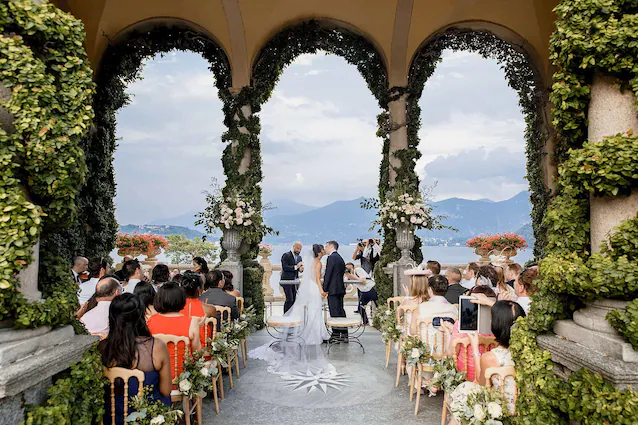
Historical and anthropological studies (Goody, 1983) show how marriage was deeply intertwined with systems of candies And social control. The public ceremony did not have a “celebratory” function in the modern sense, but one legal-social function: make the change in status public and incontestable.
In this sense, many elements of contemporary marriage, such as the presence of witnesses, the public ritual, the banquet, they are not modern inventions, but transformed residues of an original function of collective legitimation. Even when marriage loses its economic centrality, it maintains its ritual form because this is the part that produces social recognition.
Ritual, cohesion and “morphology” of the party
The sociologist Émile Durkheim he talks about it “The elementary forms of the religious life” (The elementary forms of religious life): it is fundamental to understand why marriage cannot be reduced to a private contract. In collective rituals, according to Durkheim, the society does not simply represent itself: it produces and strengthens itself. The concept of is associated with rites such as marriage collective effervescencewhich describes those moments in which the individual experiences an emotional fusion with the group, generating cohesion and symbolic legitimation.
Marriage therefore creates a suspension of everyday lifeproduces a temporary community highly cohesive and transforms a private relationship into a public event.
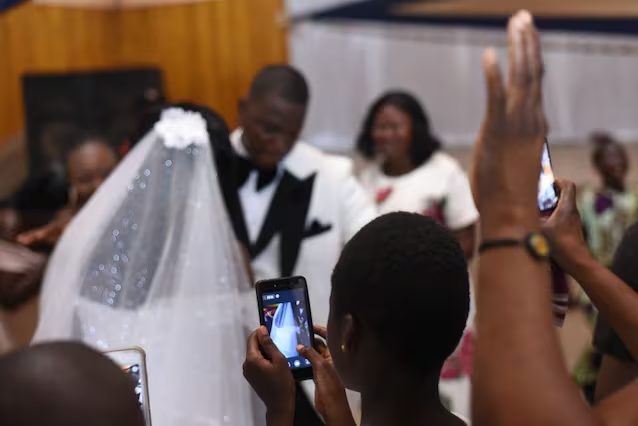
In contemporary marriage rituals, the way in which collective effervescence manifests itself has profoundly changed compared to the past. There sociology which studies contemporary rituals (Collins, 2004), shows that these are becoming increasingly aestheticized compared to the past. In this sense the party becomes an organized performancewith growing importance to looks, location, scenography and photographic documentation.
This would explain why the modern marriage “must” be visible and documentable: It’s not enough for it to happen, it seems like it needs to be acknowledged, shared and posted on social media.
Individualization and the personalization paradox
One of the characteristics of contemporary weddings is their extremeness customization: the spouses try to adapt the ceremony to their background, their experience and their character. How is ritual preserved in such an individualized context? One of the most important contributions of contemporary sociology is the idea that individualization does not eliminate rituals, but make them more complex. In highly individualized societies, according to Giddens (2000), identity is no longer given but is something that needs to be “built”.
The marriage it therefore becomes one of the few occasions in which this identity construction must be made public.
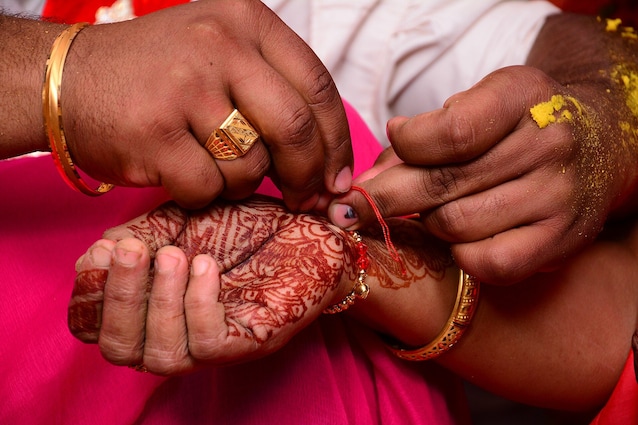
Here emerges the paradox described by recent studies such as that of Carter and Duncan on individualized conformity: i weddings they are perceived as personalized, but they follow scripts extremely standardized. The aesthetic details change, but the structure remains almost unchanged: entrance, ceremony, exchange of promises, reception, photography, dance, codified ritual moments.
This generates in itself a specific and codified social pressure: being as unique as possible is a goal, but still remaining within the category of traditional wedding couples.
The marriage market intercepts this tension perfectly, offering “standardized customization”or packages that allow aesthetic differentiation within a stable ritual structure. This is where the economic dimension becomes central: customization is one of the main ones drivers of the increase in costs.
Marriage as a form of symbolic economy and status change
From an economic-sociological point of view, marriage is a classic case of positional consumption (Veblen, 1899 The Theory of the Leisure Class), or a purchasing behavior aimed at displaying one’s social status, in which the value of the good does not reside in the good itself but in what it communicates to others about the level of wealth achieved. In fact, it is not just a matter of purchasing goods or services, but of producing social visibility and change of status.
In fact, marriage can be considered as a true rite of passage. The French anthropologist Arnold van Gennepin his famous studio Les Rites de Passage (1909), explained that human societies mark the most important moments of transition through public rituals that sanction the passage from one social status to another.
Birth, puberty, marriage and death they do not represent just biological or personal events, but changes in position within the community.
From this perspective, the economic dimension of marriage it is not accessory, but part of a real one symbolic economy of recognition. Spending, staging and collective participation operate as devices through which the new status is made visible, credible and socially effective.
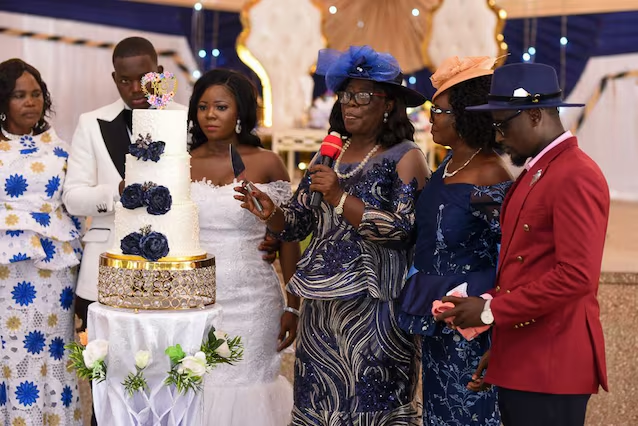
Value does not reside solely in goods or services consumedbut in their ability to produce social recognition.
This logic can be found in numerous ethnographic and historical contextswhere the change in status is systematically accompanied by forms of redistributive ostentatious consumption. An emblematic case is the case Potlach: a ritual banquet in which the dominant families of a particular tribe offered food and drinks and destroyed goods as a sign of opulence and social predominance. It is a ritual typical of some Native American societies of the Pacific Northwest coast, analyzed by Franz Boas and later by Marcel Mauss. Their studies highlight how the distribution of goods during the rites of passage functions like prestige production mechanism and social hierarchy.
Similarly, the contemporary wedding it can be read as an institutionalized form of symbolic investment that makes a new status configuration socially recognisable.
In 2026, the Marriage survives despite its institutional weakening precisely because of this social function. The sociology of advanced modernity (Giddens, 1992, The Transformation of Intimacy) describes contemporaneity as a context of destabilization of traditional institutions and increase in individual choice.
In this scenario, i rituals they become more important because compensate for the loss of stable structures.
