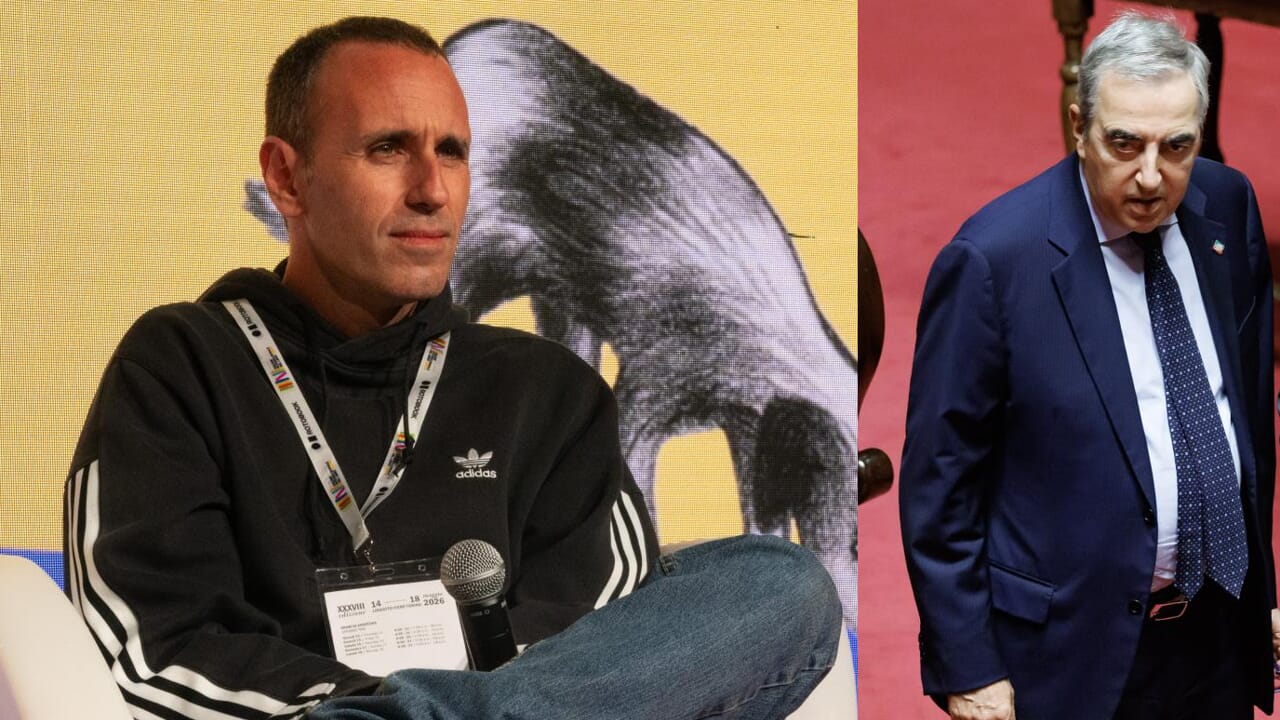
Three days of silence, then the reply entrusted to a direct and unfiltered video. Michele Rech, aka Zerocalcare, intervenes on the media and political storm that has overwhelmed “Due Spicci”, his new series produced for Netflix. At the center of the debate, raised in recent weeks also by a parliamentary question from Forza Italia senator Maurizio Gasparri to the Minister of Labour, are the alleged unfavorable working conditions, with fast pace and economic treatments considered unacceptable, complained by some animators who collaborated on the production.
“Hi, this is a serious video, sorry, but for three days I’ve been reading headlines that say that I didn’t pay or that I exploited those who worked on the series”, begins the cartoonist, intent on clarifying their respective roles within the production chain. “It seems quite clear to me that I am the author of the series, it means that I do the creative part: I write the story, draw the characters, dub the voices. I’m not the one who hires, decides or pays those who work on the production. Incidentally, I really don’t have access to that information, on the budget, on the contracts.”
The cartoonist explains that he doesn’t frequent industry forums and that he has never sensed bad moods during his rare visits to production studios: “The two or three times I met someone at their studio, no one ever made a complaint or said they were working in a critical situation. In reality, from the outside, it seemed like a nice and enthusiastic situation.”
The appeal to workers: “You could have written to me, I could have been an ally”
Zerocalcare does not deny the structural difficulties of the sector, recognizing how in contexts characterized by contracts linked to individual projects it is complex to start mobilizations for fear of not being reconfirmed. Precisely for this reason, however, he expresses regret for not having been directly involved before the controversy exploded on social media.
“If the whole situation described in the stories is true, it seems absurd to me that no one has ever thought of writing to me and asking me for help,” continues Rech. “Oh, let’s assume that it’s all true and that these guys couldn’t go on strike, I’m sorry that they didn’t think that I could be an ally, because maybe instead it could have been me who raised the issue and said: ‘Guys, no, it can’t be done like that’. Except that I’m not telepathic: if no one tells me there’s a problem, what the fuck do I know?”
The cartoonist also recalls his accessibility and the precedents in which he worked for the workers in the sector, such as when he was contacted by the animators themselves on the occasion of the closure of the Pisa office: “I made myself available, I told them: ‘Oh, let’s hold a public meeting in Pisa that puts the dispute at the centre’. Then they were the ones who never responded to me again. I have taken on any cause in recent years, I have become the caricature of the lost causes of this country, but imagine if I didn’t do it for something that has my name on it.”
The attack on Gasparri and the proposal for the sector: “A rating on wages”
The reproach of accusations on the basis of conflicting and unverified testimonies is the element that most hurt the author, who spares no criticism of the political exploitation of the story. “If now I find myself one morning having to comment on a series of accusations from a carousel of anonymous stories on Instagram that I’ve never heard before, with some telling me: ‘Yes, it’s true’, others telling me: ‘No, I worked very well on it’; all exploited by the jackals who blame me… and with Gasparri acting as an avenger in Parliament and then voting against the minimum wage… But how the fuck is it done like this?”, attacks Rech.
Despite the bitterness, Zerocalcare recognizes that the criticisms raised bring to light real and widespread problems linked to precarious employment and the VAT number regime which affect the entire labor market. Hence the invitation to find structural solutions: A workplace observatory: a structure to monitor professional conditions in the animation sector. A salary rating: a sort of register of virtuous and non-compliant productions, to allow authors to choose with full awareness who to collaborate with.
“Obviously the real fact of this whole discussion is that I am neither an animator nor a producer, so I really don’t have the tools to make valid proposals”, concludes the artist. “But I am still part of this production chain like any author, so I think it’s right that we also make ourselves available to contribute to the initiatives that serve to address these problems. I say this hoping that someone else will take it on, because it seems to me that no one ever asks anyone else for shit. Well, if we manage to do something like this, maybe for once this instrumental use of my name also leads to a good thing.”
