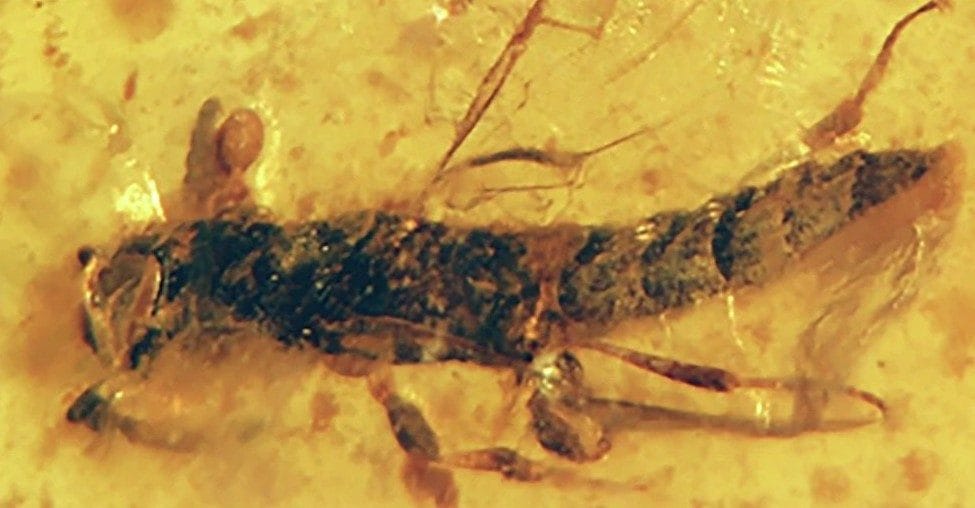
In Ecuador A deposit of fossil resins (amber) dating back to around 112 million years agoin the midst of the dinosaur era, containing insectstraces of plant and even one intact cobweb. It is the first deposit containing remains of arthropod species and pollen found in the southern hemisphere. This discovery, made in the Genoveva quarry (Napo province), allows us to shed light on the ecosystem of present-day South America in the distant past.
Ambers originate from fossilization of the resins emitted by conifersand are mostly composed of succinic acid. During the Cretaceousgeological period that is placed between 143 and 66 million years agothis type of resin was particularly widespread, due to the prosperity of various plant species that secreted it. So it often happened that arthropod specimens of different species became entangled inside the resin, and then remained “crystallized” during the process solidification. These animals, leaving no bone remains, remain a lot difficult to be known and catalogued, but the conservation process makes the study possible by paleontologists.
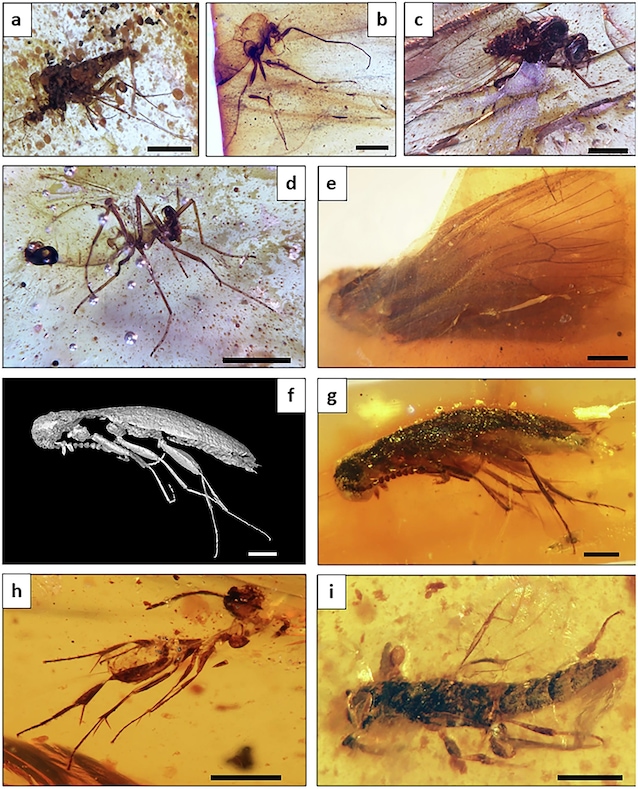
The discovery took place in the quarry of Genovevain the province of Napo, in the center ofEcuador. A large study group, made up of Spanish, Panamanian, Colombian, Ecuadorian, Brazilian, Swedish, American, Argentinian and German researchers, found and analyzed sixty samples of amber from this deposit. Samples containing remains or traces of arthropods are 21: the most attested order of insects is that of dipterato which species such as common flies belong. The most striking specimen is a small piece of amber containing i filaments of a spider web. In addition to the remains of arthropods, the fungi of some have also been identified mushroomsand numerous pollenwhich allowed scholars to reconstruct the paleobotany of South America 112 million years ago, when it was still part of the supercontinent Gondwanatogether with Africa and Antarctica. Particularly interesting is the presence of pollen angiospermsas it would be the oldest attestation of this plant species in South America.
