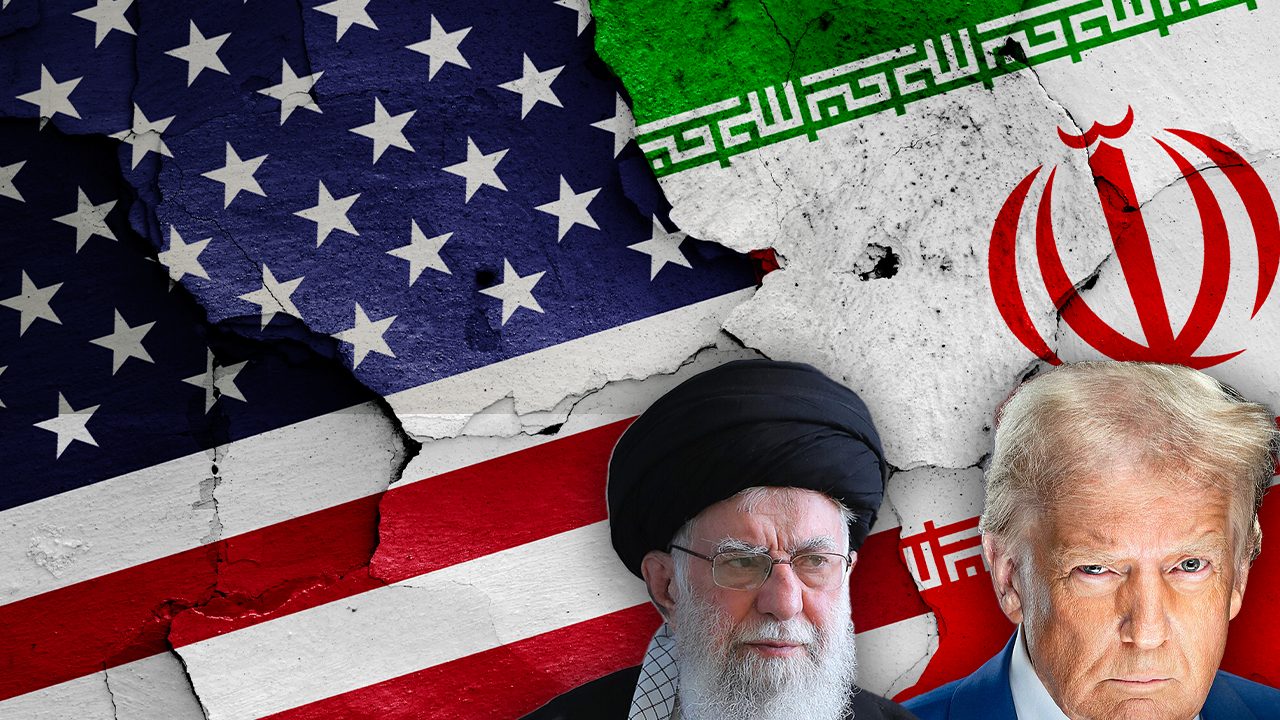
Iran under attack from Operation Epic Fury, the oil tankers held hostage by the Pasdaran in the Strait of Hormuz and even Dubai under attack. They are not just images of war: it is the chronicle of an unprecedented escalation. If you are wondering what is happening, why it is happening right now and, above all, how we got to this, in today’s video we clarify all your doubts. And to do this, we need to go back in time a few decades: let’s go back to 1979, the year of the Revolution, and from there we discover how we arrived at today’s events.
The complex architecture of the Islamic Republic
To understand this crisis you need to understand the country at the center of everything, and Iran is not a “classic” dictatorship. Imagine this country as a machine with two engines that do not always go in the same direction: on the one hand there is the democratic facade, with the President Masoud Pezeshkian and Parliament, on the other hand there is the real leader: the Supreme Leader, theAyatollahwhich until last February 28th it was Ali Khamenei (in office since 1989), and who had the final say on everything: army, foreign policy, nuclear power, oil. Khamenei commanded the Pasdaran, the Revolutionary Guards, which are not just an army but a true economic empire that controls ports, banks and oil. So in Iran people go to vote, but whoever has the Ayatollah’s favor always wins.
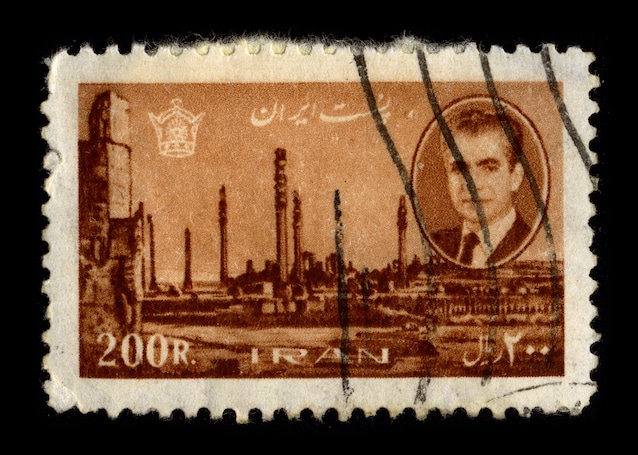
But how did we arrive at this system? Following the Islamic Revolution of 1979, when an unlikely alliance between clerics, students and workers drove out the Shah Mohammad Reza Pahlavian ally of the United States, and Ayatollah Khomeini came to power, who transformed Iran into the first Islamic Republic in history. Thus Iran, from a traditionally pro-American country, became the number one enemy of the USA in the space of a few months. That date, 1979, is the point from which everything else descends: the sanctions, the isolation, the tension with the West, and ultimately even the attacks of recent days.
Iran had already been in crisis for some time
The attacks of February 28th did not happen out of nowhere: Iran had not been in good conditions for some time. THE’inflation in recent months it had reached 40%, the price of bread had doubled, the national currency (the Rial) had collapsed to around one million Rials for a single American dollar (one million for one), and the population was increasingly desolate. All this is mainly due to the weight of international sanctionsaggravated in September 2025 by the triggering of the United Nations “Snapback” mechanism, which had reactivated all the sanctions canceled in 2015 after Iran had resumed enriching uranium beyond the agreed limits.
To hold on, Iran had clung to Chinaits only financial lung. China purchased between about 80 and 90% of Iranian oil exports (about 1.5 million barrels per day) at discounted prices, often paying in barter: surveillance technology, machinery, railway construction sites. Not out of generosity, but for business: the more isolated Iran was, the more Beijing could impose favorable conditions. Many Iranians in the streets already considered it one new form of colonization.
And between December 2025 and January 2026, many took to the streets: young people, women, traders, throughout the country. The slogans had changed: no more reforms, but “Death to the dictator”. The regime responded with hundreds of arrests, blocking of the internet and at least 40 thousand dead. This was the situation when the US and Israel decided to move.
Because the US and Israel attacked Iran just now
The United States and Israel looked at those protests and saw an opportunity in them: widespread, real, but without leadership. In the meantime, they brought to the Middle East a mass of military assets comparable to that of the 2003 invasion of Iraq. As diplomatic cover, they opened nuclear negotiations with Iran, but they were nothing more than a tactical move: the Iranians were in fact asked not only to stop enriching their uranium, but also to give up ballistic missiles and abandon all their regional allies. In practice, it was an inadmissible proposal, and so the negotiations failed.
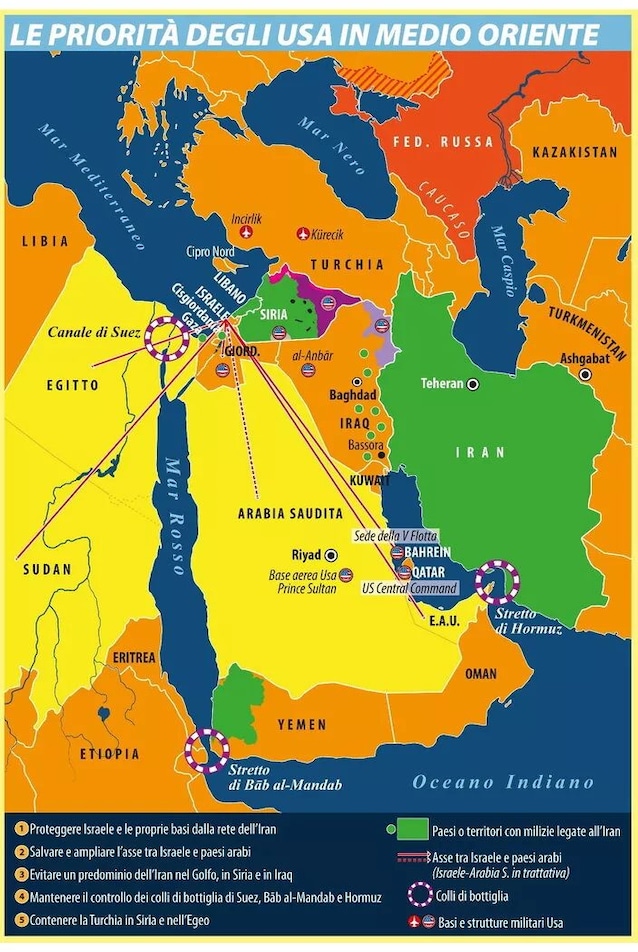
And so the fateful February 28, 2026 arrived, the day on which the US offensive towards Khameini’s country began. The official motivation was the fear of a nuclear attack, but the real objectives are now clear for all to see: dismantle the Iranian security apparatusreduce missile capabilities, weaken Hezbollah, Hamas, the Houthis, the militias in Iraq and Syria. And then there was an objective that few mentioned but which was perhaps the most strategic: weaken the Russian-Chinese axis. Russia, in fact, uses Iranian drones in Ukraine, while China depends on Iranian oil. Hitting Iran therefore means hitting both, indirectly.
The killing of Ayatollah Khamenei: the man who led Iran since 1989
The turning point came on the morning of February 28 itself: the death of the Supreme Leader Ali Khameneithe man who led Iran since 1989.
The CIA followed his movements for months and identified a summit meeting scheduled for Saturday morning in Tehran’s institutional complex. The Israeli attack hit the site with thirty bombs around 9:40 am, but for hours mystery reigned: Khamenei was missing, and the Iranian Foreign Minister had declared to NBC that the Guide was still alive. Then, late in the evening, the confirmation: the body was recovered under the rubble, the images were shown to Netanyahu, Trump announced it on Truth Social and Iranian state television confirmed it. And that’s how a window opened forty days of national mourning.
The commander of the Revolutionary Guards, the minister of defense and the national security advisor also died with the Ayatollah. In a single attack, Iran’s top military and political leaders were taken out.
Now, however, an unprecedented power vacuum is opening up. In fact, the Constitution provides that a new leader is elected by theAssembly of Expertsbut in the middle of a war, with institutions under attack and without leaders, who takes control? THE Pasdaranthat is, the 210 thousand men who control the country, at the moment seem to be the most likely arbiters of this transition. But if this were not the case, the system could collapse.
Why Iran attacked Dubai
Several videos have circulated on social media and international TV depicting explosions in the sky of Dubai: they were Iranian missiles intercepted by American and Emirati defense systems before they could reach the ground. In total, in the last 96 hours Iran has launched 165 ballistic missiles and 541 drones over the Emirates, the vast majority shot down in flight. Not all the missiles, however, were stopped: the Burj Al Arab was hit by a drone and caught fire, Terminal 3 of Dubai airport was evacuated, the Fairmont The Palm on the artificial island suffered serious damage. Three people died and 58 were injured.
But why does Iran strike Dubai? Because the United Arab Emirates, Bahrain and Kuwait are US allies and host American and British bases (Bahrain is home to the US 5th Fleet Headquarters). Without forgetting that the 2020 Abraham Accords officially brought them closer to Israel, which for Iran was an unforgivable betrayal. Striking Dubai means punishing those who host American military infrastructure and sending a message to anyone who wants to help the USA.
The two sides of the conflict: the countries that are part of it
On the one hand there are USA, Israel, Saudi Arabia, Emirates, Bahrain and Kuwait. On the other hand theIranwith Hezbollah having already opened a new front in Lebanonthe Houthis in Yementhe Shiite militias in Iraq and Syria. They are also present in this lineup China and Russiabut it is good to explain in what role.
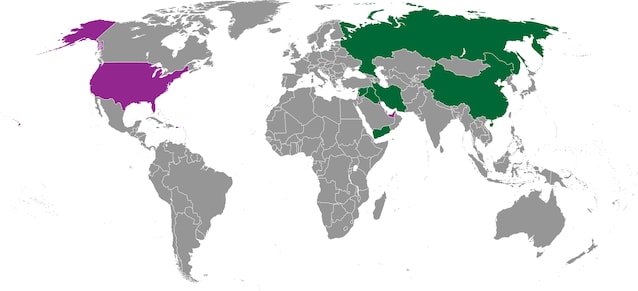
China buys almost all of Iran’s exported oil from Iran (often relabelling it to get around American sanctions) and in 2021 signed a pact worth hundreds of billions of dollars lasting 25 years with Tehran. China reciprocates by giving to Iran indirect military support and defense technology. Russia, however, has built a solid military partnership with Iran, buying thousands of Shahed drones used in Ukraine and selling advanced military technology in exchange. According to analysts, it is unlikely that China or Russia will enter the conflict directly, avoiding the worst of the escalations.
Because the closure of the Strait of Hormuz also affects Europe
The Strait of Hormuz is a water corridor between Iran and Oman that connects the Persian Gulf to the Indian Ocean. Through that corridor passes approx 20% of all world oil and an equivalent share of liquefied natural gas, largely from Qatar. A fifth of all the energy that moves the planet, for a single strait.
The Pasdaran announced their closure just over 48 hours ago, and now at least 150 oil tankers are stuck in the straitand large shipping companies have ordered their ships to head to other ports. The price of oil has already risen from 73 to 80 dollars a barrel in a few hours, with forecasts speaking of 120-130 dollars if the blockade is prolonged.
Alternative routes exist, but they would only be able to offset around 13-15% of the usual flow of crude oil, leaving global markets exposed to a massive deficit (at most 2.6 million barrels per day pass through these channels versus 20 through the strait). For Italy there is a specific problem: Qatar is the main supplier of liquefied natural gas by sea from Europe, with 45% of imports, and that gas must pass through Hormuz: if the strait continues to remain closed, we will soon feel a dramatic increase in prices.
What could happen now: possible scenarios
There are now three possible scenarios: the first is the de-escalation: Iran, under military and economic pressure and no longer with its Supreme Leader, decides to negotiate with the USA and Israel. Whoever takes control makes concessions on nuclear power and missiles, an agreement is reached, the markets calm down and the strait reopens. The second is that the Pasdaran take power explicitly: the regime would change its face but it would not change its nature, and the conflict would continue. The third is the collapse of the system: Military attacks, power vacuum and internal revolt would add up, leading to a total internal collapse of Iran. What comes next, however, may not be a liberal democracy.
What is certain is that we are faced with the most important clash in recent decades in the Middle Eastwith a strait on which a fifth of the world’s oil depends at the center of the storm. In the meantime, we will continue to keep you updated.
