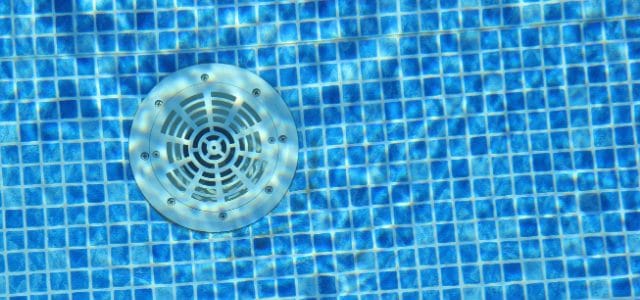
Gabriele Ubaldo Petruccia 7-year-old boy, died Saturday afternoon sucked into the suction system of a swimming pool in a spa facility in Suio Terme, in the province of Latina, where he was celebrating his birthday. According to what was declared by the family’s lawyer, the suction nozzle was without protective grille at the time of the tragedy. Unfortunately, this is the second fatal accident of this type to have occurred in Italy during this month: on Easter Sunday, in fact, the 12-year-old Matteo Brandimarti he died the same way in the hydromassage tub of a hotel in the province of Rimini. We can find other precedents in recent years in Italy, for example in 2023 in Palombara Sabina, in the province of Rome, where an 8-year-old boy died, and in 2018 in a hotel in Sperlonga (Latina) where a 13-year-old girl died.
The question is therefore: Can a swimming pool suction a person to the point of drowning? The answer is: Yessuction pumps are able to create a sort of “suction cup effect” which can cause a suction entrapment especially with someone who is not too heavy, such as children or teenagers. However, there are some safety regulations of bathers which, if applied, reduce the risk to a minimum.
Disclaimer: The investigations into the death of little Gabriele are still ongoing and we will have to wait for their outcome to ascertain any responsibilities. In this article we will not deal with the dynamics of the tragedy but with the technical and scientific aspects related to the suction of water in a swimming pool.
Why they can be risky: the physics of aspiration
Each swimming pool must be equipped with a water filtration system to avoid stagnation. In fact, they can proliferate in stagnant water potentially dangerous microorganisms or algae for health. It is therefore a safety system for swimmers, in addition to the use of chlorine as an antimicrobial. Without a filtration system, all the water in a swimming pool would often have to be replaced, resulting in waste and unsustainable costs.
The filtration systems then suck the water from the pool, filter it to eliminate anything that may be harmful to health and return it to the pool. And this is where the suction nozzles come into play. For the system to work, the pumps must generate a pressure difference so that the water pressure and gravity “push” the pool water towards the nozzle. To maintain acceptable standards of water cleanliness, vacuuming must be sufficiently rapid and consistent the depression that is created can be very high.
Pressure, from a physical point of view, is the relationship between a force and the surface on which that force acts. Therefore, by multiplying the pressure difference created by the pump by the area of the suction nozzle, we obtain the force that “sucks” a body in the immediate vicinity of the nozzle. The values may vary depending on the size of the pool and the number of outlets, but we are talking about rather large numbers. Translated into simple terms, for a single intake system we are talking about forces comparable to being crushed by a body of 150-250kg. These forces are more than enough to trap a person, especially a child, who is too close to the intake grille.
When a body remains resting on the nozzle, the suction device continues to generate a depression but the water no longer passes through, because the grill is blocked by the body. At this point a vacuum-like situation which makes it impossible to free yourself without turning off the system. It’s a bit like what happens – but on a larger scale – when we accidentally cover the mouth of the vacuum cleaner with one hand: suddenly the hand remains attached and we hear a “suction cup effect” very strong, precisely because our hand prevents the passage of air.
Accidents related to swimming pool extraction systems can concern thebody entrapment (the most frequent), of artsof the hair ol’mechanical entrapment (i.e. of fingers or objects worn by bathers, such as swimsuits or jewellery). In the worst cases, damage to internal organs or even evisceration may also occur.
How to avoid the risk: the European regulations UNI EN 13451
Let’s get one thing straight: this does not mean that swimming pools are dangerous. The risk is perfectly avoidable if manufacturers and installers respect all safety regulations, if maintenance is carried out correctly and within the established times and if swimmers pay the right amount of attention.
In Europe, the safety of public swimming pools is established by two directives, UNI EN 13451-1 And UNI EN 13451-3which establishes the measures to be adopted to avoid entrapment and other risks. In Italy, for every swimming pool for public use a certification of conformity must be produced DM 37/08 which implements European directives. Some Regions also refer to European regulations through specific regional resolutions.
EU rules provide, among other things, that:
- the manufacturer carries out entrapment test of hair, obstruction test And load test on each grid (a further test carried out by the installer is recommended, but not mandatory);
- the holes in the grill must have a maximum size of 8 mm to avoid finger entrapment;
- the rate of water flow over the grate should be limited to no more than 0.5 m/s (1.8km/h);
- the velocity of water in the pipes shall be limited to no more than 1.7 m/s.
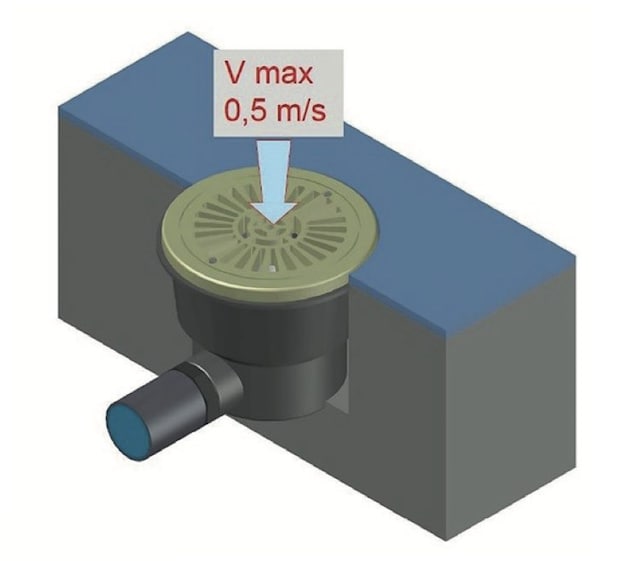
The regulations also limit the possibility of using only one suction device. This is because a single device will necessarily have to produce a greater suction force. In the case of two devices, the minimum distance between them must be 200cm to distribute the suction areas. Manufacturers also predict peripheral suction grills to distribute the pressure difference over a larger area and therefore reduce the net suction force near the grate.
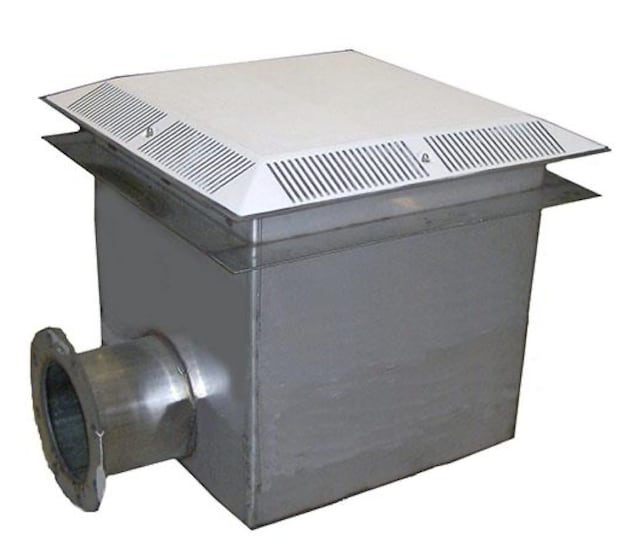
In the case of Suio Terme the protective grille was completely absenta circumstance which probably may have been a contributory cause (or even the main cause) of Gabriele Petrucci’s death.
