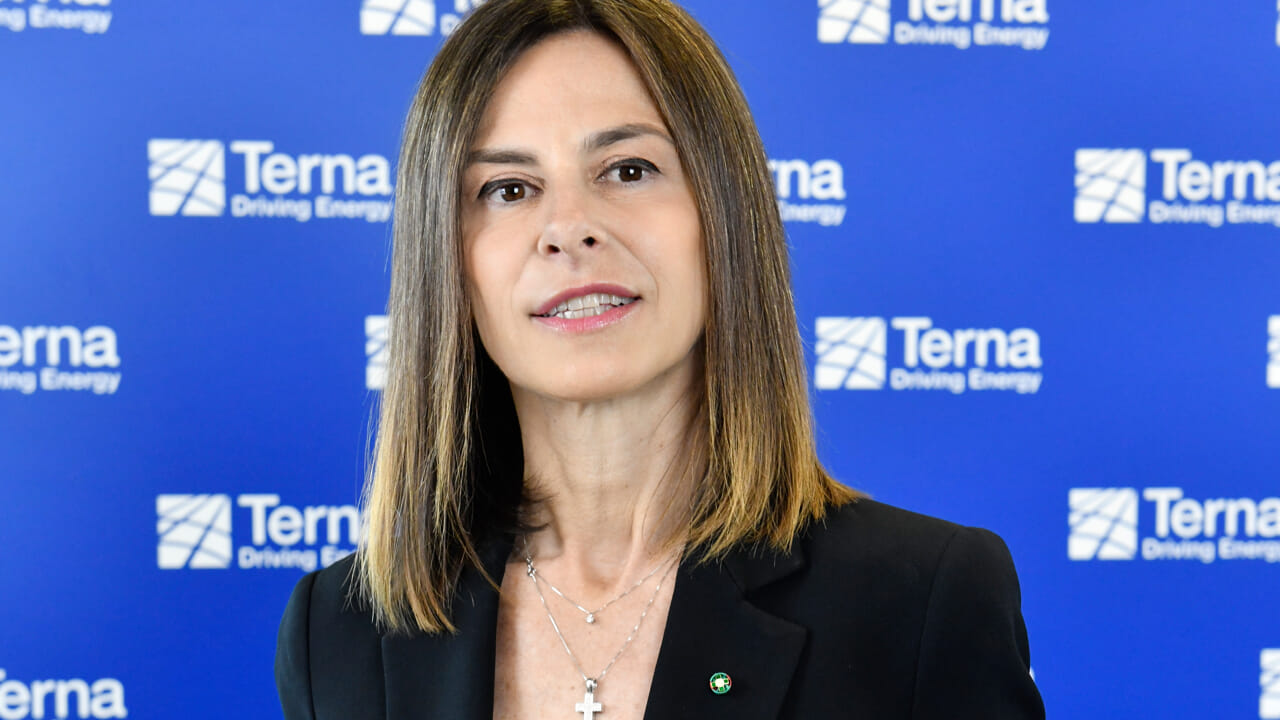
Why Giorgia Meloni beats Giuseppina Di Foggia 7.3 million to 0: what a comedy
However you look at it, it’s a mess. Despite the conflicting legal opinions of important princes of the court, a sign that each thought they had their own truth that they intended to fully assert; despite the proven professionalism of the protagonists, and also the good faith of the main actors of the screenplay. Despite all this, what happened around Terna, the company that distributes electricity in Italy, and the severance pay of its now former CEO, Giuseppina Di Foggia, is a mess, in which no one makes a good impression. And which also uncovers a Pandora’s box that has never actually closed: that of salaries and above all the maxi-gratuities of the top managers of public subsidiaries.
The firmness of Giorgia Meloni: no severance pay for Terna’s CEO
But then he resigns and becomes president of Eni without severance pay? Or does he back down, leave and collect the superbonus of 7.3 million? It’s the bar talk these days: what would you do? On Tuesday evening the company, semi-publicly owned and listed on the stock exchange, released this statement: “Terna announces that engineer Giuseppina Di Foggia has expressed her willingness to sign an agreement aimed at waiving severance pay. The company will issue further communications upon completion of the procedures required by law and in full compliance with the principles of corporate governance”. In short, negotiations have opened, something is moving.
The story in its essential, factual contours is quite well known: in the recent round of government appointments, Dr. Di Foggia was not confirmed as head of Terna by the same government that had appointed her three years ago (apparently on the recommendation of Arianna Meloni) and which has now diverted her, without much preamble, to the less prestigious presidency of Eni (less prestigious and less profitable: from Terna she received 3.8 million per year including bonuses, from Eni “only” 500 thousand euros). The lady did not take it well, and through her lawyers she made it known that she wanted to make use of a provision of the contract signed in 2023, according to which she would now be entitled to a severance payment of 7.3 million euros.
However, not even Prime Minister Giorgia Meloni (ah, ingratitude!) and Minister Giancarlo Giorgetti (shareholder of Cdp and therefore of both Terna and Eni) did not take it well, realizing how jarring the news of a severance payment of 7.3 million for three years of work (overpaid), at a time when Italians’ bills are skyrocketing. Since Terna’s personnel costs (also) end up on the bills.
The rule established by the Ministry of Economy in 2023
Meloni and Giorgetti then reminded Di Foggia and his lawyers of a regulation issued by the Ministry of Economy (Mef) in 2023, which addressed the problem of severance pay. Excellent in intentions, it’s a pity that we are in Italy and in the circular in which it was said that we wanted to eliminate the huge severance pay it was written that they were “prohibited or strictly limited”. So it wasn’t forbidden but in fact it was “recommended”, along the lines of ‘be good if you can’. It’s the same concept whereby if in Germany or England I see a sign saying “doing this is forbidden” I adapt, while in Italy I only adapt if it says “it is strictly forbidden”. Mediterranean tolerance.
Strengthened by that only “strictly limited” and the fact that to go to Terna she had abandoned a very rich career in the private sector (she was at the top of Nokia), Giuseppina Di Foggia managed to have a clause inserted according to which at the end of her commitment at Terna she would have to be paid a super severance package, which she demanded until the end. The government realized the stumble and questioned her appointment as president of Eni, to which she had been intended as a ‘sop’, telling her ‘if you want to go to Eni, give up the 7.3 million’. The lady thought about it. And, according to Terna’s evening press release, it seems he is about to give up his severance pay. But the last word has not yet been written.
Will Giuseppina Di Foggia become president of Eni?
The mess, as we were saying, however, remains. Which is above all in the hands of the government. Of those who have now taken her away from Terna without taking her reaction into account, assuming (but it’s also possible not) that Meloni and Giorgetti were aware of the 7.3 million clause, of those who in 2023 at the Mef issued that directive on severance pay not providing for a binding ban but only a recommendation, of those who again in 2023 allowed her that contract knowing that the government’s intention was to limit the maxi checks. All things that put together produced the comedy.
It is clear that in the face of all this, an approach based only on brisk populism leads nowhere, and it is clear that if you want high-level managers, you have to compete with the market for them, and therefore pay them no less (or not too much less) than the market does. When the era of public grand commis came to an end years ago, the mandarins who had always been raised in state companies – accustomed to reasoning with the very protected logic of a welfare system that is closer to politics and its immediate interests than to the dynamic universe of business – said precisely this: we need men (or women) capable of behaving with more modern logics, we need, precisely, the market.
That choice was overall a happy one, and there’s no going back. However, the question of how appropriate certain remunerations are, and especially certain severance packages after only a few years of activity, still remains to be resolved. The pressing of Giorgia Meloni on Giuseppina Di Foggia testifies precisely to this embarrassment.
Read the other editorials by Pierfrancesco De Robertis
