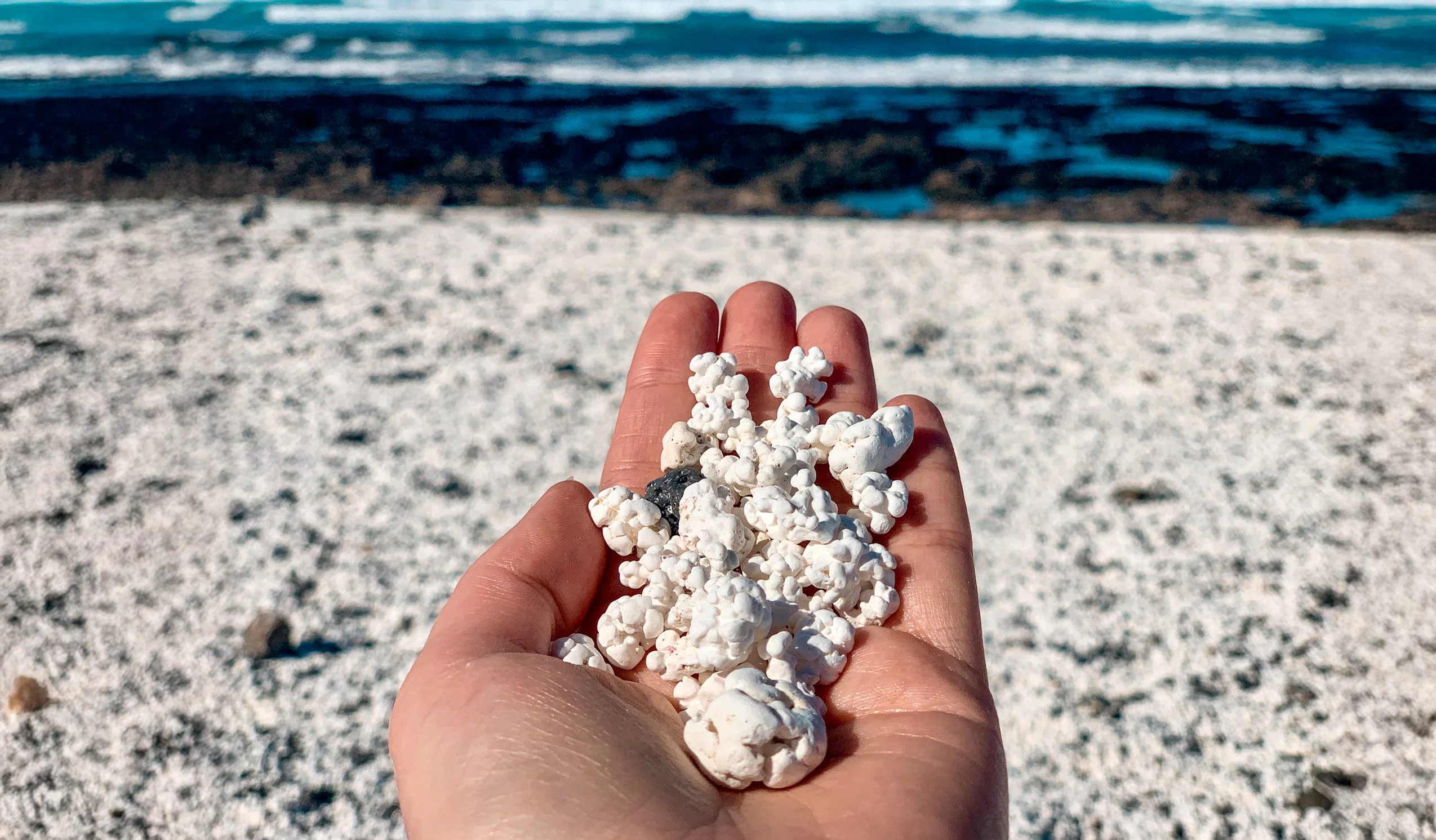
TO Fuerteventura, in the Canary Islands, there is a very particular beach, that of Majanicho which, seeing it like this, would seem to be covered in pop corn. What has been renamed “Popcorn Beach” is located in the municipality of La Oliva, about 7 km from the town of Corralejo: some might think of it as a hoax or to some image created with AI.
In reality, these are authentic photographs! Be careful though, what we see are not popcorn but particular organisms called rhodolites.
THE rhodolites I am calcareous red algae, rich in calcium carbonate and magnesium. These live freely on the seabed, taking on a stony and branched appearance, sometimes even forming extensive beds hundreds of square meters in the most depressed areas or in correspondence with the bottom forms. It is here that the ideal habitat is created for numerous organisms, capable of increasing the biological diversity of coastal sediments.
What’s the point though? That when these organisms die, yes they fragment and, progressively, they are transported by wave motion and marine currents. These fragments – by now white because they lack photosynthetic pigments – they come blunt, taking on a shape similar to that of popcorn. Many of these then end up on the beaches, accumulating and giving rise to this curious phenomenon which, every year, attracts tourists from every corner of the planet. It should be remembered, however, that it is forbidden to remove “popcorn” rhodoliths from the beach, to avoid damage to the ecosystem.
