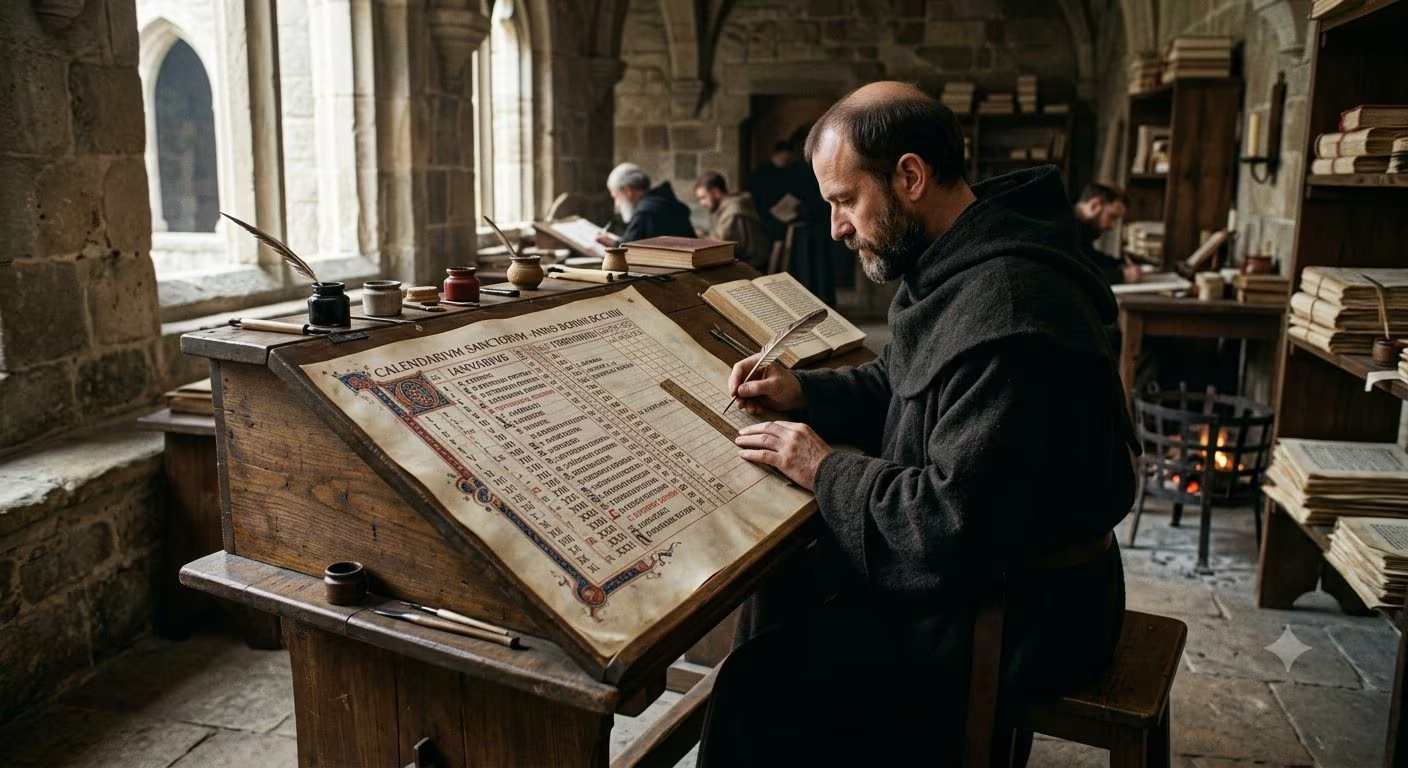
In the Laurentian Library of Florence comes back to light manuscript with a calendar of the year 813. So far nothing exceptional, if it weren’t for one rather important detail: it quantifies and corrects a three-day gap between the Julian calendar and the solar year. A study of Francesco Vizza of CNRwith the support of Giuseppe Giari, archivist of the Opera di Santa Maria del Fiore, demonstrated that that calendar placed liturgical dates alongside those of real astronomical phenomena, indicating a difference of three days. To date, this would be the oldest attestation of awareness ofJulian calendar error 7 centuries before the issue was resolved with the Gregorian Reform of 1582.
The Julian calendardeveloped by Sosigenes of Alexandria and introduced by Julius Caesar in 46 BC, attributed 365 and a quarter days to the year. It was inaccurate by about 11 minutes compared to the actual solar year. The error, consequently, accumulates over time: from the year 325that is, from when the Council of Nicaea had set the date of the spring equinox on March 21st, until813, the gap had reached about three days.
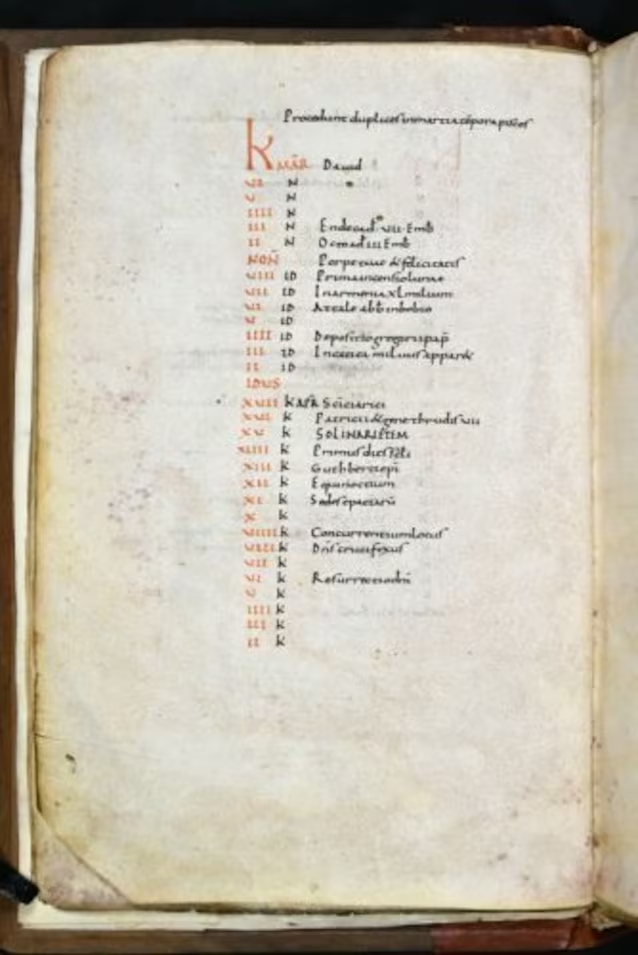
The manuscript documents it: the March 18 is noted as the day on which the Sun enters Aries, i.e. the true astronomical equinox, while March 21 bears the indication Equinoctiumthe date of the ecclesiastical calculation. The same three-day advance appears for all other equinoxes and solstices. The compilers of the manuscript quantified it with a result in agreement with what modern astronomy calculates for the beginning of the 9th century.
The calendar was found in a Sacramentary fromCathedral Operaalready reported in 1757 by the Jesuit astronomer Leonardo Ximenesbut never adequately valorised. The discovery dates back by four centuries the full awareness of the time gap of the calendar, until now attributed to the 13th century, and precedes by thirty years a similar calendar from the Prüm Abbey in Germany. The definitive correction would only arrive in 1582 with the Gregorian reform, implemented by Luigi Lilio, which gave rise to the calendar we still use today.
