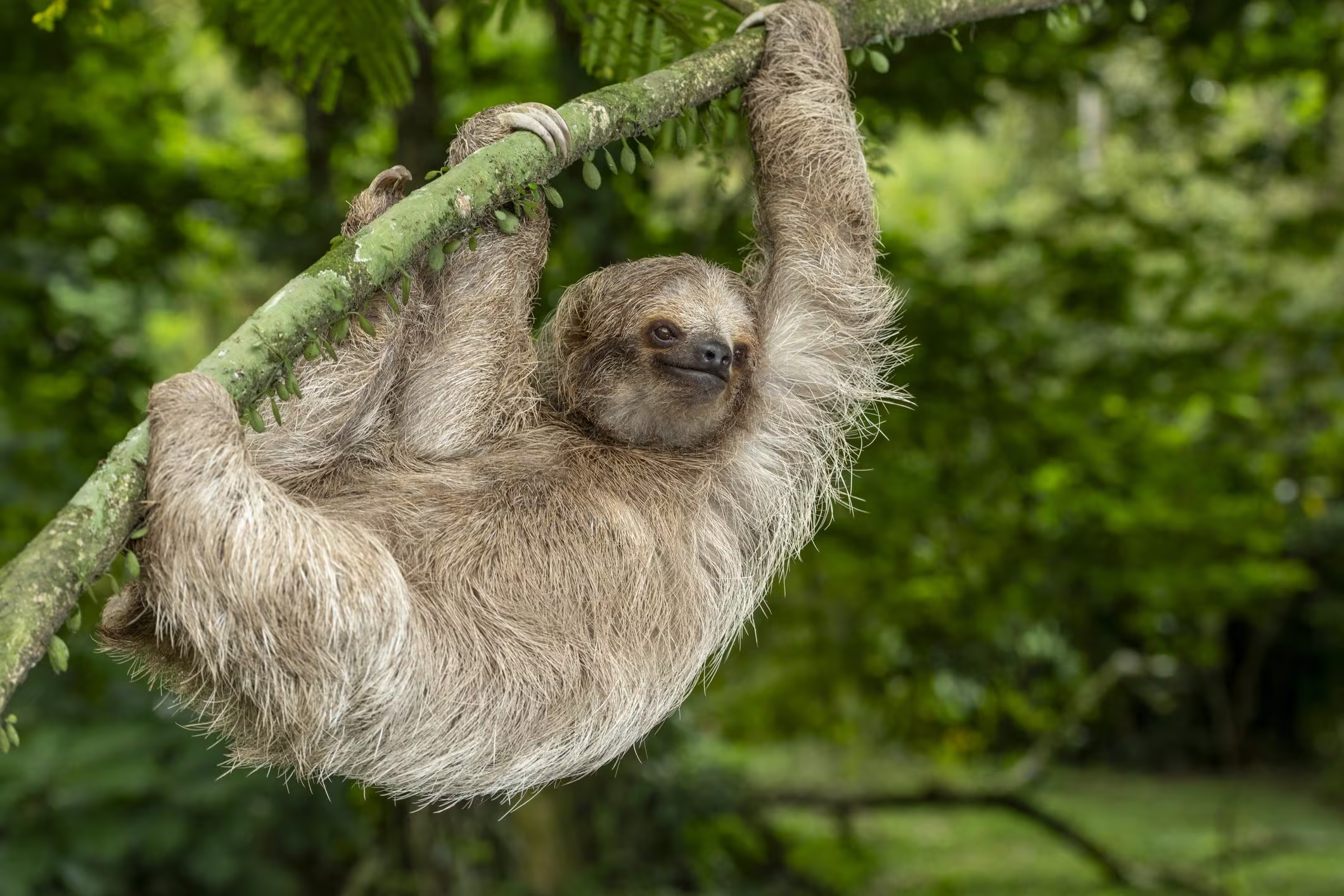
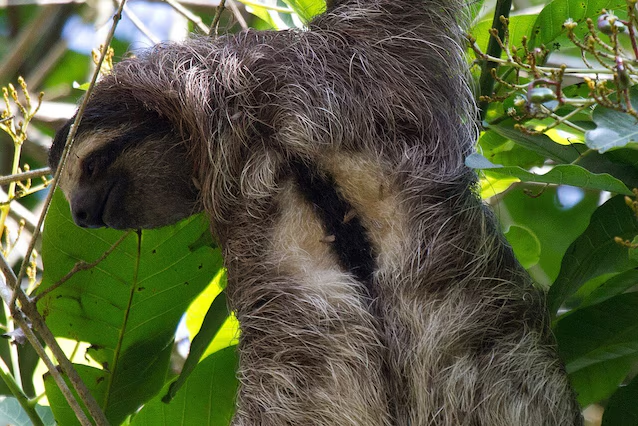
The sloth is a mammal native to the tropical forests of Central and South America, famous for being the slowest in the world: it moves at a maximum speed of approximately 0.24 km/htwenty times slower than a person walking at a normal pace. The best known and most widespread species is the variegated sloth (Bradypus variegatus) which reaches 40-80 cm in length and weighs from 2.3 to 6.3 kg. They have a rough and long hair where they grow into real green algae and a multi-chambered stomach that takes weeks to digest a single meal of leaves. Their every apparent biological quirk, including a mechanism of tendons which allows him to hang upside down without any muscular effort, is actually an evolutionary strategy for minimize energy consumption.
There are two-toed and three-toed sloths: differences and where they live
The name “sloth” comes from Greek bradýs (slow) e poús (foot), and in reality it is an umbrella term that groups together two different families. On the one hand i three-toed sloths (genus Bradypus), with three claws on the forelimbs; on the other i two-toed sloths (genus Choloepus), with two claws. The two families separated millions of years ago and the similarity between them is due to evolutionary convergence (similar environments producing similar solutions), not to a direct relationship.
Three-toed cats have five species: the brown-throated sloth (Bradypus variegatusthe most widespread, from Honduras to northern Argentina), the pale-throated sloth (B. tridactylusAmazon forests), the hooded sloth (B. torquatusendemic to the Brazilian Atlantic Forest), the pygmy sloth (B. pygmaeuswhich lives on a single island off the coast of Panama) and the southern maned sloth (B. crinitus), recognized as a separate species only in 2022.
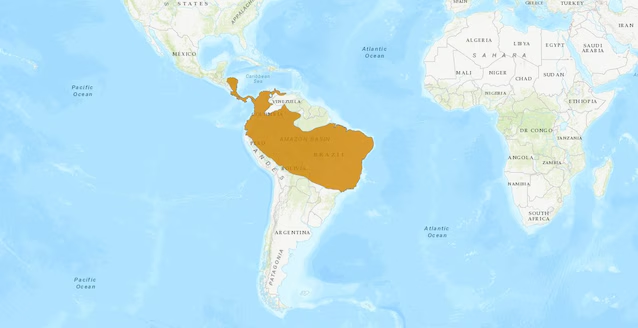
Two-toed cats, on the other hand, are only two species, more robust and with a slightly more varied diet. All sloths are herbivores and they feed almost exclusively on leaves, an abundant food but very low in calories.
Why is he so slow and how much he actually sleeps
Sloths move through the treetops at an average speed of just 800 meters per hour (about 1 meter every 3 seconds). They can reach a maximum peak of 2.4km/h only to escape from imminent danger by sprinting. This slowness is energy saving strategy. The animal has much less muscle mass than a mammal of the same size, which allows it to minimize calorie consumption. This is an essential factor for a herbivore that feeds exclusively on leaves, a poorly nutritious food that is difficult to assimilate.
For this reason the sloth has one plurichambered stomacha bit like that of a cow, where symbiotic bacteria slowly ferment the cellulose. Digestion of a single meal may take several weeks (up to 28 days), and when the stomach is full, as he explains The Sloth Conservation Foundationcan weigh more than 30% of the animal’s body weight.
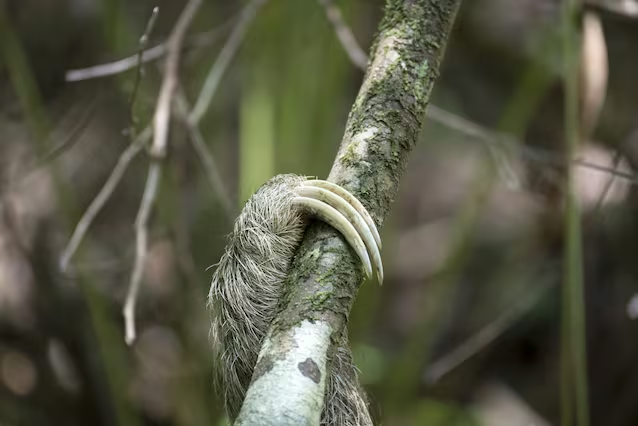
They also have an adaptation in the tendons: the finger flexors have a passive locking mechanism which keeps the claws attached to the branch without the need to contract any muscles. This is why you sometimes find dead sloths still hanging from trees. Furthermore, this mammal has a body temperature that fluctuates between 20 and 32 °C (poikilotherms) depending on the environment, a behavior more similar to that of a reptile.
It was long believed that sloths slept 15 to 20 hours a day. In 2008, however, a team of Max Planck Institute for Ornithology led by Niels Rattenborg overturned this belief by measuring the brain activity of wild specimens for the first time, thanks to small electroencephalograms (EEG) portable. The results, published in the journal Biology Letterswere surprising: In their habitat, sloths sleep on average just over 9.5 hours (9.63 hours), about six less than those observed in captivity. A fact confirmed by a subsequent study in 2014, hypothesizing that the risk of being attacked by a predator keeps wild sloths more alert than previously thought.
Sloth fur: a useful miniature ecosystem
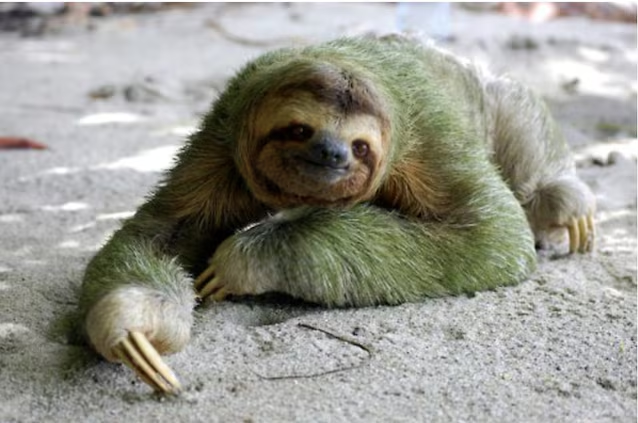
The most curious feature of the sloth is probably its fur, which hosts a real micro-ecosystem made of mushrooms, bacteria, mites, beetles, moths and above all green algae of the genus Trichophilus. This coexistence offers the sloth a double mimicry, visual and olfactory: on the one hand it gives the coat a greenish colour ideal for blending into the twilight of the forest, on the other it compensates for the total absence of animal body odor making it smell exactly like the surrounding vegetation, making it almost invisible to predators. It is a mutualistic relationship, both the sloth and the organisms that live on it benefit.
In 2010, a team led by Milla Suutari genetically analyzed fur samples taken from all the sloth species known at the time, publishing the results on BMC Evolutionary Biology. The study identified genetic material belonging to different groups of organisms, with thealgae Trichophilus welckeri as the predominant species.
A 2014 study, however, signed by Jonathan Pauli and colleagues, published on Proceedings of the Royal Society Bproposed that the moths of the Cryptoses genus are part of this system: they live in the sloth’s fur, lay their eggs in its feces, and as adults return to the animal carrying nitrogen which would fertilize the growth of algae. Sloths with more moths in their fur actually have more nitrogen and more algae. The fact that the sloth actually feeds on this algae to supplement its diet remains a hypothesis, not yet proven with certainty by the authors of the study themselves.
The sloth comes down from the tree once a week to defecate
The sloth comes down to the ground about once a week, and it does so only for defecate. During their trip to the toilet they can lose up to a third of their weight. This is the most dangerous moment of his life: on the ground his hind legs do not provide propulsion and his claws almost become an obstacle, forcing him to drag himself very slowly and exposing him to jaguars, puma And harpy eagles.
It is not yet clear why he does this. Among the most accredited hypotheses are the desire to encourage moths to lay eggs (who live in symbiosis in their fur) directly in the excrement, the targeted fertilization of the roots of one’s favorite tree, or a simple evolutionary legacy inherited from terrestrial ancestors.
The same slowness that makes the sloth so vulnerable on the ground instead makes it a excellent swimmercapable of crossing rivers using the forelimbs as oars. In water it moves three times faster than on land. Sloths are also affected by rod monochromacy, a rare eye condition that makes them devoid of cones and completely color blind. To compensate for this visual deficiency, they give up sight as their primary sense and instead rely on a highly developed sense of smell.
The conservation status of the species
The conservation picture is not uniform across species. B. variegatus And B. tridactylus they are classified LC (Least Concernminimal concern) from the IUCN: populations distributed over a large geographic area although deforestation and power lines in suburban areas remain growing threats.
The situation changes for endemic species. B. torquatusconfined to the Brazilian Atlantic Forest (reduced to less than 15% of its original surface), is classified EN (EndangeredIn Danger). B. pygmaeusthe Panamanian pygmy sloth, is CR (Critically Endangered): the most recent censuses estimate a population of a few hundred individuals, all on an island of just 4.3 km² increasingly exposed to tourism. B. crinitus was assessed by the IUCN in 2025: it too, In Danger (EN).
Sources
The Sloth Conservation Foundation, Slothopedia Suutari, M. et al. (2010), Molecular evidence for a diverse green algal community growing in the hair of sloths…, BMC Evolutionary Biology Pauli, JN et al. (2014), A syndrome of mutualism reinforces the lifestyle of a sloth, Proceedings of the Royal Society B Rattenborg, NC et al. (2008), Sleeping outside the box: electroencephalographic measures of sleep in sloths inhabiting a rainforest, Biology Letters Voirin, B. et al. (2014), Ecology and Neurophysiology of Sleep in Two Wild Sloth Species, Sleep IUCN Red List B. pygmaeus IUCN Red List B. torquatus IUCN Red List B. crinitus IUCN Red List B. variegatus
