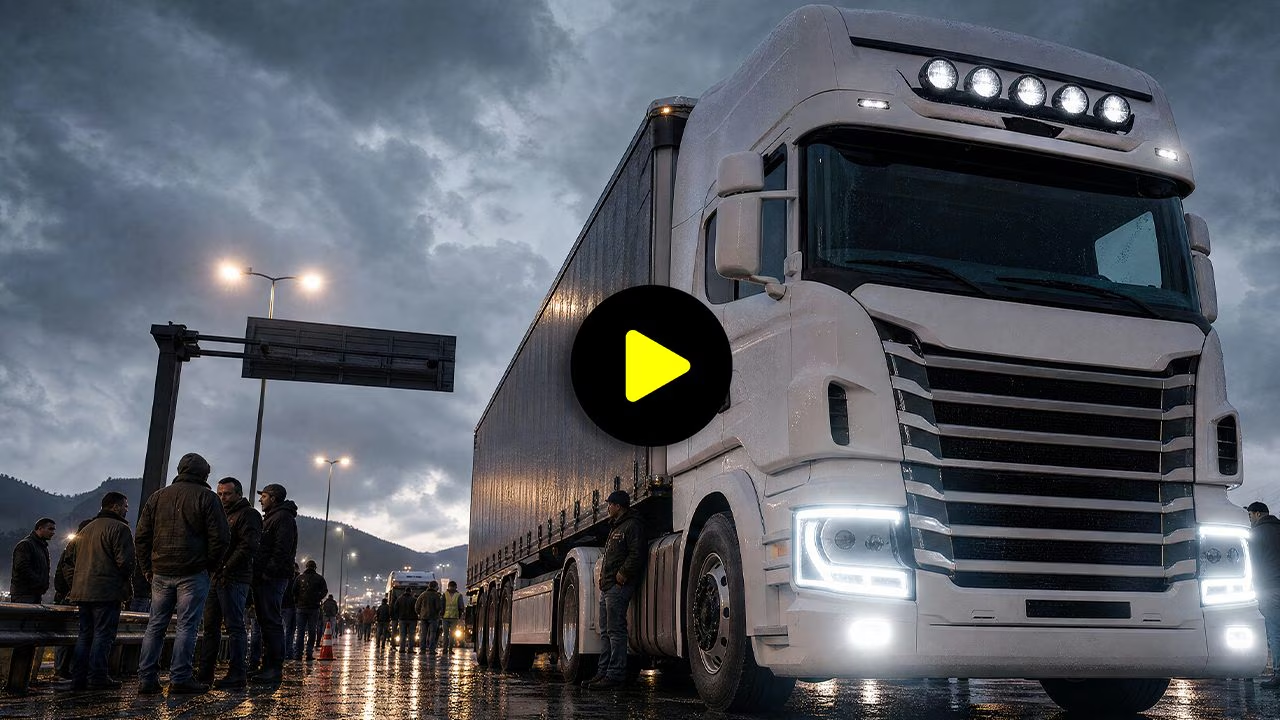
In Italy, especially in the South, protests by hauliers against expensive diesel fuel (due to the energy crisis) are blocking goods. The consequences include empty shelves and halts in food production. Road transport is vital for the national supply chain.
In various Italian regions, especially in the South, garrisons and blocks linked to hauliers’ protest against expensive diesel they are slowing down there movement of goods. Among the documented consequences are empty shelves in some supermarkets, disruptions in food production And difficulties in supplies. This is not a single national strike: local groups and trade associations have joined or interrupted the demonstrations at different times.
The problem doesn’t just affect truck drivers. When the delivery of raw materials or finished products stops, difficulties can spread from one point to another in the supply chain, even where there is no protest underway.
Dear fuel, why it costs more: the causes
The fuel crisis is also linked to disruptions in international energy markets caused by war in the Middle East. To understand what happens, it is necessary to distinguish crude oil from refined products: diesel oil is not extracted directly from the deposits, but produced in refineries. Supply therefore depends both on the quantities of oil and on the ability to refine and transport it.
According to the International Energy Agency, global diesel exports in September 2026 were approximately lower 700,000 barrels per day compared to September 2025. On 21 October 2026 the national average price of self-service diesel on the Italian road network was 2.259 euros per litre. The self-service price does not necessarily coincide with that paid by all companies, which may have specific procurement contracts.
Because price increases put hauliers in crisis
Fuel is one of the main ones operating costs of a trucking company, along with personnel, maintenance, vehicles, tolls and insurance. If diesel fuel increases, each trip costs more. For example, a hypothetical increase of 50 cents per liter is equivalent to 500 euros more per 1,000 liters purchased.
Increased costs are not necessarily passed on to the customer straight away: rates can be adjusted by contracts, adjustment clauses and payment times. Businesses may therefore find themselves incurring greater expenses today, without recovering them immediately. For them islands the costs of sea crossings are added.
On the public aid front, the Ministry of Transport has set up a tax credit for certain operators which can cover up to 70% of the eligible increase in the cost of diesel compared to February 2026. The amount actually recognized depends on the requirements and available resources.
How many goods travel in Italy on trucks, trains and ships
Trucks play a central role in internal transport, but the shares change based on the statistical perimeter. In the sun road and rail land modesThe 92.1% of the tons detected by ISTAT in 2024 is attributed to the road and the 7.9% to the railway. Restricting the analysis to journeys with departure and destination in Italy, in the road-rail comparison the road share rises to 96.8% of tons.
If we also include the transport by seafor pipelines and aircraft, the useful statistical unit is the tonne-kilometre, which takes into account weight and distance. According to the ISPRA indicator on internal transport, the road covered the 58.6% of tonne-kilometres in 2024 and the sea and inland waterways the 25.6%. The percentages of the two indicators should not be compared directly: the denominators and units of measurement change.
Ships and trains are essential for many trips, especially on long distances. However the goods often have to be transported up street to reach factories, warehouses and shops. The blocking of some road linkstherefore, it can also disrupt supply chains that use other means of transport.
From pasta factories to mozzarella: the effects already documented
Among the most obvious consequences are: difficulties in pasta production. Pastificio Garofalo suspended production on October 18th and had only resumed on October 20th 40% of capacityaccording to the statements of its CEO Massimo Menna. Rummo and La Molisana have also reported stops or reductions in activity for the supply of raw materials or packaging.
In the DOP Campania buffalo mozzarella supply chainthe Protection Consortium has announced the temporary closure of several dairies: in some cases the milk produced by the farms does not reach the factories in time to be transformed. The PDO specification sets the deadline for transformation within 60 hours.
Difficulties are also visible in the distribution of fruit, vegetables, meat And other fresh foodsespecially in the areas most affected by the blockades. But empty shelves in some locations do not mean a general shortage of food throughout Italy: missed deliveries, in addition to any precautionary purchases by consumers, have an impact.
The crisis has also reached air transport: an official notice NOTAM reported the temporary unavailability of aircraft fuel at the Crotone and Reggio Calabria airports; the pilots were invited to plan refueling elsewhere, while in Lamezia Terme operations were regular.
Dear life and protests: are they the same thing?
There protest was born in a context of increasing costs, but the dear life it is a broader phenomenon that predates the lockdowns. In September 2026, Italian inflation was at 4.2% on an annual basis, driven mainly by energy.
It is therefore not correct to automatically attribute to hauliers the price increases already observed in previous months, nor to consider every empty shelf as evidence of a national shortage. To quantify the direct economic effect of the lockdowns would require separate data on sales, logistics, production and prices.
