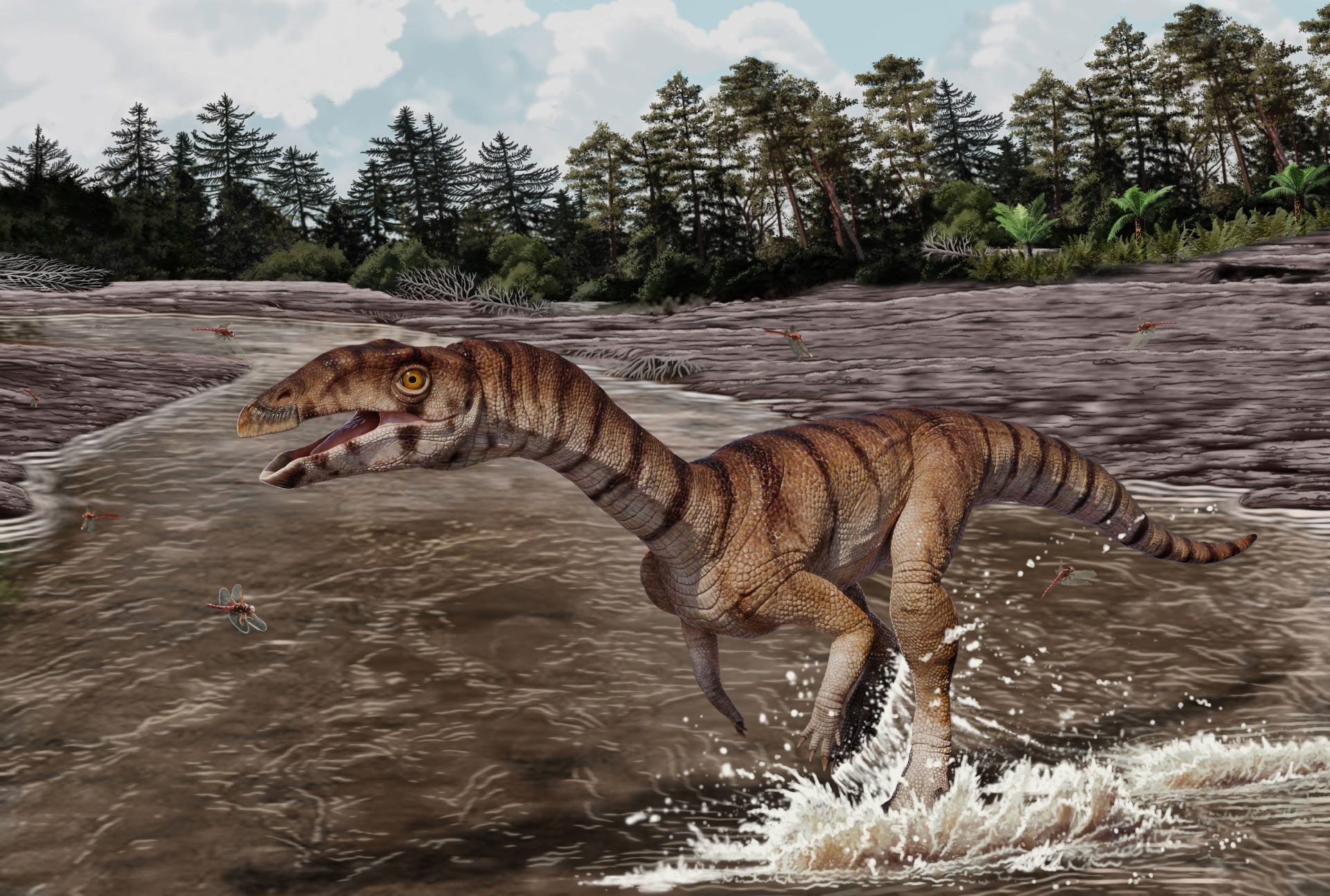
About 212 million years agoin the current territory New Mexicolived a bipedal reptile, without teeth and with small arms.
It wasn’t a dinosaur: it was a relative of the crocodiles. His name was Labrujasuchus expectatus and was described on the Journal of Vertebrate Paleontology from Alan H. Turner of Stony Brook University and colleagues from the Dinosaur Institute of the Natural History Museum of Los Angeles County, in the article A new shuvosaurid (Archosauria, Poposauroidea) from the Late Triassic (Norian) Hayden Quarry of New Mexico, USA
Labrujasuchus belongs to Shuvosauridaea group of pseudosuchian archosaurs Upper Triassic known from western North America and Argentina. Pseudosuchians are the evolutionary branch that produced i modern crocodiles. Shuvosaurids display a strikingly similar morphology to ornithomimidesthe herbivorous theropod dinosaurs of the Cretaceous: light body, bipedal posture, reduced forelimbs, absence of teeth. A build comparable to modern ostriches. It’s a classic case of convergent evolutionin which two independent lines develop similar morphological solutions in response to similar ecological pressures. “Many of the successful evolutionary strategies of modern animals and non-avian dinosaurs,” Turner reports, “first appear in the Triassic. Bipedalism is certainly an unusual feature for crocodilian relatives, but it was widespread in many dinosaurs.”
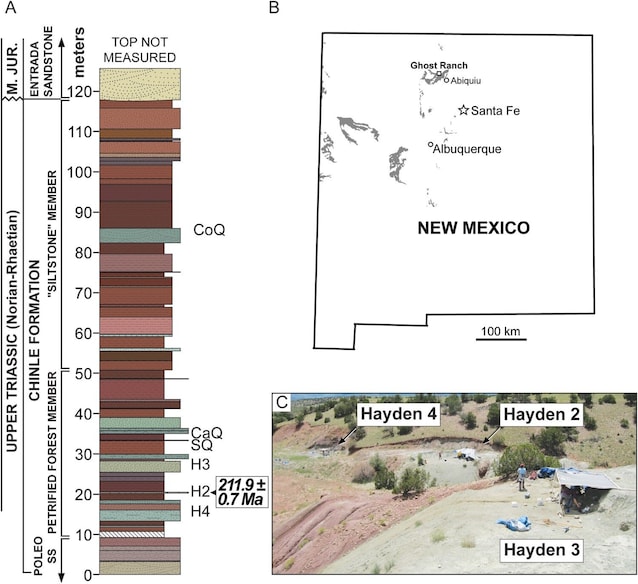
The fossils come from the quarry of Hayden in Ghost Ranch, New Mexico, already known for its wealth of Triassic remains. The site corresponds to Petrified Forest Member of the Chinle Formation. The holotype comes from a layer dated to the Middle Norian, approximately 211-212 million years ago. The name of the genus combines a reference to the Ghost Ranch, known historically as “Ranchos de los Brujos“, the Witches’ Ranch, with the Greek word souchoscrocodile. The epithet expectatusLatin for “expected,” reflects the fact that such a discovery at the site was considered probable.
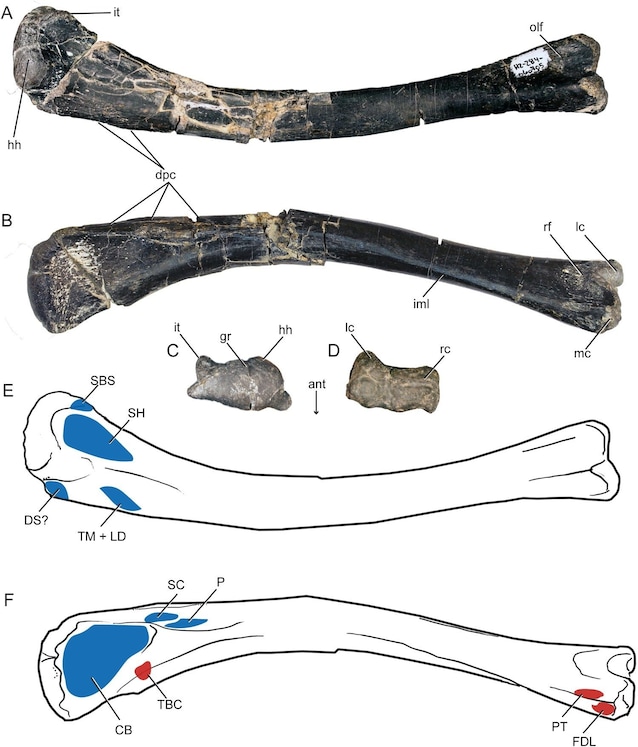
The species is distinct from the other two North American species, viz Shuvosaurus inexpectatus of Texas ed Effigy okeeffeae of New Mexico. Stratigraphically it fills the temporal void between the two species. Phylogenetic analysis places it in a North American endemic clade, distinct from the Argentine species Sillosuchus longicervix.
The authors point out that Labrujasuchus confirm the morphological conservatism of the group: The three North American species display remarkably similar skeletons despite the millions of years separating them, suggesting that this body arrangement was effective in the Triassic ecosystem of the American Southwest.
