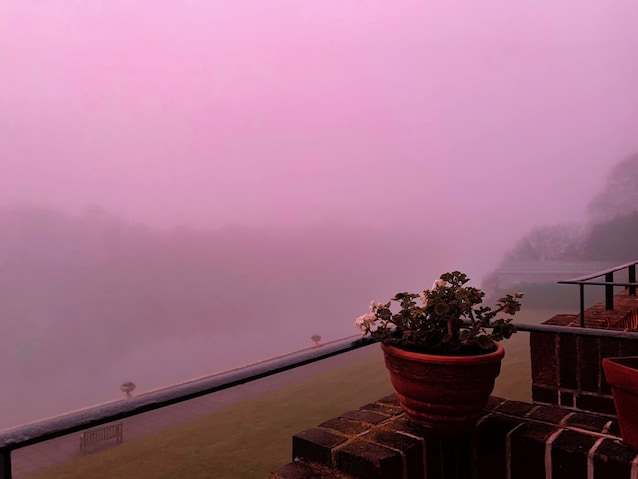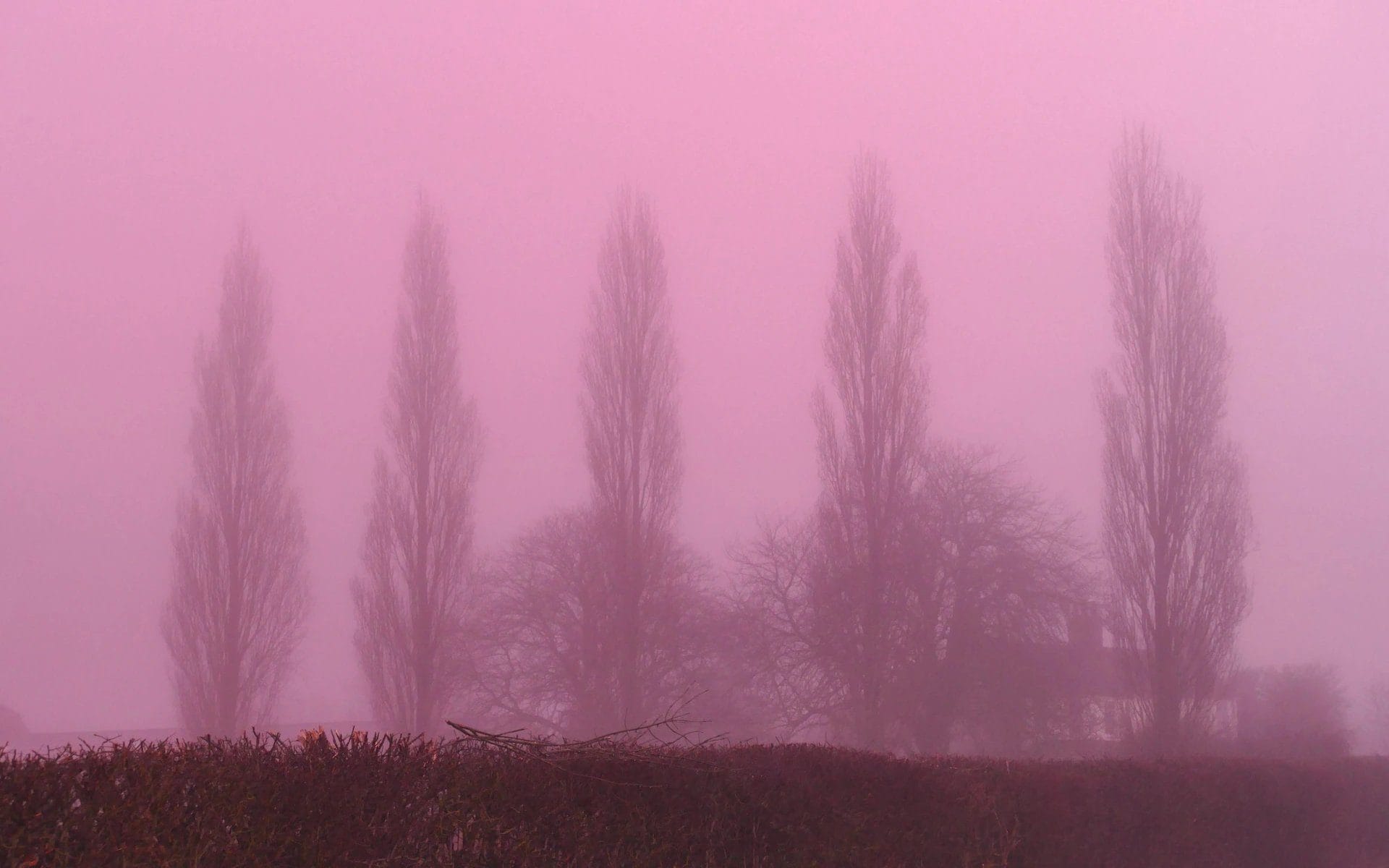
The images of the. are going around the world pink fog which at dawn yesterday covered some areas of the United Kingdom southern, up to the suburbs of London. In addition to the enchantment for a rare and suggestive phenomenon, concerns also arose about what could have caused this unusual color: in reality it is not a chemical phenomenon (it was therefore not due to particular substances in the air) but purely physical, which depends on how the sunlight interacts with the earth’s atmosphere first and then with the fog. Simplifying a bit, the light magenta/mauve colour which surprised the English yesterday morning is the result of the sum of orange-red due to dawn and del white-blue due to fog.

These two colors in turn depend on the fact that the light is scattered with different mechanisms in the air and in the fog. Air, which is a mixture of gases and is therefore composed of tiny molecules, diffuses light through a process called in technical jargon Rayleigh scattering. This type of diffusion deflects blue light much more than red light, and this results in the blue color of the sky but also the red color of sunrises and sunsets. When the sun is very low on the horizon, in fact, it passes through much thicker layers of the atmosphere and Rayleigh scattering diligently “subtracts” the blue from the sunlight, predominantly letting only the red light pass through.

Now, let’s say we have a sunrise with a very reddish color. What happens if this light, after passing through the atmosphere, enters the fog? Here another mechanism of diffusion of light intervenes, Mie scattering. This is because fog is not a gas made of microscopic particles, but a aerosol composed of much larger particles. With large particles the light is scattered not through Rayleigh scattering but with Mie scattering, which instead deals with the various wavelengths (i.e. the “colors”, so to speak) more or less in the same way. In other words, it scatters red light more or less like the blue one. It is precisely this “democratic” scattering of the various colors that tends to make fog whitish-greyish: white, in fact, is the sum of all colors.
You will notice, however, that I repeated twice in italics «more or less». This is because in reality Mie scattering has a slight tendency to deviate red light more than blue light on average. This is why sometimes, under the right conditions, the fog becomes tinged with a bluish-white colour. (And it’s the same reason why on Mars, where the atmosphere is very dusty and therefore has many “large particles”, the sky is reddish and the sunset is blue).
Now, what happens if I mix a particularly reddish color of dawn with a particularly whitish-blue color of fog? That’s right, I get a light magenta like the one that made yesterday morning’s English fog pink. The conditions for this particular color mix to occur are not frequent, but they can occur, as happened yesterday in the south of the United Kingdom. It is therefore not a question of chemistry, but of physics!