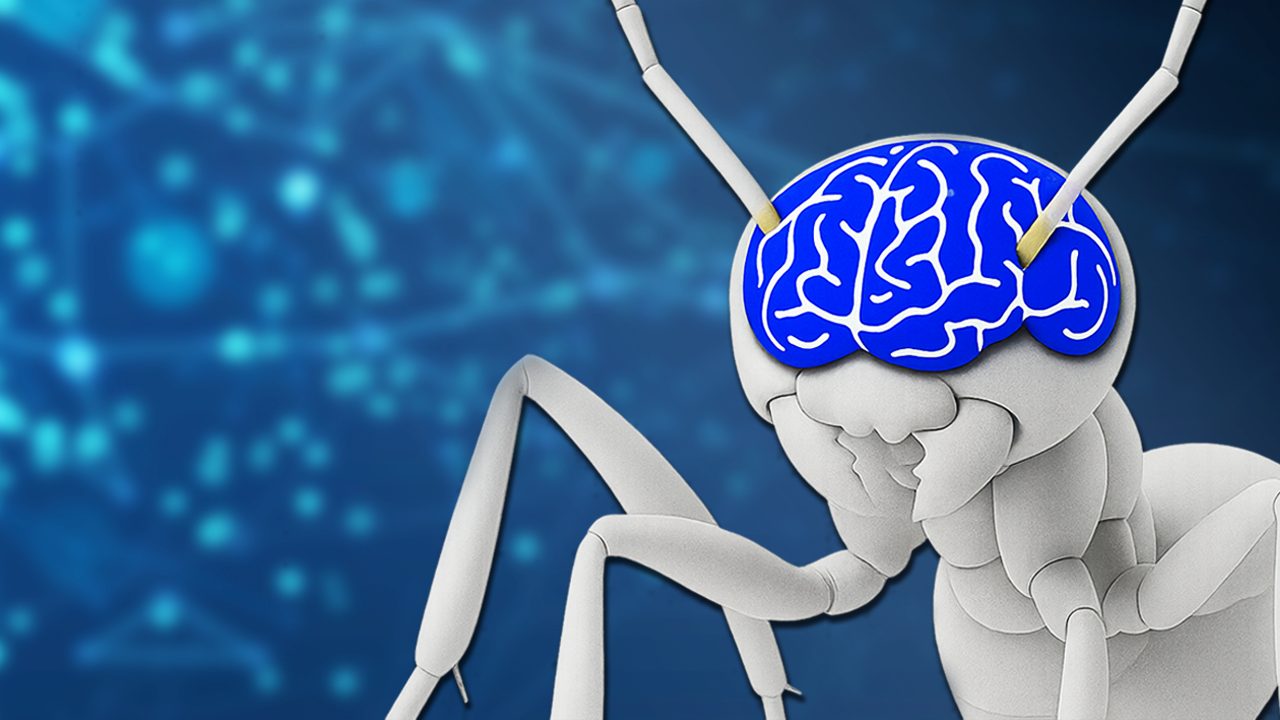
Ants are highly social insects: they live and operate constantly in close collaboration, especially when it comes to carrying heavy loads, often of much higher size than theirs. Even human beings, although belonging to a profoundly different species, show a marked propensity for sociality and cooperation. But who of the two is more skilled in collaborating? This question tried to answer an interesting experiment conducted by a group of researchers from the Weizmann Institute for Sciences, who compared ants and human beings in facing a geometric problemknown as the “Ruel of piano removers“.
What the puzzle of piano translultants consists of
The rstinotor of piano removers is a classic problem in the field of robotics, used to test the ability to plan complex movements. Consists, for example, in the move an object with an irregular shape – like a piano – within a restricted space, rich in obstacles.
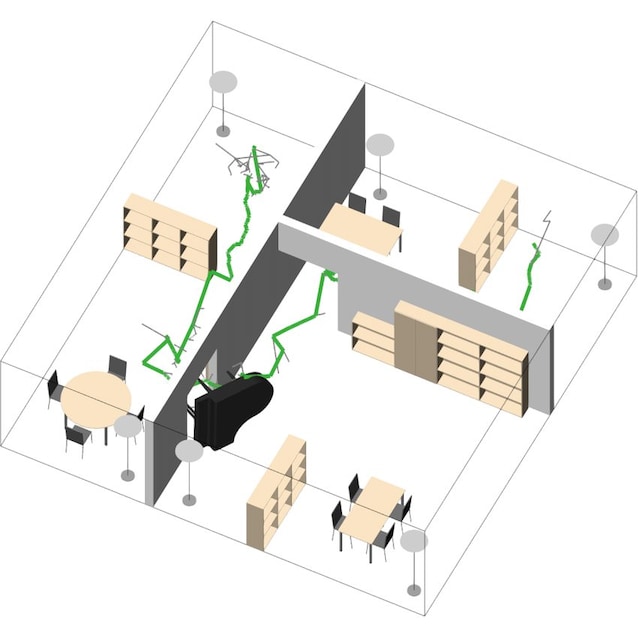
Starting from this principle, a group of researchers created a concrete version of the puzzle, comparing the performance of a group of ants with those of a group of human beings. The basic question was: Who of the two is most effective in collaboration?
The comparison between ants and human beings
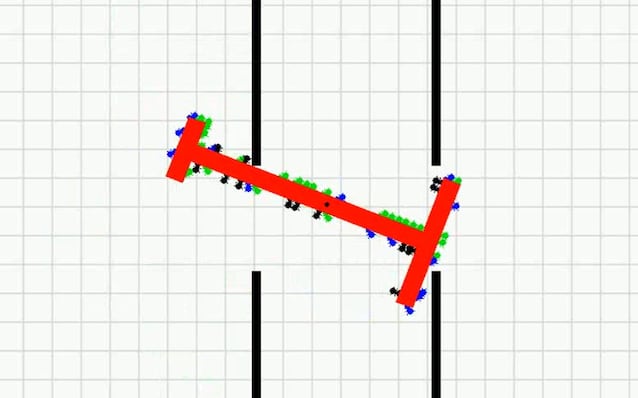
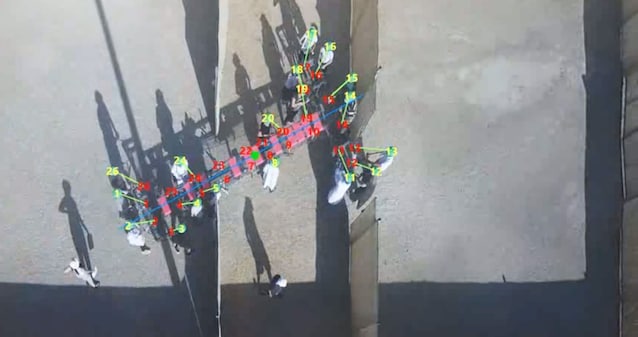
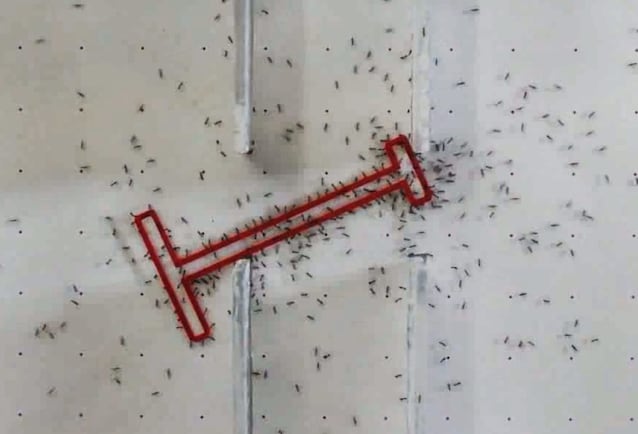
To make the comparison between humans and ants as fair as possible, human participants were requested not to communicate neither verbally nor through gestures. They could exclusively count on the force exerted directly on the object. The task, apparently simple, consisted of transporting a T -shaped object through three rooms connected by narrow passages. Since the object could not cross the openings keeping the initial position, it was necessary to identify the orientation and the sequence of more adequate movements to overcome the obstacle.
In mathematical terms, solving a problem of this type is equivalent to Build an algorithm: an orderly and precise series of instructions aimed at reaching the solution.
How ants act
The ants that took part in the experiment are the so -called “crazy ants“, Common name by which reference is made LONGICARNIS PARASTECHINA. To fully understand the scope of this comparison, it is important to keep in mind that, in general, ants do not “think” in the human sense of the term: they do not persist, do not reflect individually, but act in a functional and automatic. Their behavior is guided by collective mechanismsand not from personal decision -making processes. In other words, they do not think as individuals, but they operate as a single collective entity. On the contrary, individualism represents one of the distinctive characteristics of human behavior.

The results of the experiment
In individual comparison, humans have clearly overcome ants. However, in group tests, the result has turned upside down: Ants have proven significantly more efficient. The ants acted in a coordinated and strategic way: they moved along the edges of the environment, almost as they were analyzing the structure and memorizing it, thus reducing the risk of repeated errors.
On the contrary, human groups – deprived of the possibility of communicating – have achieved lower results. They tended to choose quick but subfits, led by an immediate logic that, in the long term, often led to stall situations and the need to start again.
What surprises most is that the ants seemed to perform a sort of collective algorithm: each individual performs a specific action that, added to those of the others, contributes to the resolution of the problem. No ant has an overview or a complete plan; It is the group, as a whole, to behave as if you had one. They collaborate spontaneously and extremely effective, oriented towards a common goal.
How the Ants Society works
The ants society is so cohesive that it is called a super-organism: a unique entity, equipped with a collective intelligence that emerges from the sum of individual behaviors. Even memory is shared: no ant has all information, but together they know exactly what to do. They avoid errors, choose the most effective solutions, correct each other, without ever losing sight of the common goal. What makes all this even more extraordinary is that they do not communicate how the human being, but use i pheromoni: invisible chemicals that work as signals. However, it is important to underline that pheromones do not equate to a conversation, to a strategic planning, nor to a comparison between opinions.
Because human beings have failed
When verbal communication is prevented for human beings, they tend to take behavior similar to those of ants, but with very different results. Instead of collaborating effectively, they often end up hinder themselves, block themselves in hesitation or wait for the other’s initiative. They try to act as a collective entity, but they cannot coordinate with the same efficiency.
Human beings demonstrate great individual skills, but in the absence of communication they struggle to collaborate effectively. During the experiment, the impossibility of speaking led the participants to choose apparently advantageous solutions immediately in the immediate term, which however proved to be ineffective in the long term. Each has acted autonomously, without coordination or shared strategy, causing a block of the group. A dynamic that, contrary to what happens between the ants, penalizes human collective behavior.
