You’re watching GeopolitiX Don’t miss out on more content from Geopop

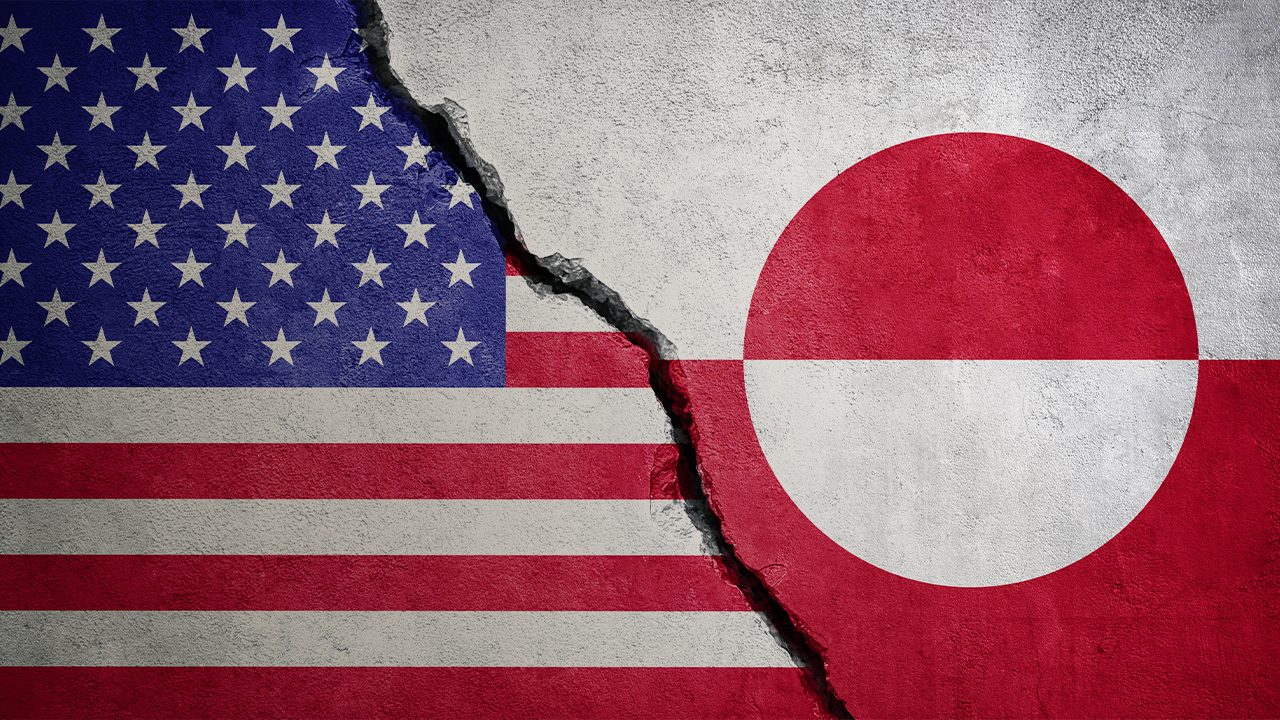
There Greenand has returned to the center of global geopolitical attention after the president of the United States Donald Trump he reiterated that the world’s largest island is “fundamental to national security” and may even “have to choose between Greenland and NATO.” The US interest in a hostile territory between the Arctic and the Atlantic and almost uninhabited (it has just 57,000 inhabitants) is due to a series of geographical, geological and geopolitical factors which make Greenland an almost unique case in the contemporary world scene. It is in fact a territory autonomous but not independent (is part of the Kingdom of Denmark), rich in mineral resources precious and rare earths that are difficult to extract both economically and politically, which however would allow the United States to have long-term strategic advantages especially over China and Russia. Not to mention the location it allows for control military routes and trade flows. Trump has talked about the possibility of “annexing” or “buying” Greenland, but his real aim is have influence on that territory rather than conquering or formally possessing it.
Mineral resources in Greenland
Some of the oldest rocks on the planet are found in Greenland, and it is crossed by magmatic and sedimentary complexes that represent a sort of “archive” of the deep history of the Earth. In this geological context we find a considerable mineral wealth: rare earths, graphite, nickel, cobalt, copper, zinc and gold, materials of industrial utility or fundamental for the energy transition and advanced electronics.
This mineral potential, however, is difficult extraction: Greenland is in fact a fragile territory from the point of view of ecosystems and for this reason mining exploitation can create enormous environmental and social risks.
Belonging to the Kingdom of Denmark: politics
We therefore understand an initial interest not only of the USA, but also of other superpowers such as China, in the control of Greenland’s resources. The issue, however, is complicated by the fact that Greenland is not an independent stateso we cannot deal with it directly. It is an autonomous territory that belongs to the Kingdom of Denmark with regards to defense and foreign policy, which are the two main areas of geopolitical dialogue. While Greenlanders have an established right to self-determination (established by Self-Government Act of 2009), and in its parliament there are also pro-independence currents, currently Greenland it does not have the economic independence to become a sovereign state (about half of its economic needs are provided directly by Denmark through financing).
What does “the US wants Greenland” mean?
Greenland represents one of the few areas in the Western world with a significant mineral potential still underexploited. A potential, among other things, linked to some raw materials (such as rare earths) whose supply chain is currently largely concentrated in China. For Washington this is not only an economic problem, but also – as declared by Trump himself – of national security. What is attractive to the United States, in short, is not only the mineral resources of Greenland, but what this territory represents in perspective for the USA: the possibility of undermine the Chinese “quasi-monopoly” on the sources of supply of rare earths and other resources in which Greenland is rich.
Then there is the question of Arctic routeswhich with global warming are also becoming navigable for increasingly longer periods of the year. From this point of view, Greenland’s position is strategic for monitoring and navigating communication, commercial and even military routes.
There military question it is closely linked to the geographical one and is certainly not of secondary importance for the United States, which moreover already has bases on the island. To date, the US military presence in Greenland is concentrated in Pituffik Space Basewhich is not only a military airport but a crucial hub for the missile warning system, satellite tracking and surveillance of the Arctic space.
For all these reasons, when we say that “the United States wants Greenland” we mean it in a subtle and modern sense: making sure we have influence over that territory to obtain a strategic advantage on rival powers: for the US administration it is fundamental prevent the island from becoming economically dependent on potentially hostile actors to the USA who could control Greenland’s critical infrastructure and resources to their advantage.
So now we understand unique location of Greenlanda territory that is not huge but with enormous strategic importance, which must make decisions as a great power without having the political and economic means. In a way, Greenland is where we can watch some of the world unfold in real time key geopolitical dynamics of this century: the energy transition that needs new raw materials, climate change that redraws maps, geopolitics that is once again based on geography.
What Trump can do concretely
From a practical point of view, what the United States can concretely do now is to play onpolitical influence. “Buying” Greenland is practically out of the question, both because of the aforementioned Self-Government Act and because its government has repeatedly declared that “Greenland is not for sale”.
Certainly the inhabitants of the island can decide their own destiny, including complete independence from Denmark or stipulate aassociation with another countrysuch as the USA, in exchange for economic support. Any decision will still have to go through a popular referendum, approval by the local parliament and the consent of the Danish parliament.
Thus discarding the hypothesis of purchase, but also of annexation through the use of military force (both the USA and Denmark are NATO members), Trump can increase the influence of the USA on Greenland through the so-called soft powerthat is – in simple words – economic or political agreements. For example, by financing local mining projects or by proposing a commitment to the defense of the territory and economic aid in exchange for rights to exploit the territory and the resources it contains.
