The dog meat consumption In some areas of the China has long aroused conflicting reactions, especially by theinternational public opinion. The truth is that, in the past, the dog was one accessible food source It is functional to survival, so much so that some breeds were raised precisely for food consumption, and in some areas these habits have survived until recent times. Today, however, it is a trend in strong decline, both for internal cultural changes and for social and regulatory pressures.
Consumption of dog meat in China: historical origins and cultural context
The tradition of consuming dog meat in China ha ancient rootsdating back to more than Two thousand years ago. Historical sources attest to its use already during the Zhou dynasty (1046-256 BC), when the dog was considered one of the animals useful for existence of the peasant family. In an era marked by frequent famines and economic difficultieswas usual breed animals according to their usefulness foodrather than that affective. The dog, like other courtyard animals Like the pig or poultry, it was therefore bred for its meat, in particular in the regions where resources were scarce. In some local culturesdog meat was considered precious and was served on special occasions or offers in sacrifice during traditional rituals.
Furthermore, according to the Traditional Chinese medicinethe dog meat owns properties “heating” (Yang), and is considered useful during the winter to counter the cold, strengthen the body and stimulate circulation. For this reason his presence was historically more marked in the southern, coldest provinces.
The Yulin Festival and the public reaction to the consumption of dog meat
One of the best known and controversial episodes related to the consumption of dog meat is the Yulin Festivalan event that takes place every year in June in the Guangxi regionduring the Summer solstice. For the promoters, in a medical-traditional perspective, dog meat should be consumed in this period for “Boarding body energies”.
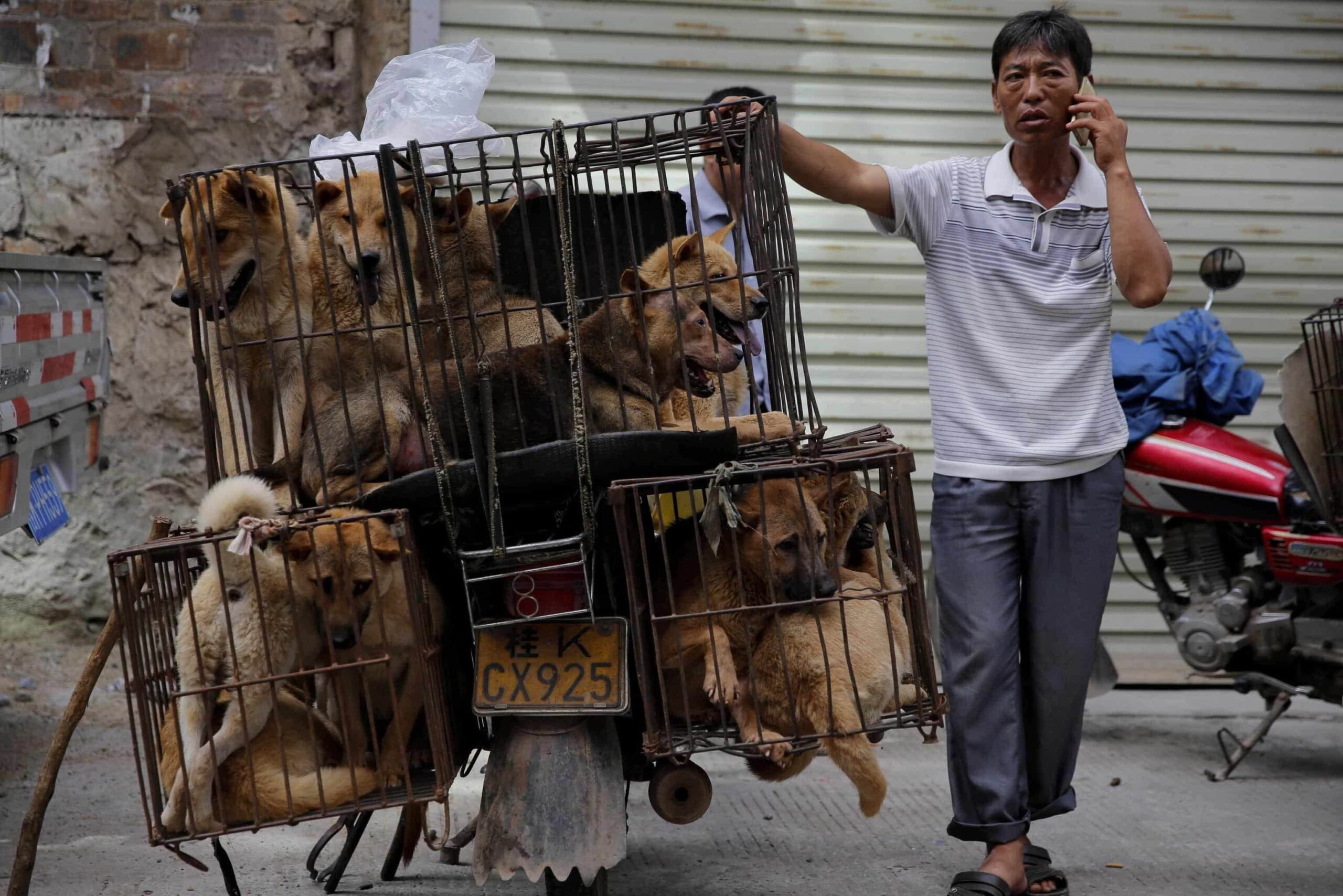
Institute in 2009 by local traders such as marketing strategy To attract visitors and increase sales, the festival has become the subject of criticism both nationally and internationally. The images of hundreds of dogs locked up in narrow cages, transported in precarious and slaughtered conditions in public have aroused strong protests by the organizations for the protection of animals, but also by numerous Chinese citizens, especially young people, who consider this cruel and obsolete practice.
However, it is important to clarify that the Yulin Festival has no ancient originsis not linked to any traditional holiday and does not receive official support from the central government. It is a local initiativecarried out by a limited number of economic actors, who generated an ethical controversy of global scope: in recent years, in fact, participation in the Festival has significantly decreased thanks to Public opinion pressure and at Campaigns from Chinese and international activists.
A practice in decline
Contrary to the perception widespread in some western contexts, the Dog meat consumption in China It is not a generalized practice or shared by the majority of the population. It is a minority habitespecially present in specific South Provinces, such as Guangxi, Guangdong or some rural areas of Manchuria. In big cities Like Beijing, Shanghai or Shenzhen, the sensitivity to animals has increased significantly in recent decades. Urbanizationthe increase in the standard of living and the spread of globalized lifestyles have contributed to the growth of the number of pets and the spread of a affective and protective vision towards the dog.
Legislative reforms and signs of change
In recent years, China has adopted one series of regulatory measures which reflect a significant evolution in the conception of human-animal relationship. In the 2020in response to the pandemic of COVID-19 and the growing requests for animal protection, the Ministry of Agriculture and Rural Affairs has officially Removed dogs from the list of breeding animals intended for human consumptionformally recognizing them as pets. This passage, although it does not yet equate to a national ban, represents an important symbolic change in defining the dog status. Some cities have adopted more restrictive measures, prohibit expressly the sale and the consumption of dog and cat meat.
The dog meat consumption in China represents a traditional practice with deep historical roots, but his diffusion is now strongly reduced and the subject of a rapid process of transformation. The evolution of the relationship between Chinese citizens and pets, combined with regulatory and cultural changes, is contributing to a significant change in the country’s food landscape.
Sources
Wang J. (2019) “The Cultural Politics of Eating Dogs in China”
Kim K. & Petersen A. (2018). “Ethics and animal consumption in East Asia”
Xinhua News Agency (2020). “China Excludes Dogs from Livestock List”
