
Human communication is not limited to words: postures, gestures and micro-movements constitute an essential component of social interaction. Among these, the act of keep your hands in your pockets apparently represents nonverbal behavior neutral which, however, it can assume profoundly different meanings depending on the cultural context. In some societies this gesture is perceived as a signal of informality or introspection, while in others it can be interpreted as an indication of lack of respect, disinterest or lack of transparency.
The meaning of hands in pockets in popular culture
In Western cinematic and narrative language, hands in pockets are often associated with ambiguous, rebellious or potentially dangerous characters. In detective and thriller films, the narrative tension is built around the visibility of the hands: Cops and detectives frequently ask suspects to “show your hands”as the possibility of hiding a weapon makes the gesture potentially threatening.

In many cinematic representations of the modern criminalthe apparent normality of the body contrasts with the potential hidden violence: invisible hands become the metaphor of undeclared intentions. Even in westerns or film noir, characters with their hands close to their pockets implicitly recall the image of the gun, suggesting tension and the possibility of conflict.
At the same time, in contemporary popular culture, hands in pockets have been associated with figure of the young nonconformist or outsider: a bodily attitude that simultaneously signals independence from social norms but also indifference, security or threat.
The hand as a cultural symbol: between destiny, morality and social control
The hand represents one of the body parts most full of symbolic meaning in the history of humanity. In many spiritual traditions, the palm of the hand is considered a space of knowledge and prediction of destiny: practices such as palmistrywidespread in various culturesSouth Asia and of Middle Eastattribute to the lines of the hand the ability to reveal personality traits and the future.
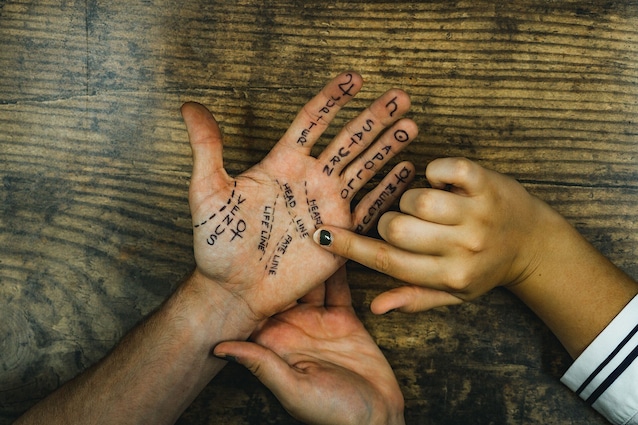
The visibility of the hand then takes on a value of transparency and social legibility. In numerous religious and cultural contexts, the hand is associated with moral action. Expressions like “have clean hands” they reflect deeply rooted metaphors linking the body to ethics.
The hands thus become a symbol of individual responsibility: what we do with them defines our social and moral position. Hiding them can therefore suggest the desire to hide intentions or avoid the judgment of fate.
Some psychological approaches highlight how the visibility of the hands is associated with al perception of reliability. Studies on social cognition suggest that humans tend to unconsciously monitor the hands of the interlocutor to evaluate intentions and possible risks.
In the behavioral criminologyHowever, attention to the hands is fundamental during interrogations or analysis of body language. Investigators and forensic psychologists observe movement and micro-gestures to identify signs of stress or attempts at emotional control.
Comparing hand cultures
Finally, in some culturesEastern Europehow Russia, Ukraine and Polandspeaking with your hands in your pockets during a formal conversation can be perceived as a sign of profound disrespect, especially in interactions with older people or authority figures. In these contexts, maintain a postura composed and open communicates attention, seriousness and hierarchical respect.
On the contrary, in some societiesCentral Asiaincluding Kazakhstan, Uzbekistan and Kyrgyzstangestures are influenced by traditional codes of behavior linked to hospitality and deference towards the interlocutor. During formal meetings or ceremonial situations, hiding the hands can be interpreted as closing signal or lack of participation in the social relationship.
Even in Japan and South Koreaalthough there is no explicit prohibition, keeping your hands in your pockets during a professional conversation can be perceived as excessively informal attitudeespecially in traditional working contexts.
Finally, in some areas of the Middle Easthow United Arab Emirates and Saudi Arabiathe position of the body takes on a relevant symbolic meaning in public interactions. During formal meetings, the visibility of the hands is often associated with sincerity and correctness, and the use of the left handfavoring all actions with the right hand, of loyalty.
Sources
Burman B. & Fennetaux A. (2019). “The Pocket: A Hidden History of Women’s Lives”
Hall E.T. (1966). “The Hidden Dimension”
Kendon A. (2004). “Gesture: Visible Action as Utterance”
Goffman E. (1959). “The Presentation of Self in Everyday Life”
Granhag PA & Strömwall LA (2004). “The Detection of Deception in Forensic Contexts”
