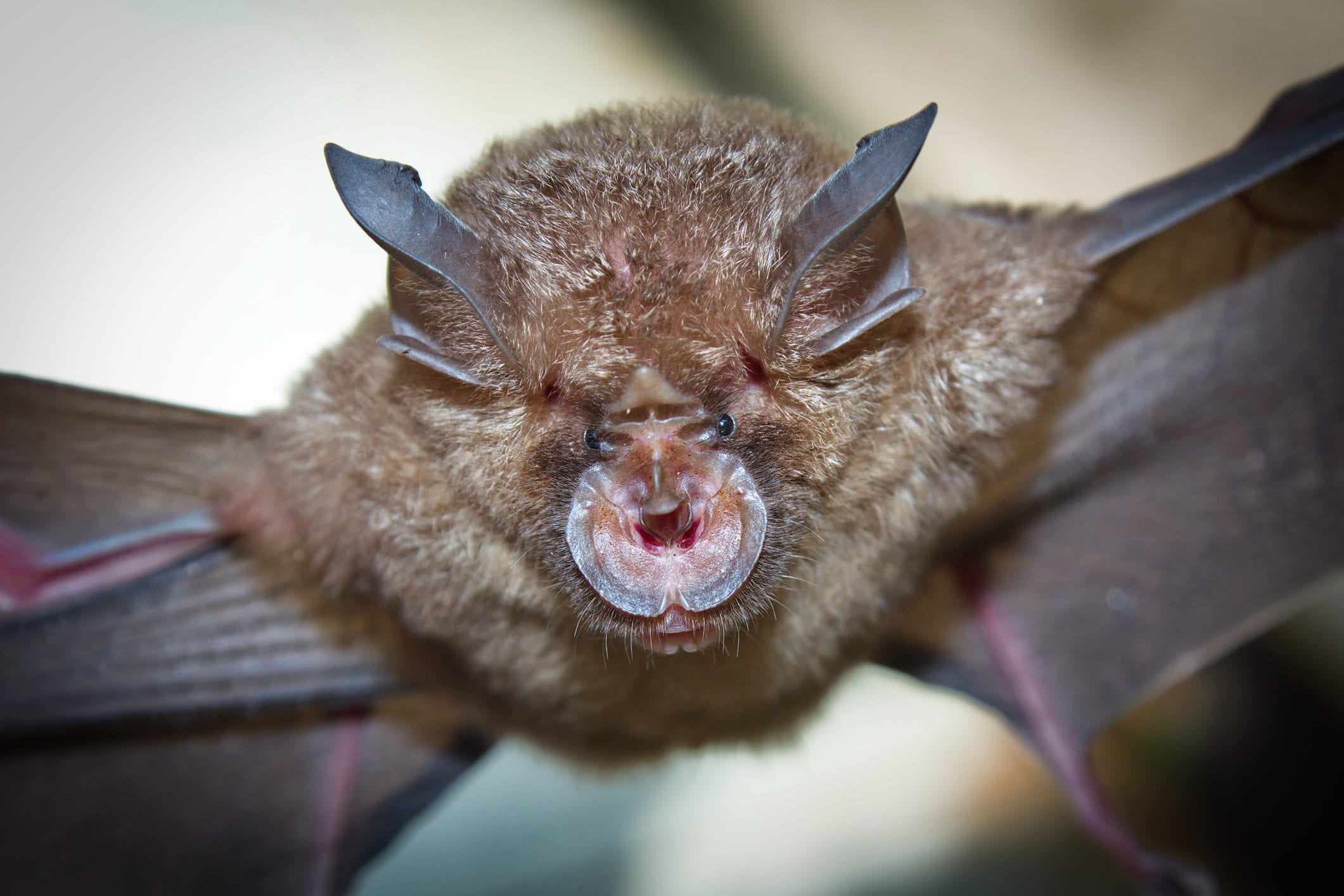
Strange wrinkles, protruding flaps and complex cartilage structures: the Facce of night bats They are at least bizarre and have contributed to the reputation of “monstrosity” they have in the eyes of many people. However, this apparent strangeness, like many in the natural world, would have an evolutionary motivation: several studies have in fact theorized that these complex faces would help the bats a issue and direct the sounds, acting as defectors and resonance coffers during theeco -termination, The ability to use the echoes of the sounds they emit to make a sort of map of the surrounding environment thanks to which to orient themselves. It would therefore be an adaptation for survival, that every species of bat – and there are many – has declined in its own way. Other facial offshoots found in the chiroteri could instead have a non -auditory sensory purpose, but which still remains unknown.
The faces of the night bats have evolved to improve the ceremony
Equipped with small pin pointed eyes, the night bats have in most cases one bad view. To orient themselves and hunt, they therefore use ultrasound, which are able to issue from the mouth or nose depending on the species. These shouts with a high frequency, not audible from the human ear, bounce on the environment and return to the ears of the bat, which is thus able to identify the position of obstacles and prey. The pipistrelli earsalso often strategically positioned on the face and full of deformations and skin flaps, I am able to respond and adapt in a very precise way to the return signal, offering an example of what is probably the most sophisticated auditory system in the animal world. But if having enormous and protruding ears offers an obvious advantage for the reception of ultrasounds, understanding the purpose of the complex facial structures of the bats was less immediate. The hypothesis that these structures were somehow involved in theeco -termination It was confirmed by recent studies.
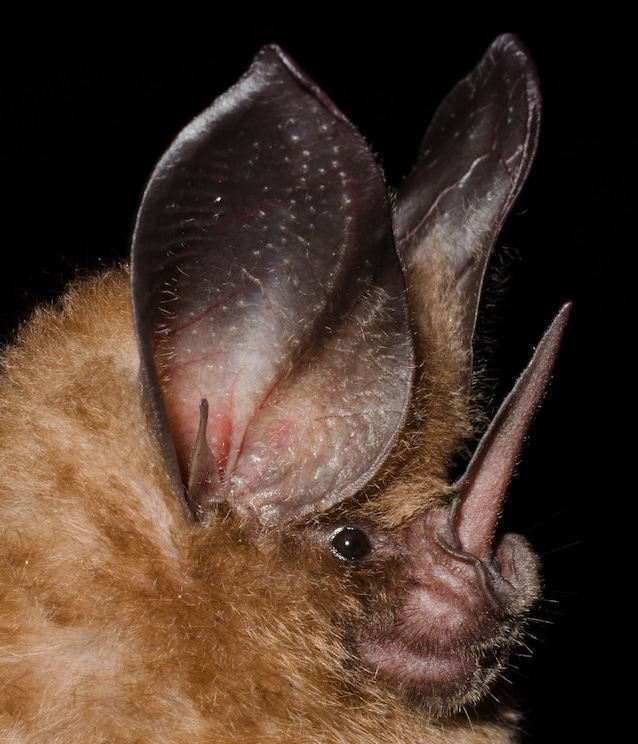
The horse iron bats, so called precisely for the shape of the protuberance around their nose, use it as a resonance chamber for amplify and concentrate the sound radius who emit. It was also discovered that the “nasal leaf”, an elongated structure that part of the typical nose of many chiropteri who emit ultrasound from the nostrils, is able to vibrate at different frequencies: By moving and reducing the nasal leaf, the bats thus manages to modulate the frequency and direction of the ultrasounds with more precise. Certain species of bats seem to be more capable of others in this modulation, according to the ecological niche Occupied: the two species of South American bats Micronycteris microtis And Phyllostomus Discolor They are related to each other and have a very similar nose, yet the first – which feeds on flying insects – manages to focus much better the sound ray through the nasal leaf than the second, which instead prefers a nectar diet.
Other studies on the protuberance of the face and lips of the bat Nocritio LEPORINUS they made one hypothesize one possible sensory function: In fact, they are areas rich in hair and nerve endings. The presence of specialized cells and complex nerve connections suggested that these can act as a dedicated sensory areas, non -sound typebut their role still remains unknown.
The enormous diversity of bats
Curiously, there seems to be no direct relationship between the parameters of the ultrasound issued by bats and their nasal and facial structures: a study by the University of Nebraska instead found how there is one great variabilitywith similar forms associated with different sound rays and vice versa. This discovery induces a reflection of the great biodiversity of bats: Chirotteri, in fact, are the second group of mammals by number of species, second only to rodents and include Over 1400 species different, or 20% of the species of mammals currently known.
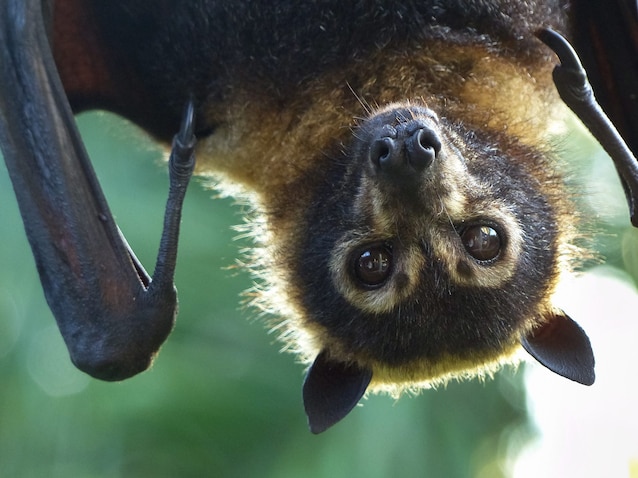
This variability can be found precisely in the forms of their skull, their faces and in specific adaptations related to their diet. In fact, it is not surprising that the Flying foxes and other daytime bats appear to us much more “normal“Of the night ones: their diet is mostly frugivorous (they feed on fruit or seeds) and not relying on the ultrasounds to procure food, but their sight, their faces are without bizarre leather propagations, and instead resemble much more to those of rodents and small carnivorous mammals.
