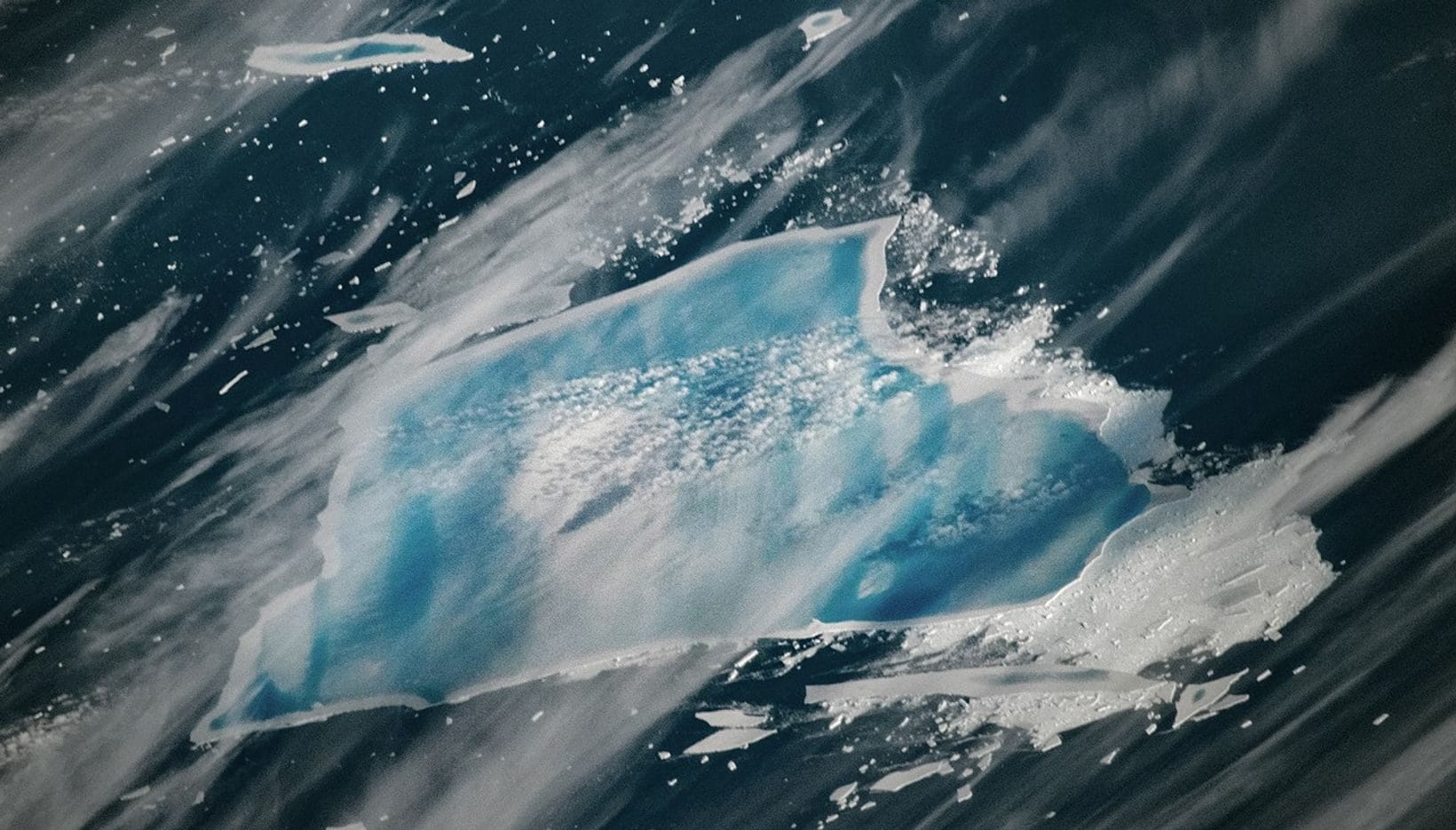
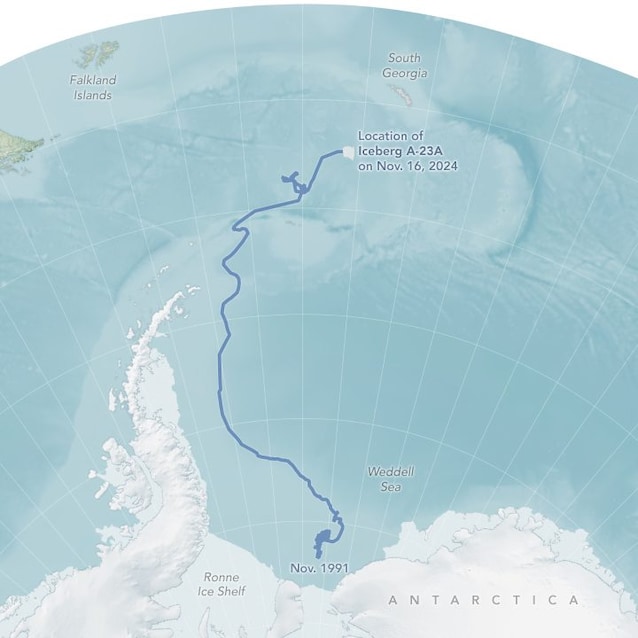
The A23a iceberg, one of the largest and longest-lived ever observed in the world, melting it became blue and after 40 years of its formation it is on the verge of disintegrate completely. After breaking away from Antarctica in 1986, it ran aground for a long time and several times on its journey north, until in 2025 it arrived near the island of South Georgia. Now, while it is drifting in the South Atlanticbetween the island and the eastern tip of South America, headed towards the so-called “Iceberg cemetery“, shows a notable accumulation of melt water on the surface. A raised external edge of ice prevents the flow of the latter into the sea: the result is a blue water “pool”. almost as big as Rome.
How the A23a iceberg, the giant of Antarctica, has changed
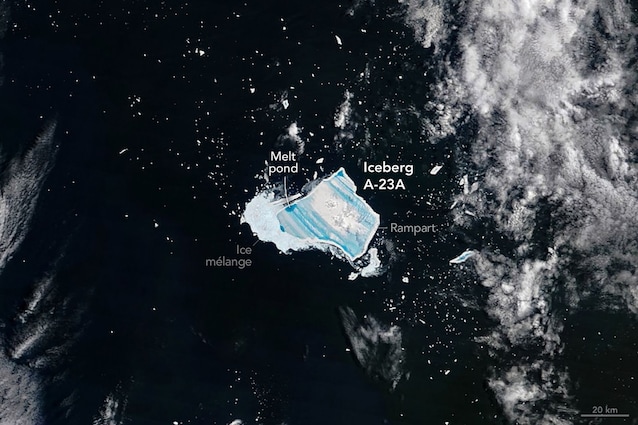
Originally, when the A23a iceberg broke away from the Antarctic ice sheet, it had a surface area of approximately 4000km2 and it was the largest tabular iceberg in the world. Until January 2025 it still extended for 3500 km2 but, as it advanced towards South Georgia, transported by the Antarctic Circumpolar Current, it encountered warmer waters which began to cause its disintegration. To August 2025 its surface area had shrunk to 1700km2while many fragments drifted. At the beginning of January 2026 a further reduction was detected: now the iceberg extends only for 1182 km2. It was immortalized by NASA’s Terra satellitewith its MODIS tool (Moderate Resolution Imaging Spectroradiometer). The satellite images, in addition to showing its small size, highlight its new color: the iceberg, from white, has become largely blue.
Why the world’s largest iceberg turned blue
What caused the iceberg’s color change was theaccumulation of melt water above its surface. The water, in fact, is unable to flow into the ocean due to the presence of raised outer edges of icewhich have the effect of containing it. From the images in some areas the blue is more intense because here the water is digging the ice deeply, accumulating in the fractures and opening them even further. The phenomenon accelerates the disintegration of the iceberg and the detachment of blocks. A’lighter areaobservable from the images, could have been created because the water, accumulating, exerted such pressure that it managed to break through the edge of the ice and pour into the sea. The iceberg is also marked by long blue and white streaks: grooves along which melt water is channeled, which can be traced back to hundreds of years ago when the ice was part of a continental glacier that flowed over the rocks of Antarctica.
According to experts, evidence suggests that the iceberg may disintegrate completely within a few days or weeks. “I certainly don’t expect the A-23A to hold up through the austral summer” says glaciologist Shuman of the University of Maryland, pointing out that the season usually brings warmer air and water temperatures. Currently the iceberg is already in waters whose temperature reaches 3 °C and the currents are pushing it towards even warmer waters, where many icebergs from Antarctica are known to melt: the so-calledIceberg cemetery”.
