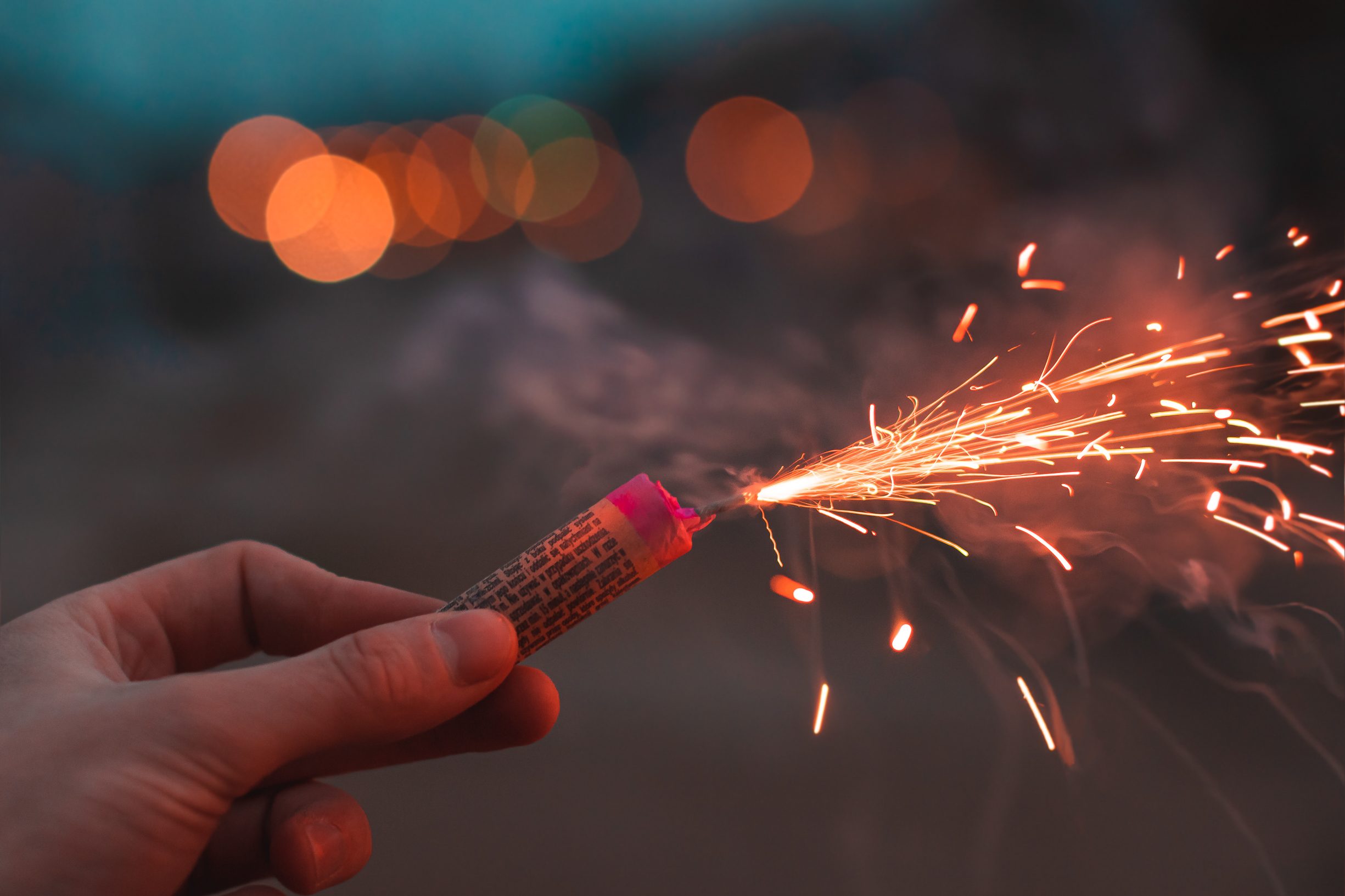
The classic “bangs” we hear on New Year’s Eve are the result of a reaction of explosion extremely rapid: a real “boom” coming from those candles, whether large or small, called firecrackers. Inside them there is a mixture of chemicals, including gunpowder, which, once ignited, burns quickly and violently producing large quantities of hot gases. Since the gases that evolve are initially confined in the small volume of the candle, the pressure increases until it breaks the casing, generating noise and a pressure wave: in short, the bang which entertains young and old alike. The key point is this: beyond the mixture of explosionwhat sets off the firecracker is precisely the small volume which prevents the gases from “escaping away”. When a gas develops in a closed environment, especially if small, the pressure increases and… crack: the casing breaks with the classic “bang”.
Attention: Firecrackers are explosive and can cause serious damage if used improperly. Use them only safely, following local instructions and regulations.
What’s inside a firecracker: the pyrotechnic mixture
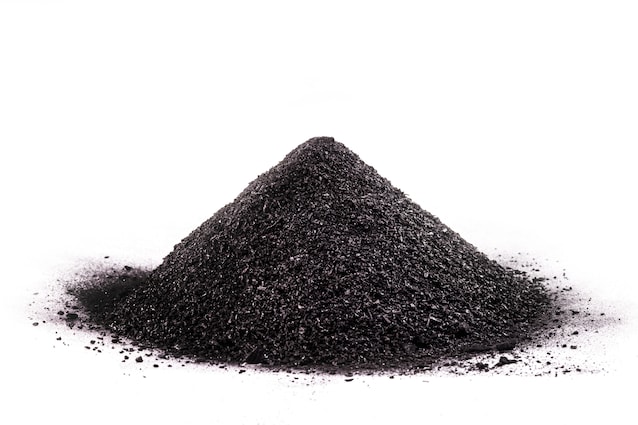
The typical composition of firecrackers derives from the classical black powder (or gunpowder), a mixture consisting mainly of:
- potassium nitrate (KNO3)which acts as oxidizing;
- carbon (coal), which acts as fuel;
- sulfurThat lower the temperature ignition e accelerate the reaction.
In some modern firecrackers they are also added metal powderslike thealuminumwhich by oxidizing contribute to further increasing the energy released and the brightness for an even more scenic effect.
The explosion: what happens when we light the fuse
When the mixture comes turned onpotassium nitrate decomposes, releasing oxygen which allows the combustion of carbon and sulfur even in the absence of atmospheric oxygen. Basically, potassium nitrate provides oxygen (which replaces that of air), necessary to oxidize (burn) coal in a combustion reaction. Just like other textbook explosions, we go from less stable compounds (such as potassium nitrate once heated) to more “firm” gaseous molecules such as nitrogen (N2), carbon dioxide (CO2) and sulphurous (SO2).
The combustion of these mixtures is an extremely rapid and strongly reaction exothermicwhich produces, that is, high temperatures in a very short time. By changing the size of the black powder grains or the proportion between the various components of the mixture, they can be obtained different “explosive” effectslike a more or less powerful explosion.
Confinement, pressure and energy: why the firecracker “goes off”
The combustion of the pyrotechnic mixture produces hot gases which tend to expand rapidly in the surrounding environment. If the reaction occurred in the open air, the effect would be limited to a flame that goes out once the fuel runs out. In the firecracker, however, the mixture is confined in a paper or cardboard envelope that retains the gases for a fraction of a second. This brief confinement is sufficient to increase the internal pressure to breaking of the casing: it’s like when you were a child when you blew up plastic bags, with the difference that a truly vigorous reaction takes place inside the firecracker. To all this, we add one external fuse long enough to obtain a “controlled start” and… have time to escape!
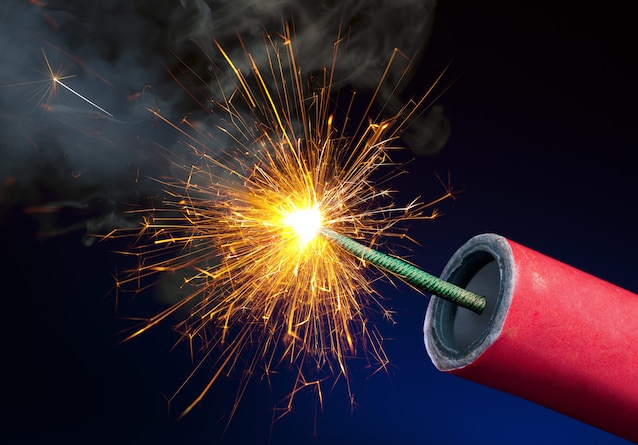
When the container gives way, the energy accumulated by the compressed gas suddenly breaks free, converting into a wave of pressure and sound energy, which we perceive as the characteristic “bang”. This is why even the smallest firecrackers (greater confinement) produce deafening bangs, despite containing little pyrotechnic mixture… well, now that you know, on New Year’s Eve also watch out for mini-cracklings!
Explosives, deflagration and detonation: what “exploding” really means
A explosive it is a substance capable of reacting very quickly by developing large quantities of heat and gas, thus generating a sudden increase in pressure. We are talking about chemical substances which, once “triggered”, become extremely unstable and they decompose quickly in gaseous molecules far more stable, such as carbon dioxide (CO2) or molecular nitrogen (N2).
When we talk about explosions, the term explosion is too generic: there is a distinction between detonation And explosionterms known but often used in the wrong way. In detonation, the reaction propagates to speed greater than that of sound and is accompanied by avery intense shock wave: this is the case of military and industrial explosives.
In deflagration, however, the reaction propagates at speed subsoniclower than that of sound, producing heat and gas but without an intense shock wave. Simply put, it is as if the explosion is more delicate, but not harmless, just like in the case of firecrackers. In explosions, the violence of the explosion depends largely on the confinement of the reactive material: the more closed the system is, the greater the pressure developed and the greater the bang we hear. The firecracker is a deflagrating explosive: when triggered, the mixture burns rapidly, developing a lot of heat, but its violence mostly comes from the confinement of the explosive process in a small volume.
Sources
Treccani Encyclopedia, Explosive entry National Fire Protection Association (NFPA), Explosions vs Deflagrations vs Detonations
JA Conkling, C. Mocella, Chemistry of Pyrotechnics: Basic Principles and Theory, CRC Press
Forbes, T. P., & Verkouteren, J. R. (2019). Forensic Analysis and Differentiation of Black Powder and Black Powder Substitute Chemical Signatures by Infrared Thermal Desorption-DART-MS. Analytical Chemistry, 91(1), 1089–1097 Bezemer KDB, Forbes TP, Hulsbergen AWC, Verkouteren J, Krauss ST, Koeberg M, Schoenmakers PJ, Gillen G, van Asten AC. Emerging techniques for the detection of pyrotechnic residues from seized postal packages containing fireworks. Forensic Sci Int. 2020 Mar;308:110160. Anthony P. Shaw, Jay C. Poret, Robert A. Gilbert, Jared D. Moretti, Jesse J. Sabatini, Karl D. Oyler, Gary Chen, Pyrotechnic Smoke Compositions Containing Boron Carbide Chris Mocella, ACS webinars, Advanced Pyrotechnics: Flash, Sound, and Smoke, L.-Q. Wang, X.-J. Shi, W.-J. Wang, Studies on thermal stability of pyrotechnic compositions, 2014, Journal of Beijing Institute of Technology (English Edition) 23:192-198 Jixuan Jiao et al., Energy release characteristics of confined explosives at varying violence levels, 2025 MEHRA, S., MAWARI, G., KUMAR, N., KUMAR DAGA, M., SINGH, MM, JOSHI, TK, GARGAVA, P., BHATTACHARJEE, M., SHUKLA, V. K., JHA, M. K., SARMA, M. P., & KUNWAR, A. (2022). ECOFRIENDLY (GREEN) FIRECRACKERS VS OLD FIRECRACKERS AND THEIR HEALTH EFFECTS: A SYSTEMIC REVIEW. Pollution Research, 1095–1105 Manikandan, R., & Rajesh, S. (2019). Fabrications of Effluence Free Fire Cracker using Pyrotechnic Chemical Composition. International Journal of Engineering and Advanced Technology, 9(1s4), 687–690
