
Do you know that irresistible desire to stay at home, away from everything and everyone, that overcomes us when we are sick? According to a new study conducted by MIT (Massachusetts Institute of Technology), published in the well-known journal Cellit would not be a simple sensation nor a side effect of the feverish exhaustionbut of a real one evolutionary stratagem implemented by our body to limit the spread of infectious diseases. During the fever, in fact, some cytokines (inflammatory molecules produced by our body when we are sick) seem to modulate specific areas of the brain involved in social interactionsleading us to prefer a quiet evening in the company of our favorite series to an outing with friends.
IL-1β: the “postman” that pushes us into isolation when we are sick
Back pain, general exhaustion, migraines: these symptoms alone, typical of fever, would be enough to justify our lack of desire to go out and socialize when we are sick. Yet, to lead what we could define as a real ‘“feverious apathy” it could be a much more specific mechanism. But what is it, exactly?
To find out, MIT researchers began by studying the cytokinesmolecules produced by the immune system when we are sick that act as real “postmen” of the organismdelivering specific messages to organs and tissues, to prompt our body to fight the infection. By administering into the brain 21 different cytokines to a group of mice and observing their reactions, scientists have identified the key messenger in theinterleukin 1β (IL-1β). This molecule, once administered, caused the mice to behave like feverish animals, reducing themotor activityprobably due to the general malaiseand pushing them to move away from their “mates”. In short, a bit like when we give up an aperitif in the center with friends for hide under the covers when we are sick.
Fever-related exhaustion is not the only cause of feverish apathy
Just as every letter has its recipient, IL-1β delivers its message by recognizing specific receptors (IL-1R1) located in specific areas of the brain. Using molecular probes (real gods “chemical detectives” capable of recognizing specific molecules) researchers have identified a great abundance of these receptors in the neurons of the dorsal raphe nuclei, a region of the brain rich in neurons that produce serotonina neurotransmitter that plays a crucial role in regulation of social behaviors.
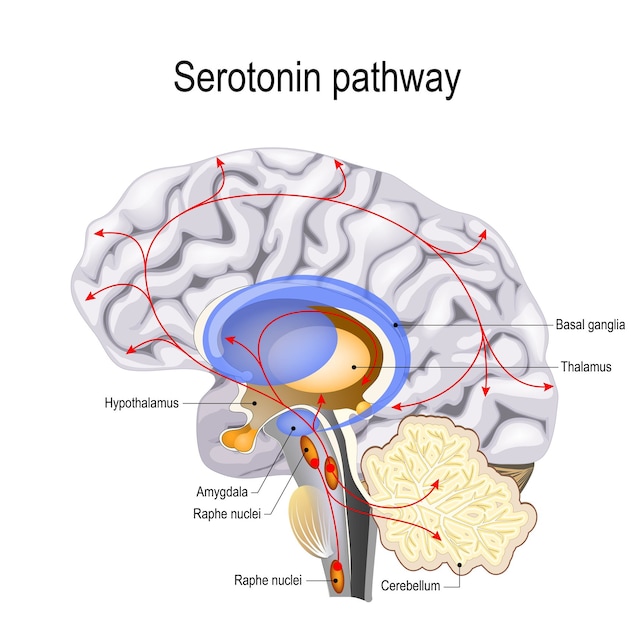
Confirming its key role when this region came artificially activatedthe mice showed the same motor and social deficits induced by IL-1β, confirming that it is its brain target. But above all, mice genetically deprived of the receptorafter IL-1β administration, continued to be hypoactive, but they no longer isolated themselves from their classmatesdemonstrating that feverish apathy is not a simple effect of pain, but a real trick of the brain, which amplifies our desire to be alone when we are sick.
The importance of the discovery of the MIT study
Humans (like many other mammals) are a highly social species. On the other hand, being together and collaborating to defend ourselves from predators or to build safer shelters was a great thing evolutionary advantagebut it also carries a significant risk: it favors transmission of infectious diseases.
However, nature seems to have developed mechanisms that push our brain to distance ourselves from our peers when we are sick. Sort of “instinctive quarantine” which not only allows us to rest and heal, but it also protects the entire group. In short, the next time you turn down a friend’s invitation when you’re not feeling well, you can reply, “It’s not me, it’s my brain trying to protect you.”
