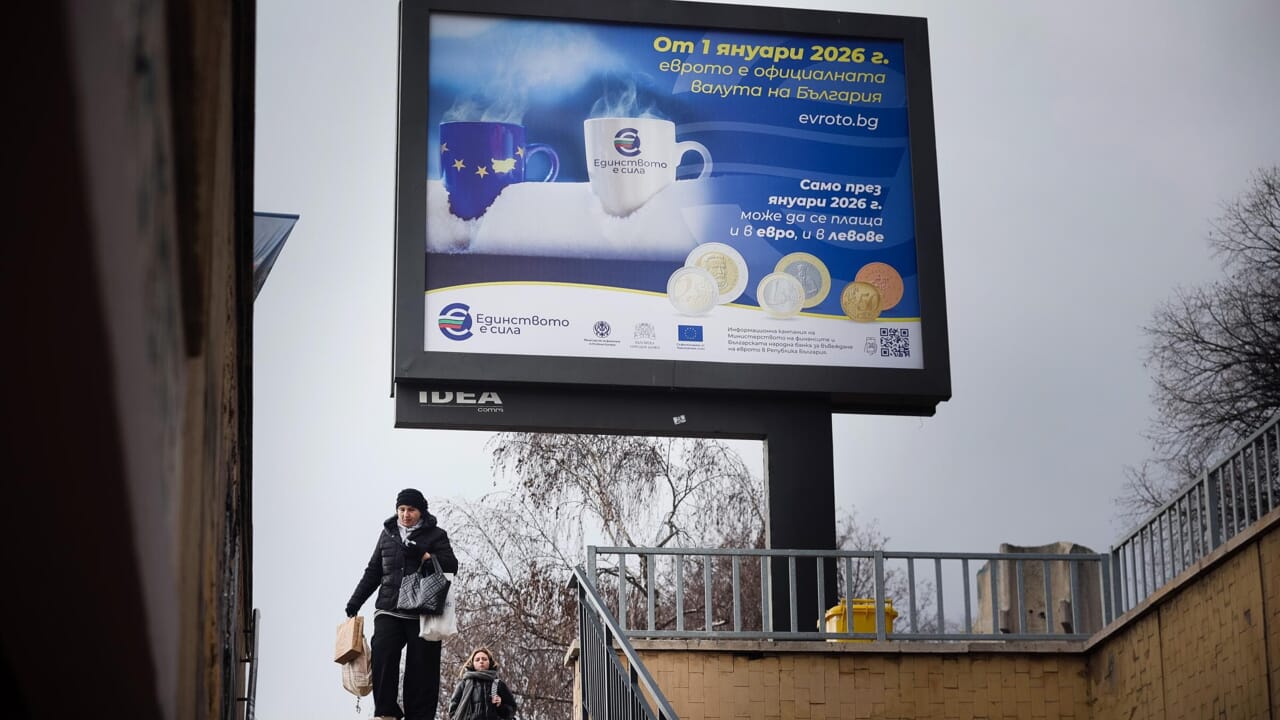
The Eurozone will have a new tenant. Bulgaria will adopt the euro from tomorrow, 1 January 2026, definitively saying goodbye to the old lev. For supporters of the transition to the single currency it is a decisive move to support the country – which is the poorest in the Union, which it joined in 2007 – to support the economy and to have a “shield” against Russia. But for opponents, the introduction of the euro will have devastating effects on prices, especially affecting citizens of the poorest rural areas of Bulgaria, precisely where the pro-Russian far right has long fueled doubts and protests against the government in Sofia.
What will change for the Bulgarian economy
The images on the coins will remain the same: a rock sculpture, the patron saint, a friar-patriot. What will change will be the currency and also the daily life of Bulgaria, which for some time – following the hyperinflation of the 1990s – had started the long process of joining the Eurozone. Sofia had linked the lev first to the German mark, and then directly to the euro, thus already de facto dependent on the ECB. Now, however, Bulgaria will be able to participate in the decision-making process within the monetary union. ECB President Christine Lagarde, only last month, underlined the advantages of the euro for Bulgaria: “More fluid trade, lower financing costs, more stable prices”, she explained, with savings of around 500 million euros a year in exchange commissions for businesses and a substantial boost for tourism, a sector which alone is worth 8 percent of Bulgaria’s GDP. The increases in consumer prices, again according to Lagarde, will be modest – generally between 0.2 and 0.4% – and in any case will not last long.
Bulgarians’ skepticism about price increases
The reassurances do not dampen citizens’ fears and skepticism: according to Eurobarometer, almost half (49%) of Bulgarians would have willingly kept the lev in their pockets, which already seemed to be shrinking month after month. According to the local Istat, last November the supermarket receipt increased by 5 percent compared to the previous year. In short, inflation makes itself felt with an average salary that is just over 1,200 euros. To ensure a painless transition to the single currency, the Sofia parliament will this year launch supervisory bodies authorized to investigate increases and also to monitor the feared and unjustified surges in the single currency. Strategies to make a transition more acceptable which also has, by broadening our gaze, a clear geopolitical meaning: the euro brings us closer to the West and further away from Moscow.
