Campiello Prize, but the fiction no longer exists?
“They can compete” at the Campiello prize “Italian works of narrative (novels or collections of stories)” (…) “works of an wise nature cannot compete”. Thus states article 5 of the regulation of the prestigious literary prize established (in 1962) and promoted by the industrialists of Veneto. That the romance horizon has gradually moved away, in recent years, from ‘classic’ stylistic features and has embraced, or rather, has flattened on gender trespassing is a known topic, but this year, in a higher way compared to the recent past, it has been chosen to include in the finalist cinquina at least three works that have very little narrative. If not nothing.
On closer inspection, in the 63rd edition of the Campiello Prize – which will see the prestigious ‘Vera da Pozzo’ award tonight to the author of the book most voted by the jury of the 300 readers – it was chosen to privilege what the regulation would like to exclude: the wise dimension based on careful historiographic research. The vote of the jurors is unquestionable, of course, but once the reading of the five finalist novels – pardon, books – is finished – is it spontaneous to ask “but why”? Why compose an cinquina in which the narrative dimension really touched, clearly, only by two works?
A partial evaluation can be made by taking up the words of Federico Bertoni, professor of literature theory at the University of Bologna. Member of the jury of the writers, in his intervention that preceded the vote of the Cinquina last May at Palazzo Bo in Padua, highlighted a rather deficit state of health of contemporary Italian literature. He pointed the finger, in particular, on “excessive and perhaps excessive production” in which “the weaving of the page denotes narrative conformism” and still “great use of stereotypes, phrases made, homologated imaginary, a little easy themes to catch the public”. This followed an appeal to the publishing houses, perhaps more interested in “making ends meet” and chasing the reader that allows large sales, rather than a production that can really do the good of literature.
So what? Do you necessarily have to include works that do not fully satisfy the criteria of the regulation in Cinquina to propose a rose of finalists who do not make the Campiello prize disfigured? It is not to me to judge, I only give an outdoor opinion that reads and follows with passion the vicissitudes of the contemporary Italian authors, but I am rather certain that between May 2024 and April 2025, in the bookstore, several works of narrative have come out that would certainly not have understood the blazon, far from it.
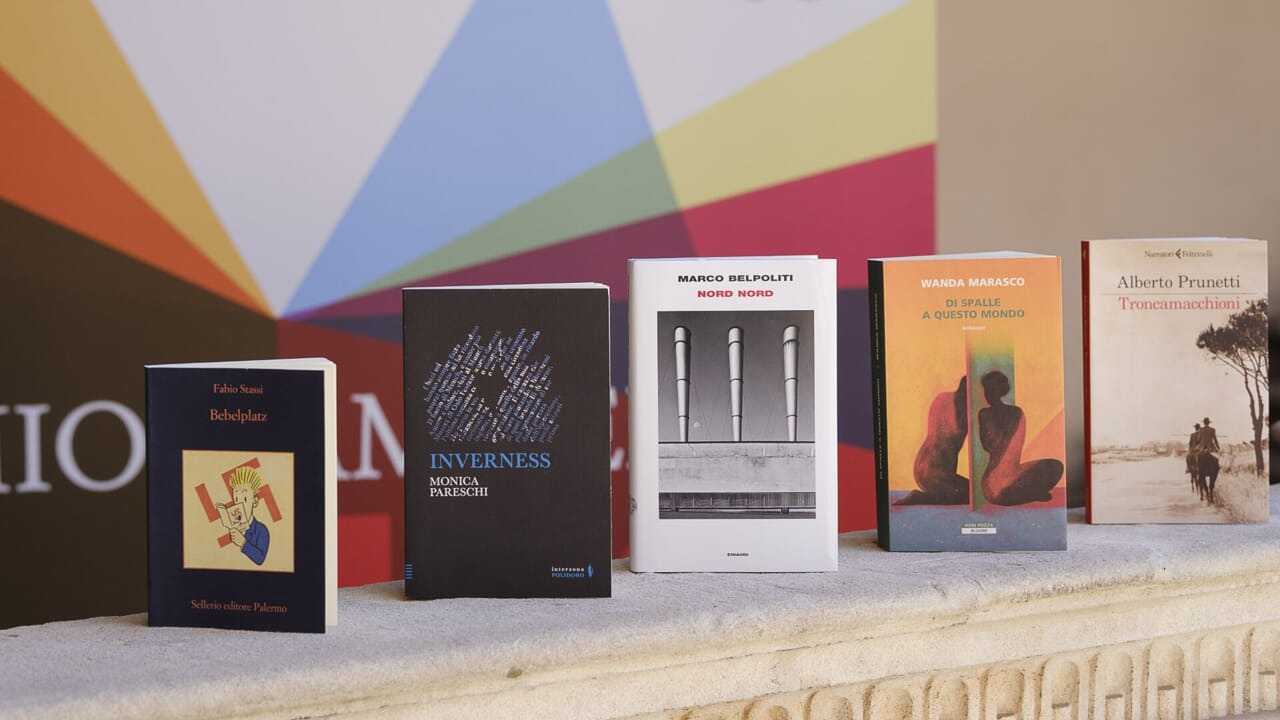
This of mine, originally, should have been a point of view as dispassionate as possible on the finalist works. I wanted to indicate which book – in my opinion and only in my opinion – deserves to be awarded, this year, of the Campiello Prize. A personal evaluation that gaming goes out of exclusion. The finalist works, in order of voting of the jurors, are: From behind this world (Neri Pozza) by Wanda Marasco, Bebelplatz (Sellerio) by Fabio Stassi, Inverness (Polidoro) by Monica Pareschi, North north (Einaudi) by Marco Belpoliti e Troncamacchioni (Feltrinelli) by Alberto Prunetti.
To kidnap me more than any other, from the first page, it was definitely Bebelplatz. Stassi’s is a praise to the power of literature, which has always been terror of dictatorships in every corner of the world. A pretext of reflection and research is on the evening of May 10, 1933, when the Nazis, in Berlin – in the Bebelplatz which gives the title to the Opera – gave the flames over 20 thousand books deemed deeply dangerous for the regime. Start from there and from the proscription list in which the books of 5 Italian authors were also included (of which it speaks widely, trying to motivate the concerns, on the matter, of the regime fanatics). It touches other places and squares, other Nazi bonfires and other regimes, dating back to well before the 1930s of the last century. A powerful book of reflection and research that despite the issue is of very pleasant reading. However, alas, it has nothing of narrative.
The same careful research and reconstruction is found in Troncamacchioni by Alberto Prunetti, in which he dominates is a historical story that highlights the events of Men and Women of the Upper Maremma in the preceding years, lead and trespass in the twenty years. They are anarchists, bandits, deserters and communists who have been forced, in their existence, to come forward ‘to Troncamacchioni’, that is, going straight on their way, living on strength and arrogance. It is the historiographic story of miners and peasants who were not afraid to get their hands dirty and rebel in their own way. Prunetti says that he has granted himself of licenses, also trespassing in fantasy – where historiographic documents and testimonies did not return feedback. Not enough to consider Troncamacchioni fiction.
And therefore North northin which Marco Belpoliti thinks about a relative, changeable and uncertain concept that is that of ‘North’, precisely. And he does it (also) through the memories and lives of photographers, artists and friends, a sort of guidelines that have accompanied him over the years. The author tells of Brianza, Milan of today and yesterday and his ‘contrasts’, taking ‘narrative’ snapshots in the area. North north It should – or could – be a geographical novel hidden on a solid autobiographical nucleus that Belpoliti – is my opinion – tries to disagree. It is very difficult for me to catalog this book as a novel, let’s ascribe it more generically to a travel literature, without more specific labels.
Narrative are definitely From behind this world by Wanda Marasco and the collection of stories Inverness by Monica Pareschi. The first is a historical novel, certainly based on sources and historiographic research like the previous ones, but deeply narrative. Marasco tells the last years of life of Ferdinando Palasciano, a Neapolitan surgeon, politician and precursor of the Red Cross. Appointed doctor of the Army of the two Sicilies, he found himself in Messina during the insurrectional motions of 1848. Contrary to the provisions of General Carlo Filangieri, the then 33 -year -old Palasciano worked to give medical care also to the enemies who remained injured during the fighting and was accused of insubordination. Despite the timely historical reconstructions From behind this world It is a novel that speaks above all of love – that between the doctor and his wife Olga, a noblewoman of Russian origin -, of loyalty, and still of mental illness, the one that cultured Palasciano in the last years of life and who led him to delight and be internally.
A story of non -trivial, profoundly psychological suffering, from which the impact that a person’s inner world can have on the closest people, in the case in this case consort, friends and colleagues, transpires. It is, more generally, a novel that reflects on the solitude of those who, taking up the title of the novel, finds themselves “from behind in the world” because it is fed by a deep vocation. Marasco packs a work of narrative of the past, at times complex from a linguistic point of view but still fully intelligible, perhaps with a style that sometimes exceeds in baroque. If I had to focus my 5 cents, I would do it on this novel.
It has a sharp writing Monica Pareschi, direct and evocative, is not afraid to use the tongue, it does so with extreme awareness, even in a raw way, without expanding in vulgarity. The eight stories that make up Inverness Relationships and loneliness, silences and incommunicability, desire and abuse are exploded: the author takes the reader with an emotional crescendo, alternates steps that exudate pain to moments of reflection and suggestion. Even in narrating the morbidity and cruelty inherent in relationships he manages to maintain a stylistic elegance, opting for a lexicon that sinks like a blade and does not leave indifferent. We are completely opposed to the Marasco’s novel: different types of storytelling, different genre, almost opposing stylistic choices. Fortunately, these two works make sense of a Campiello prize which, otherwise, would have remained completely emptied of its meaning.
