Crans-Montana: the arrogance of “I would have acted differently”
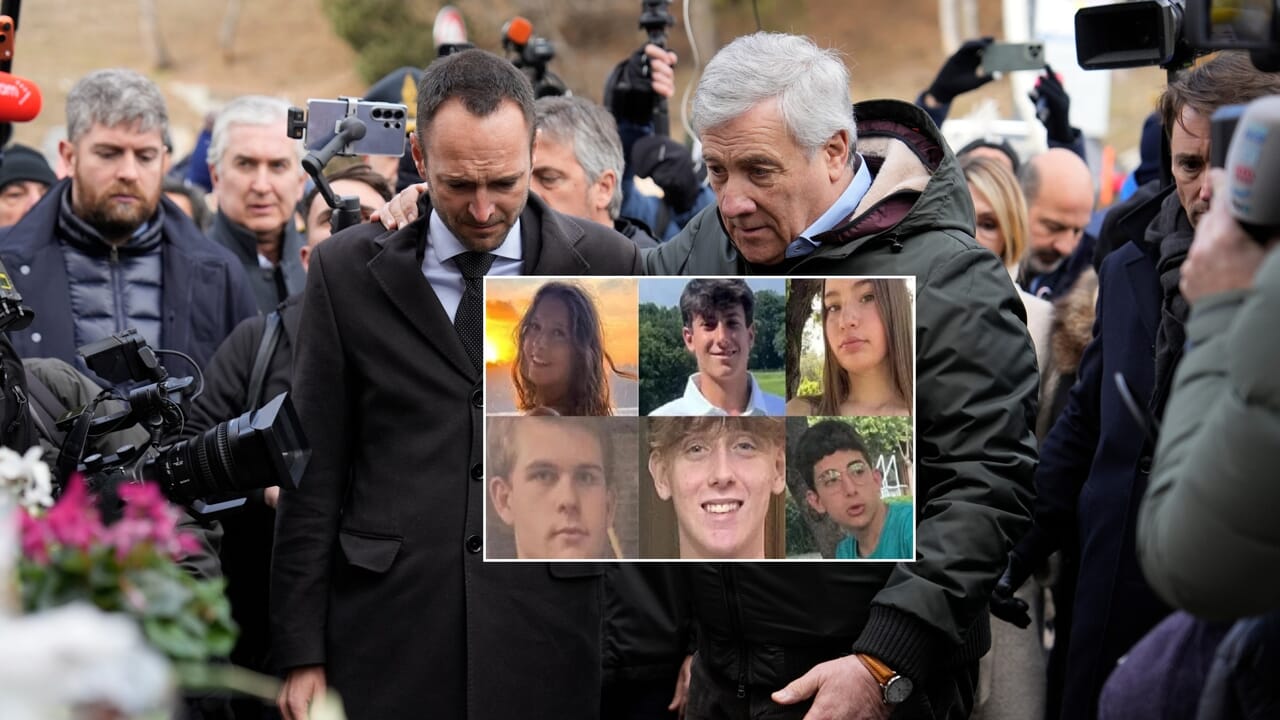
At the time of writing, the definitive number of victims has not yet been published, yet we already know that over forty people died in the tragedy in Crans-Montana, most of them very young. We can only try to empathize with the atrocious pain that family members are experiencing in these hours, in particular those parents who said goodbye to their children as they left the house, unaware that this would be the last time they would see them alive. It is inevitable that, in such dramatic circumstances, these parents may sink into the abyss of guilt, of “what would have happened if…”. “Maybe I should have stopped him from going out”, “maybe she was still too young to celebrate New Year’s Eve alone”.
The blame
Much less understandable, however, is that these accusations come from third parties, in particular from strangers on social media. In fact, at the same time as the news of the tragedy was spread, the usual dynamics of blaming the victims were triggered. The first concerns the video in which some boys are seen filming the fire with their smartphones. Many have read that behavior as yet more evidence of a youth “lobotomized” by social media, more worried about creating potentially viral content than trying to save themselves. There may be some truth in this consideration, but it must also be said that the fire spread rapidly and that it was not easy to immediately realize the gravity of what was happening. Some may have thought: “It’s just a small fire, soon someone from the club will arrive with a fire extinguisher and put it out.” Are we really so sure that, in their place, we would have reacted with greater clarity? And here the second accusation aimed at the victims comes into play: “They must have all been drunk and drugged, that’s why they didn’t have the time to escape.”
The right to one’s own experiences
Again this is pure speculation. And even if it were? Doesn’t a person have the right to unplug for an evening and let go, perhaps using some psychotropic substance? In Switzerland, among other things, from the age of 16 it is legal to buy wine and beer. Then, as mentioned, there are those who have pointed the finger at the parents, guilty of having allowed underage boys and girls to leave the house. This criticism also appears completely out of place, both considering the moment these families are experiencing and because this narrative reinforces a dangerous educational trend: that of hyper-protection and hyper-control. Is preventing a teenager from going out on New Year’s Eve to celebrate with friends in a club really the right choice? In hindsight, in this case, everyone would say yes.
But the truth is that there is nothing wrong with allowing a child to have their own social and developmental experiences; in fact, it would probably be much riskier to prevent him from doing so. If there is a culprit, this must be sought in the owners and managers of the place, who will have to demonstrate that the structure was up to standard and that the safety measures were adequate. So why do we continue to blame the victims? Perhaps because doing so gives us an illusion of control over events that terrify us, but which at the same time are almost impossible to predict.
Feeling superior
Or perhaps because we need to feel superior, to convince ourselves that we, in their place, as parents or as children, would have behaved better. We would have been smarter, quicker, more cautious, more courageous. Or again, that we would never have gone there, because we prefer to stay safe in our home, perhaps alone (a statement sometimes also dictated by social envy). In any case, we learn to respect the pain of others and to suspend judgment. Because, in the face of tragedies of this magnitude, the need to blame the victims often says more about our fears than about real responsibilities.
