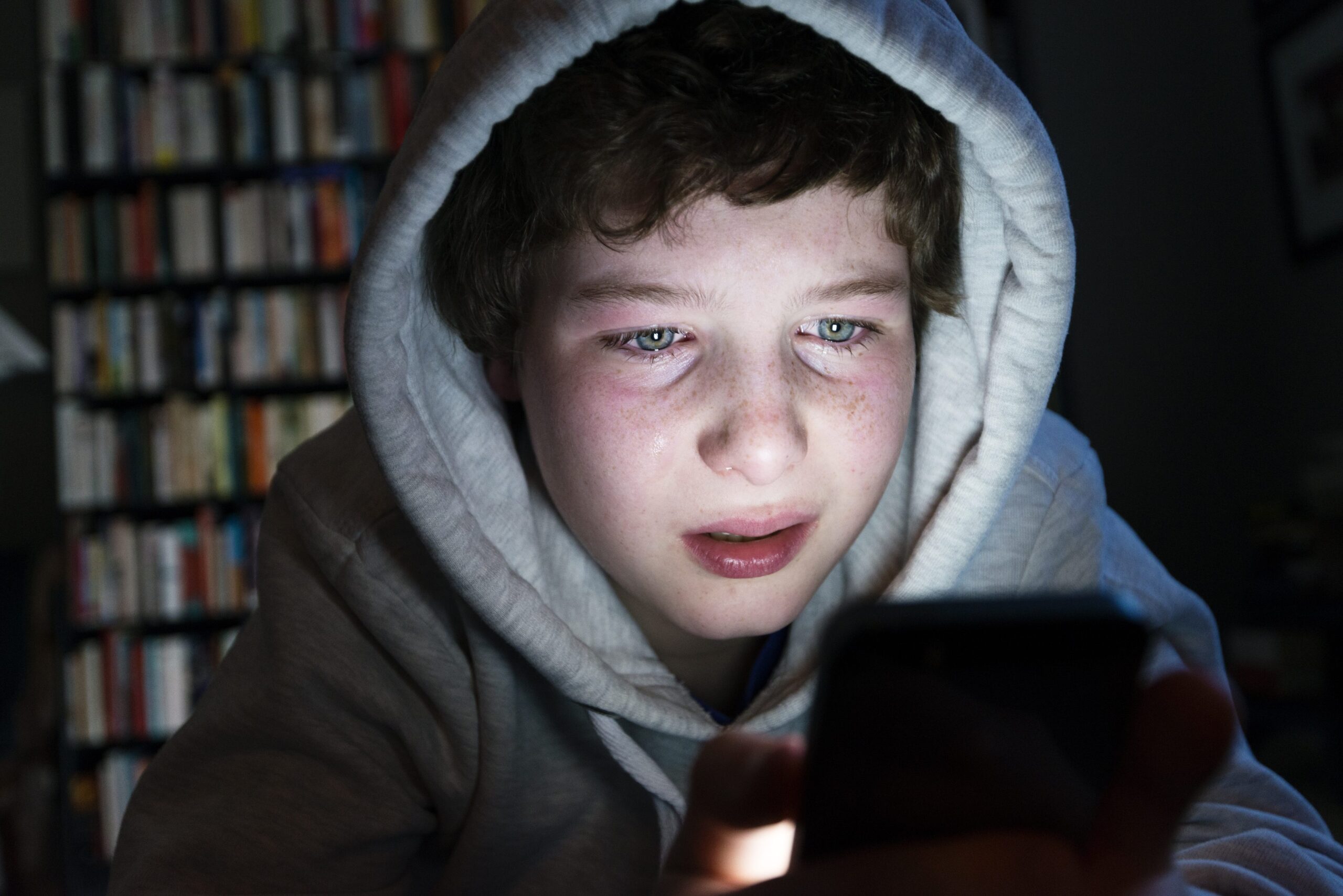
According to the investigation Istat Children and teenagers: behaviors, attitudes and future projectsThe 34% of the Italian boys between 11 to 19 years of age tried on their skin what it means to be a victim of at least one episode of cyberbullying. Let’s talk about 1.7 million of teenagers throughout Italy, with a prevalence of boys male and with foreign citizenship. In the 30% The cases of cyberbullying were also accompanied by offline offensive events. In Italy, the main law on cyberbullying is the Law no. 71 of 2017 which defines prevention and contrast measures for this phenomenon.
What is cyberbullying and why it is different from “traditional” bullying
In Italy, 90% of children between 11 and 19 years of age spend at least two hours a day online. However, between social networks, chats and messaging platforms risk of cyberbullying: a form of bullying that takes place online, through Offensive messages, insults, threats, humiliating photos or videos which are shared via SMS, email, chat or social and are repeated over time. In fact, the official data on cyberbullying are not included all those harassment acts that remain isolated over time. But every online click has a real weight. And sometimes it can hurt more than an invisible slap.
Compared to traditional face -to -face bullying (i.e. offline), cyberbullying then has some unique characteristics that make it even more difficult to deal with:
- Persistence: online content are more difficult to cancel and can re -emerge even after months or years
- Anonymity: those who attack can hide behind a nickname
- Amplification: a video can become viral in a few hours
But how much do we really know about this phenomenon?
The numbers of cyberbullying in Italy: the most affected are males
According to the Istat investigation, More than 1.7 million boys Between 11 and 19 years (about 1 teen out of 3) they suffered At least one offensive episode online during 2023 And the males said they had been more affected than females, with 7 percentage points of difference.
This gender gap is also reflected in the type of action suffered. The most common forms of online harassment are:
- Offenses and insults: 23.5%
- Social marginalization: 17.9%
- Defamation: 8%
The actions are not always only online. On the contrary: for almost 1 in 3 (30.1%) the harassing episodes also took place offline. In other words, Often the digital and offline bullying deeds feed each other.
A teenager on twelve (7.8%) was repeatedly victim of it onlineThus fall into the official definition of cyberbullying, also in this case more males (8.9%) than females (6.6%).
Foreign boys are the most vulnerable
Among the boys with foreign citizenship The situation is even more serious: almost 4 out of 10 have undergone at least one vexatious online episode. At the top of the list of the most affected communities there are Ukrainians (44.5%, in practice almost 1 in 2), followed by Chinese and Romanians (both at 42.8%), Moroccan (36.2%) and Albanians (35.2%).
In particular, Romanians and Ukrainians are the most at risk of both offline and online, more than the other minorities and Italians. Albanians, Moroccans and above all Chinese seem more exposed online than bullying in presence.
Here too a genreespecially among the Albanians: 39.5% males vs 30.2% females. However, while among the males Ukrainians are mainly to have suffered across it across the board (47.8%), among the females, the Chinese stand out (41.2% of cases).
But beyond the differences in citizenship or gender, behind each victim there is a real person and cyberbullying can have profound and lasting psychological consequences: isolation, anxiety, drop in self -esteem. So what to do if you suffer it? Do not respond hot, but save the tests (such as chat and screenshot), use reports and blocks and talk to a trusted adult. But it also serves to work upstream on digital education, empathy and awareness of the impact of their actions online. The network does not forget but we can choose to use it to build instead of hurting.
