Every time it’s like the first time. “Avatar: Fire and Ashes” is a feast for the eyes (but a little confusing)
In the history of cinema there is a before and an after Avatar. When James Cameron’s film arrived in theaters in 2009 it marked several changes of pace. The technological one: it was the first time that the performances of real actors were integrated so well within a virtual world. The spectacular one: previously there had never been something as immersive on screen as Pandora, the alien world on which the film is set, an imaginary world to be completely absorbed by through the revival of 3D. Grossing: it was the work with the highest box office ever, with almost 3 billion dollars (also achieved with releases and revivals over the years).
The point is: Avatar is not a saga like any other. It has set very high standards compared to which every other blockbuster pales in thought, it has built a narrative universe and created a cinematic experience different from all the others. An act of faith was taken. When a new film in the saga arrives then all this is not essential, but an acquired starting block. It was so for The Way of Water in 2023, it is so now with “Avatar: Fire and Ashes”, the third chapter in cinemas from 17 December.
Where we were
A work that picks up exactly where the second film ended (the two films were shot at the same time), therefore without too many summary ceremonies and immediately into the heart of things. A year after those events, Jake (Sam Worthington) and Neytiri (Zoe Saldaña, who has since become an Oscar winner for Emilia Pérez) are still mourning the loss of a child, while Kiri (Sigourney Weaver) discovers the special connection she has with the nature goddess Eywa.
However, the human colony on Pandora is still expanding and always wants more. In The Way of Water a liquid produced by local humpback whales (they will return) which extends life, in Fire and Ash a parasite which seems to allow the human body to adapt to the air of the planet. He is still at the head of the military expeditions, a Quaritch (Stephen Lang) only with an ‘avatar’ body and with motivations where orders are confused with personal matters.
Like its predecessors, Avatar: Fire and Ashes is also part of an archetypal and therefore highly symbolic narrative arc – a figure of strong thematic overexposure that has always caused it to be accused of didacticism and stereotype. Which Avatar instead exploits as an excellent blockbuster, that is, a film of entertainment and reflection of the world around it. An epic at the service of amazement, therefore in search of the great popular tale always expressed in the present – which also takes the risk of bordering on the ridiculous in certain exchanges that are not always very brilliant (“Bro, yes bro, tell me bro”).
The usual big themes
In the Way of Water there was family, identity and belonging. Here there are the winds of war and alliances between ideological extremisms, such as the colonialist who arms the enemy “tribes” of his enemy (i.e. the United States with the policy adopted between the Middle East and South America starting after the Second World War).
But at the same time it is a film full of things crammed inside, with an internal plot that is extremely intricate beyond measure and beyond what is necessary, because in the face of a track that is actually very simple. Frayed in several situations, with an extremely precarious narrative hold and entrusted to fragments: now we are here, now we are there. Avatar: Fire and Ashes is also mammoth in duration, three and a quarter hours. And the feeling is that the script written by Cameron, Rick Jaffa and Amanda Silver had even more. An imbalance in measuring the many nuances into which the film wants to slip, in the characters it wishes to question, placed as a piece of an enormous and overall certainly stunning mosaic.
In his hand he holds the bundle of themes that pass through tolerance towards “pink skin”, humans, and the usual reflections on the evolutionary transition between man and machine. Here pushed increasingly into an act of post-human conciliation between technique, nature and spirituality – Jake begs Quaritch to “see” through his new body, but Jack Champion’s Spider also plays a fundamental role.
A magnetic villain and a halfway opportunity
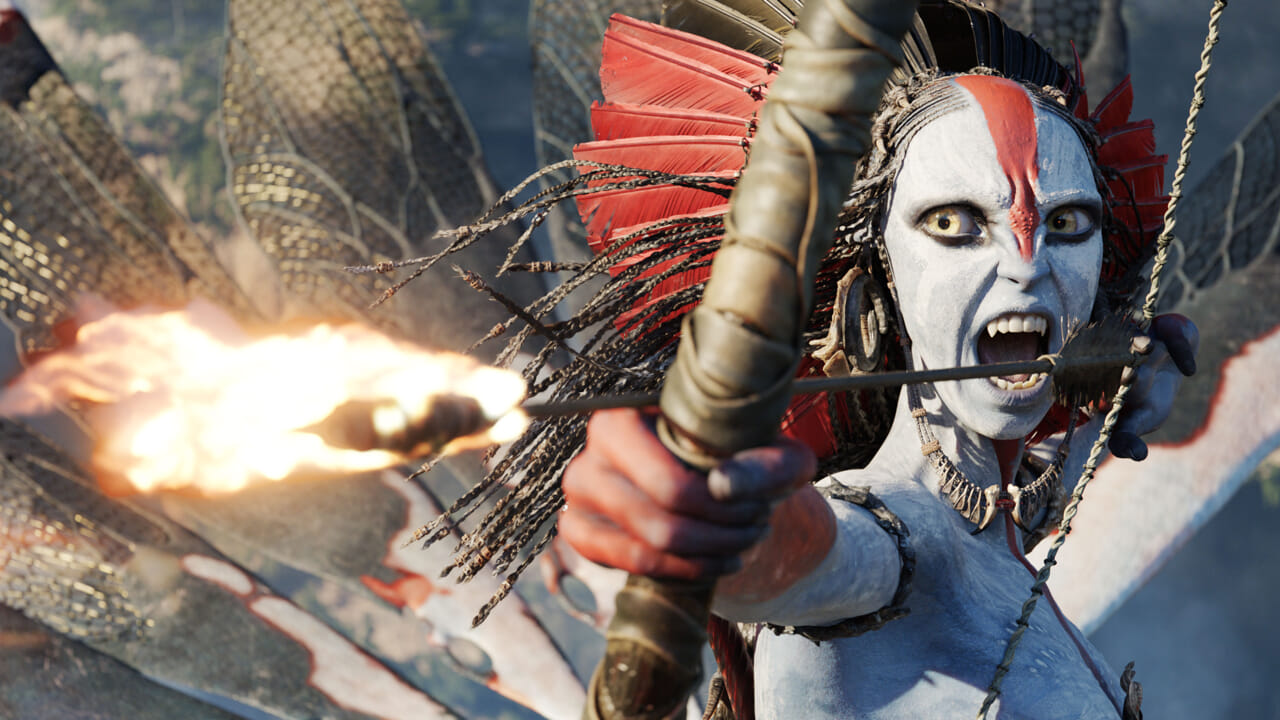
Again the generational and social rebellion, with the younger ones calling for resistance while their parents try to maintain the status quo. Then of invoked and cursed gods, of heresies, then of destructive fundamentalisms like that of which Varang (Oona Chaplin), a disturbing and magnetic villain, is the herald, but soon relegated to the background together with the “world” of which she is the bearer, subservient to the agendas of the colonizer. The latter is completely consistent with the underlying political-military story, which brings to the surface a more explosive, more frenetic film, more openly given over to the action and the visual story of the war clash.
Here, a great sin of Avatar: Fire and ash, however, lies in the fact that with its circular movements it soon ends up returning to the contexts already visited previously, offering too little of that “fire and ash” from which Varang and his people come. It is clear that “fire and ash” is then a metaphor for anger and resentment, not a subtitle for an excursion to other places of Pandora. However, that of the film is a retreat into the known which on the one hand makes it even clearer how it should be read in diptych to The Way of Water, but which on the other leaves a hint of bitterness.
To be romantic, at the end of the day two things remain unquestionable. Only Cameron can regularly and successfully revitalize 3D technology, between the coercive and the educational of the gaze – because it directs and imposes. And only Avatar, when you sit down to watch it in the theater, gives the sensation that it is as if you were doing it for the first time. That’s what cinema is for, right?
Rating: 7
undefined
