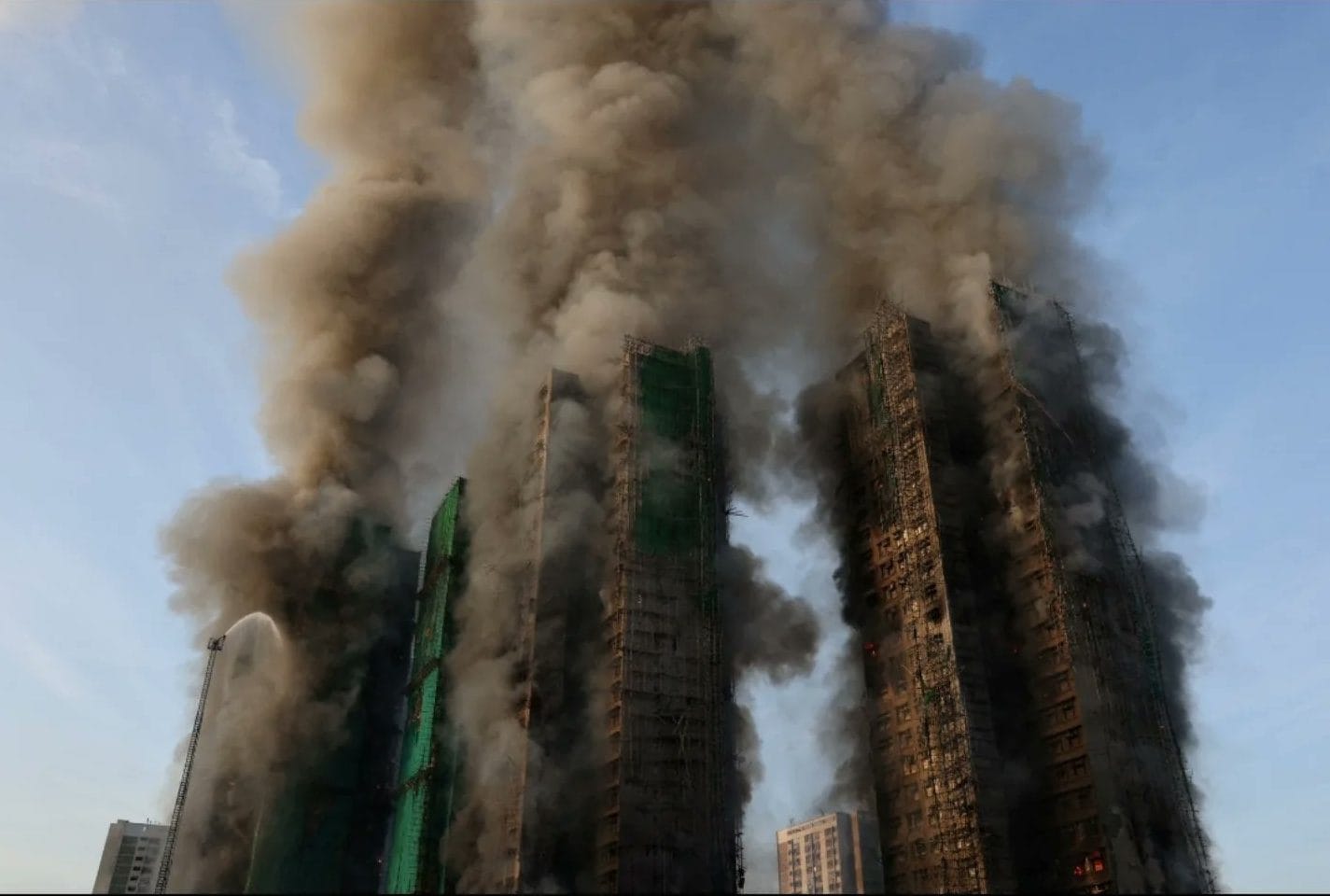
The images of thefire which devastated the skyscrapers in the residential complex of Wang Fuk Courtin the Tai Po district of Hong Kong (China), have traveled around the world. The firefighters managed to put out the flames 48 hours after the fire broke out: but how is it possible that the fire spread so quickly and why is there so much talk about the bamboo scaffolding and nets surrounding the buildings?
We interviewed the teacher Raffaella Endrizzi, professor at the Faculty of Architecture of Chinese University of Hong Kong, who explained to us what the requirements are for the use of bamboo in the construction sector, what are the other buildings in Hong Kong that have undergone similar works and what are the chances of this material being abandoned.
Professor, there are some requirements to be able to use bamboo for scaffolding in the construction sector?
Yes. Bamboo scaffolding is regulated by Code of Practice for Bamboo Scaffolding Safety and by regulations relating to protective nets, anchoring systems and complementary materials. The local scaffolders (the so-called sifu) they have developed an extraordinary skill in shaping bamboo directly in situ, creating structures that perfectly adhere to the building. This knowledge is part of the cultural heritage of Hong Kong and has contributed to the speed of construction in the city for decades.
However, in the case of the Tai Po fire — as confirmed by the authorities — the installed nets did not comply with fire safety standards. The use of non-certified materials or not fireproof represents a significant violation, because the network has a decisive role in the spread or containment of a fire. It should also be remembered that scaffolders must be certified, as bamboo erection requires very specific technical skills.
The authorities also clarified that other highly rated materials were also used in the renovation flammablesuch as expanded polystyrene to cover windows: this illegal practice meant that the fire spread extremely quickly.
What percentage is bamboo used? Is it combined with other materials such as metals?
In most cases the supporting structure is entirely made of bamboowhile metals are used for key components such as the anchor triangles that connect the scaffolding to the facade. The knots are today tied with sturdy black nylon strips, resistant to atmospheric agents; traditionally they were made with thin bamboo fibres. This hybrid system takes advantage of the extraordinary tensile strength and flexibility of bamboo, while ensuring stability through some metal elements.
Are there any other notable buildings in the city for which bamboo was used during construction?
Bamboo scaffolding has been used in many iconic buildings of Hong Kong: from residential complexes to commercial skyscrapers, from temples to cultural spaces. It is common to see bamboo scaffolding enveloping entire tens-story buildings — a practice that surprises many visitors, but is considered normal and reliable by local operators. Furthermore, bamboo is also often used in temporary contexts: festivals, stages, art installations and ephemeral structures.
At this point, in your opinion will there be a gradual abandonment of bamboo as a material?
The fire highlighted systemic problems in the construction industry, which often operates according to a logic of profit rather than one safety-oriented approach. In the case of the Tai Po fire, the construction company tried to enrich itself by using cheap materials. Furthermore, it is a very bureaucratic system that presents many obstacles before obtaining a building permit, which at the same time leaves little manpower for checks.
In my opinion, the real problem is not bamboo – which, thanks to its high moisture content, is naturally more resistant to combustion than synthetic materials – but the structural lack of controlsthe application of regulations and surveillance on construction sites. However, I fear that the institutional response will be a rapid transition to metal scaffolding. The government has already announced plans to gradually replace bamboo, which could lead to the demise of a building system that is culturally significant, highly flexible and much more sustainable than metal systems. And all this without addressing the real causes of the problem.
