The European Council which meets today, and probably also tomorrow, in Brussels is dedicated to a question defined as existential for the Union: deciding whether or not to expropriate the Russian assets frozen with the sanctions triggered after the conflict launched by Moscow, to transform them into loans with which to finance Ukraine in the next two years. The 27 heads of state and government are called to unravel the knot on the so-called reparation loan, based on assets frozen at the Russian Central Bank, which amount to 210 billion euros. Of these, 185 are available to Euroclear, a Belgian giant which is a critical hub of the global financial system, active in the clearing, settlement and custody of securities on many European markets, but also on American and Asian ones.
The clash and divisions between the 27 European leaders
There is a lot to gain. Financing Ukraine to weaken Russia and, at the same time, reduce dependence on the United States after what many consider a betrayal. But there is also a lot to lose. The lack of agreement reached by the Europeans will confirm Donald Trump’s reasons for the decline of the Union. This summit is essential to allow the EU to demonstrate its capacity as a global player.
At the opening of what is announced as the most delicate EU summit in recent years, comes the appeal from the Ukrainian president. For Kiev, explains Volodymyr Zelensky, the issue of the use of Russian reserves represents a borderline between resistance and capitulation. In the absence of a decision from Brussels on Russian assets, Zelensky warns, the situation would become a “big problem” for Ukraine.
But there are many divisions within the Council. On the one hand there is the leader of the Commission Ursula von der Leyen, flanked by the German Chancellor Merz and the President of the European Council Costa, who is pushing for the use of Russian assets in favor of Ukraine. A first step was taken last week with the agreement of the countries (also voted by Italy) to immobilize Russian assets in a prolonged manner, which will be blocked until Russia ends the war and until it pays the necessary reparations to Ukraine for all the damage caused.
There’s more. In the plans of the President of the Commission, the EU should take on approximately two thirds of Kiev’s financial needs estimated by the International Monetary Fund: 90 billion euros out of the total 137 expected for 2026 and 2027.
Adding to the legal quagmire in which the EU would risk getting itself by confiscating the Russian treasure is the clear refusal of Belgium, the country that hosts Euroclear, the main depository of Russian assets. Belgian Prime Minister Bart De Wever is at the center of European pressure: his government actually holds the key to the vault that holds the resources of the Russian Central Bank frozen in Belgium, but a firm ‘no’ comes from De Wever, for fear of possible financial and legal consequences with Russia resulting from their use. Then there is the clear opposition of Hungary, Slovakia and the Czech Republic to any form of support for Ukraine through Russian reserves. Italy and France, however, enter the European summit with the most cautious positions on the use of frozen reserves.
The fear of some Europeans over the confiscation of assets by Moscow
The internal conflict revolves around a fixed point: if European governments decide to mobilize Russian reserves in favor of Ukraine, the Kremlin could within a few hours claim the 17 billion entrusted to Euroclear. Immediately afterwards, Moscow could target the assets of the main European groups still present in Russia, including the Italian ones. Because the real game is that of foreign capital in the Federation. The Kremlin has already issued a serious warning: the Russian Central Bank will sue European banking institutions in Russian arbitration courts, to request compensation for lost profits resulting from the blockade and illicit use of its assets.
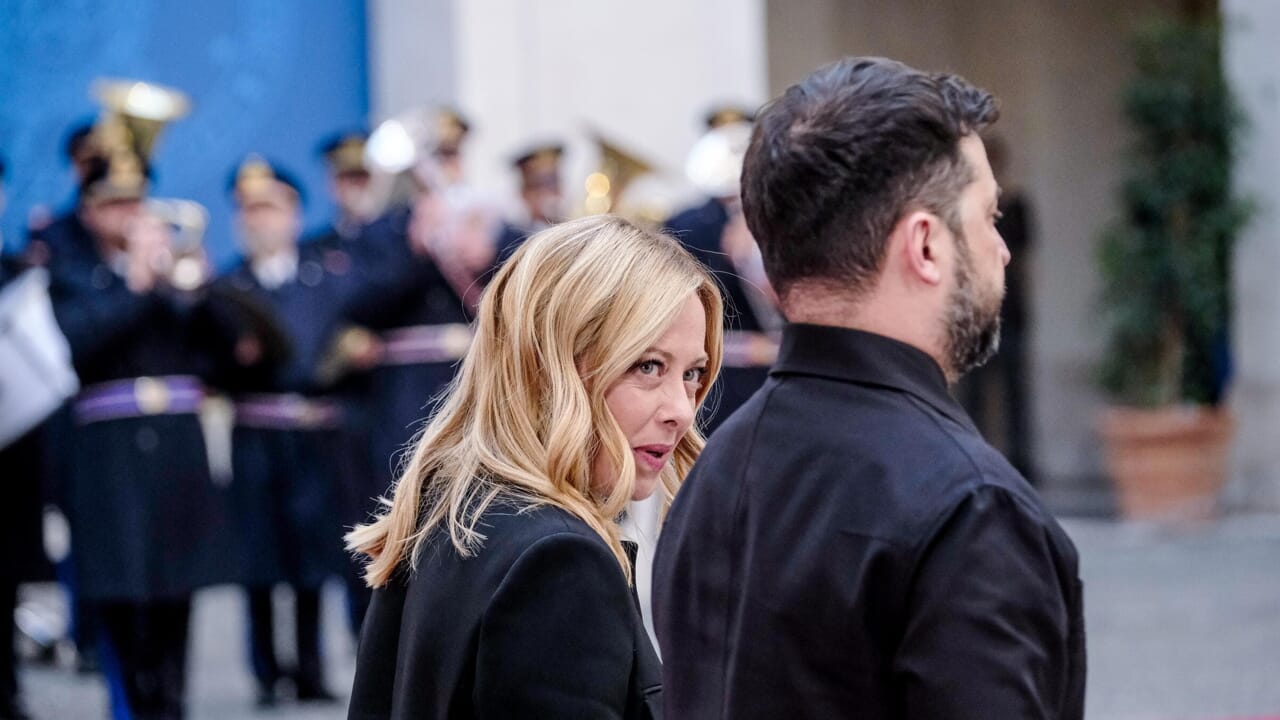
It is no coincidence that Prime Minister Giorgia Meloni is against the proposal put forward by the leader of the Commission. Even though the amount of investments has dropped significantly compared to before the war, many Italian companies are still active in Russia. The first is Unicredit, which in recent weeks has pushed hard to exit Russia, selling the entire long-term portfolio of its Moscow subsidiary Unicredit-Leasing to the Russian Pr-Leasing for 3 billion rubles (33.5 million euros). But time passes too quickly and does not follow the slow steps – dictated by bureaucracy – of the bank led by Andrea Orcel. Not all Italian companies left Russia after the outbreak of the conflict and now risk seizure by Moscow if the EU decides to confiscate and use the Kremlin funds.
What are the Italian companies in Russia
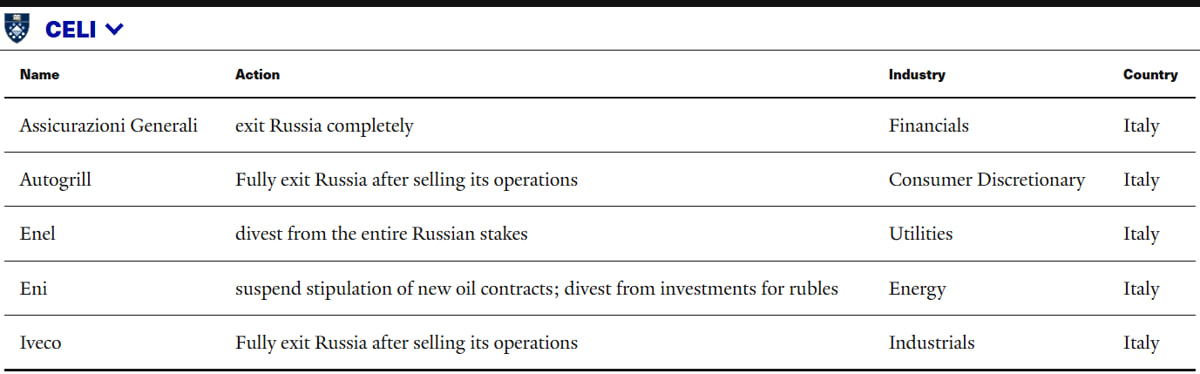
The picture of the activities of Italian companies in Russia is uneven: some continue to operate in the Federation or only temporarily suspend investments, while others have withdrawn or are aiming for a complete exit. According to cross-analysis by the Yale School of Management and LeaveRussia by the Kyiv School of Economics, the activities of Italian companies in Russia can be divided into five main categories.
- Continue Operations – Companies that continue operations, sometimes hiring staff, include Ferrero, Barilla, Fenzi and Calzedonia. These companies operate commercial and manufacturing operations in Russia, albeit with some reductions compared to the pre-Ukrainian invasion period.
- Pausing Investments – Several companies have frozen new investments or marketing initiatives while continuing to operate existing businesses. These include Maire Tecnimont, Menarini and Saipem.
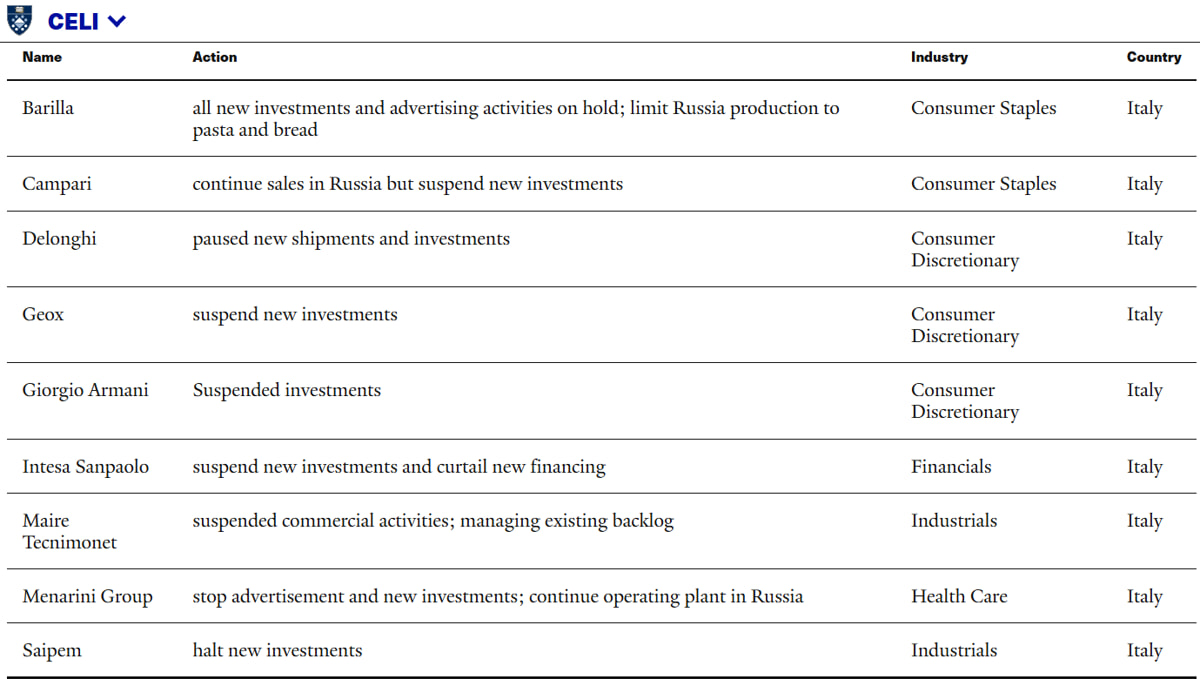
- Scaling Back – Some companies have significantly reduced operations, without completely abandoning the market. Benetton, Luxottica, Pirelli and Valentino have suspended production lines or limited sales, in line with risk containment strategies.
- Suspension – There are groups that have suspended most of their operations, keeping open the possibility of a future return. Among these: Diadora, Ferragamo, Ferrari, Leonardo, Prada, YOOX and Ermenegildo Zegna Group.

- Withdrawal / Exit Completed – Finally, some companies have completely abandoned Russia, halting all activity and investment. These include Enel, Eni and Moncler.
There are over 100 Italian companies still operating in Russia, which could potentially end up in Moscow’s sights, and whose assets the Rome government is trying to protect from possible confiscations. Thus a difficult balancing act begins for Prime Minister Meloni: on the one hand, support for Ukraine remains firm; on the other hand, the protection of Italian economic interests in the Russian Federation imposes a selfishness of national interest with the risk of undermining European unity.
