Gaza is a dead end, here’s how to get out of it
In the aftermath of the closure of the Global Sumud Flotilla affair and Trump’s new “Plan” for Gaza, I try to lift some points and I explain why I consider the choice of Italy and Europe wise to remain defined to avoid exposing its irrelevance.
Trump’s plan for Gaza: because Tony Blair is talking (a lot)
What is called “peace plan” is, in reality, a device to stop the fire and stabilize the strip. It does not resolve the Israeli-Palestinian question-and let alone the entire Middle East-because peace presupposes that both sides accept politically toxic compromises, on radicalized populations.
In Israel for years he has ruled a majority who, to stay in power, has given decisive space to the most extreme religious requests. Until a coalition willing to real concessions will emerge, a credible negotiation will remain precluded. On the Palestinian front, there is no unitary representation: Anp in the West Bank and Hamas in Gaza are irreducible rivals. The first is secular, worn out by corruption and poor legitimacy; The second is an Islamist movement that, having reached power with the vote, then neutralized internal pluralism. With Hamas you can at most negotiate tree, not a lasting peace, because its political-religious vision does not contemplate definitive territorial compromises.
The nature of the conflict
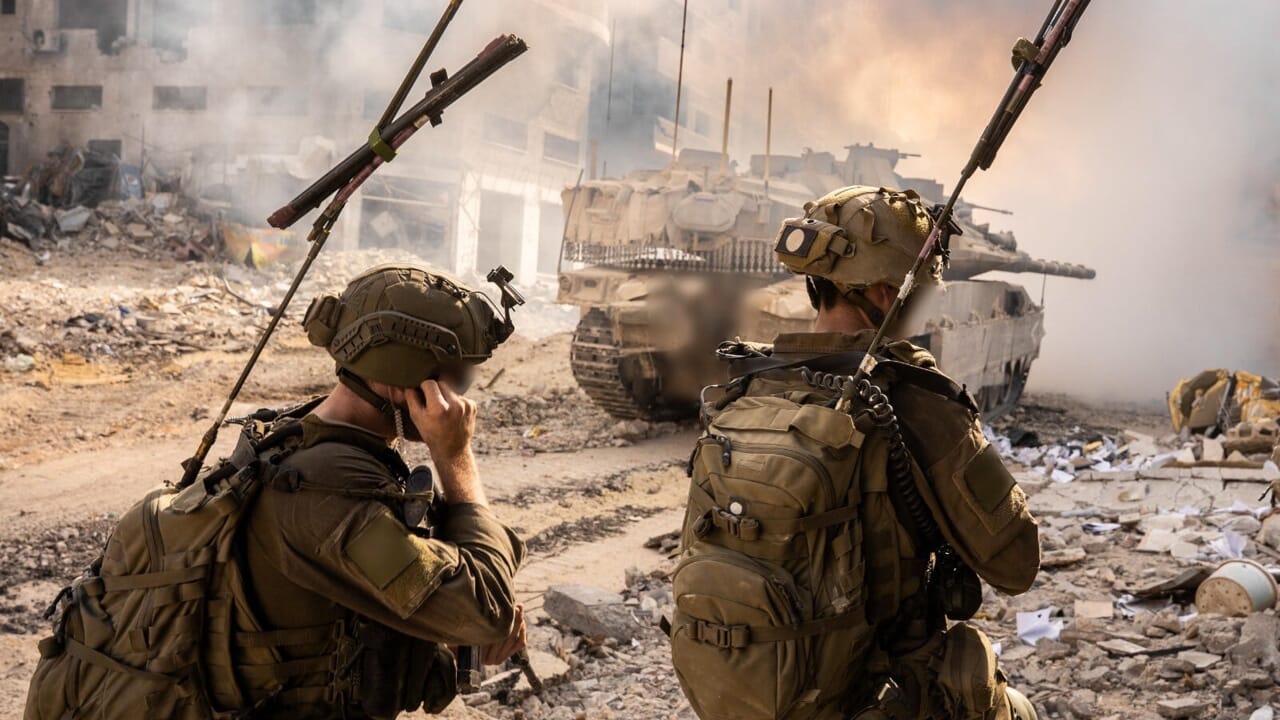
A symmetrical war is not underway in Gaza: it is a humanitarian crisis with residual terrorist activity and counter-onset operations in a very dense urban environment. The Hamas fighter component was seriously degraded, but the ability to camouflage himself among civilians moves the friction to the plan where the error (or abuse) of the Israeli defense forces (IDF) costs more, also on the front of international public opinion. IDF are among the most experienced forces in the world, but the terrestrial bone remains of conscripts and reservists: excellent for external defense, less trained with prolonged police tasks in a hostile and political territory. The combination of ambiguous mandate, internal political pressure and operational fatigue is fertile for collateral damage and judicial scandals.
What is the way out? Not a “military” solution, but a diplomatic architecture imposed from the outside: the verifiable fire cease; permanent humanitarian access; A transitory governance of Gaza that excludes the armed acronyms and that is supported (and tied) by regional guarantees; A package incentive-can be on who Sabota. In this, the United States remain the only actor with sufficient influence on Israel and, through the Arab partners, on the Palestinian counterparts. And a non -evil element is the Qatar, sponsor and historical facilitator of Hamas: without Doha at the table, the lever on Gaza remains Monca.
In Gaza today the choice is not between “peace” or “victory”, but between risk management and damage containment. Europe can help only if it brings civil skills (funds, corridors, border police under a mandate) within a frame designed elsewhere. Everything else is rhetoric.
