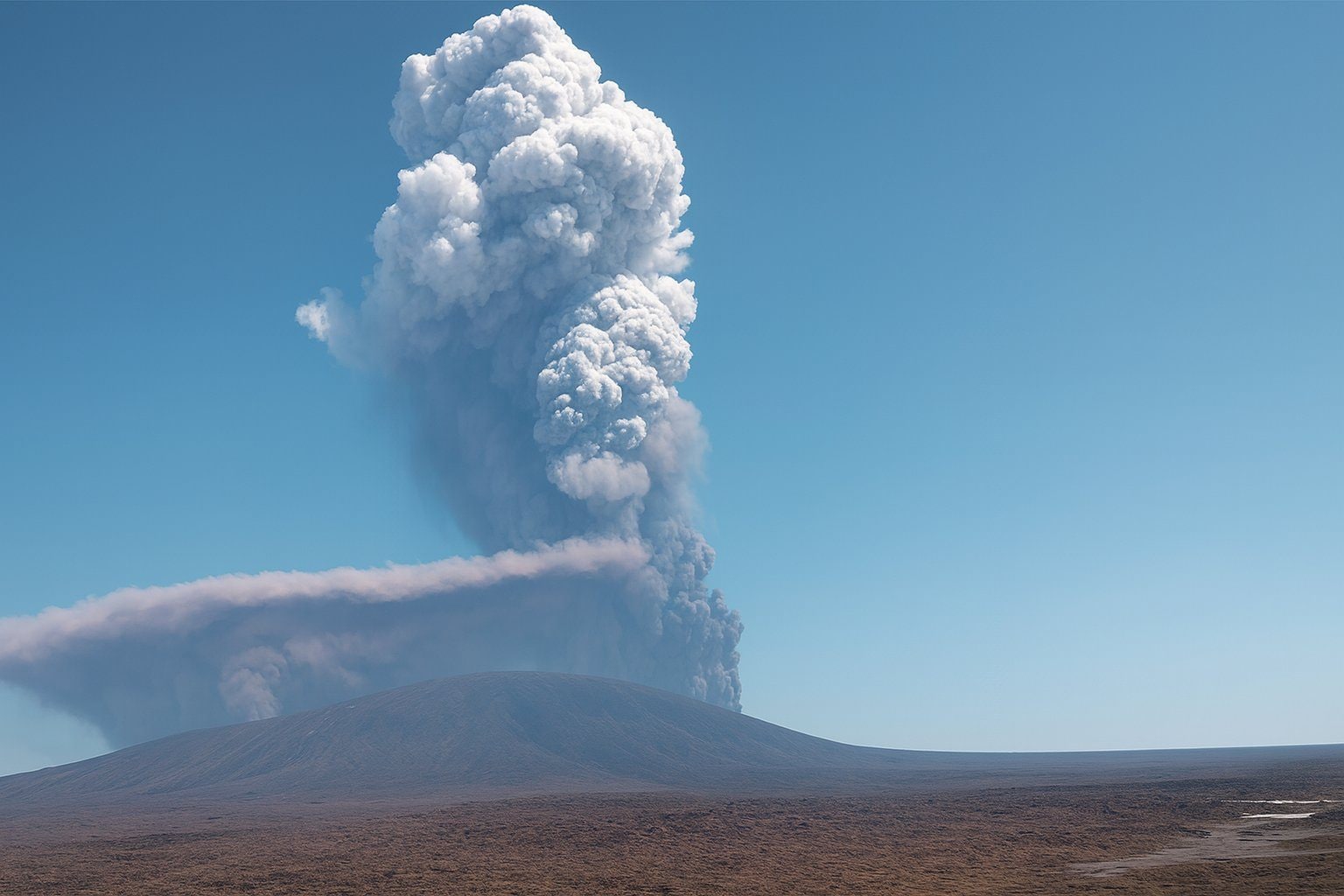
The volcano Hayli Gubbilocated in the Afar region of northeastern Ethiopia, erupted for the first time after a period of inactivity almost 12,000 years. The eruptive episode, which began yesterday 23 November, lasted several hours and produced a column of smoke which reached i 14/15 km in height. As reported by Global Volcanism Program of the Smithsonian Institution, there is no documented evidence of eruptions of Hayli Gubbi during the Holocenethat is, in the last 12,000 years or so. According to local media reports, clouds of volcanic ash were transported across the Red Sea, reaching the Yemen and Omanand have also been traced towards India and northern Pakistan.

For the moment, however, there have been no major ones consequences: local authorities have confirmed the absence of victims or injuries, although the fallout of the ash on the villages could create inconvenience and economic damage to the local shepherd communities.
But, from a geological point of view, what are the characteristics of this volcano? The Hayli Gubbi is a shield volcano and is located in the Afar region of Ethiopia, approximately 926 km northeast of Addis Ababanear the border withEritrea: it is about 500 meters high and is located along the African Rift Valley, a huge depression that extends from south-west Asia to east Africa, created by the separation between the African and Arabian tectonic plates.
