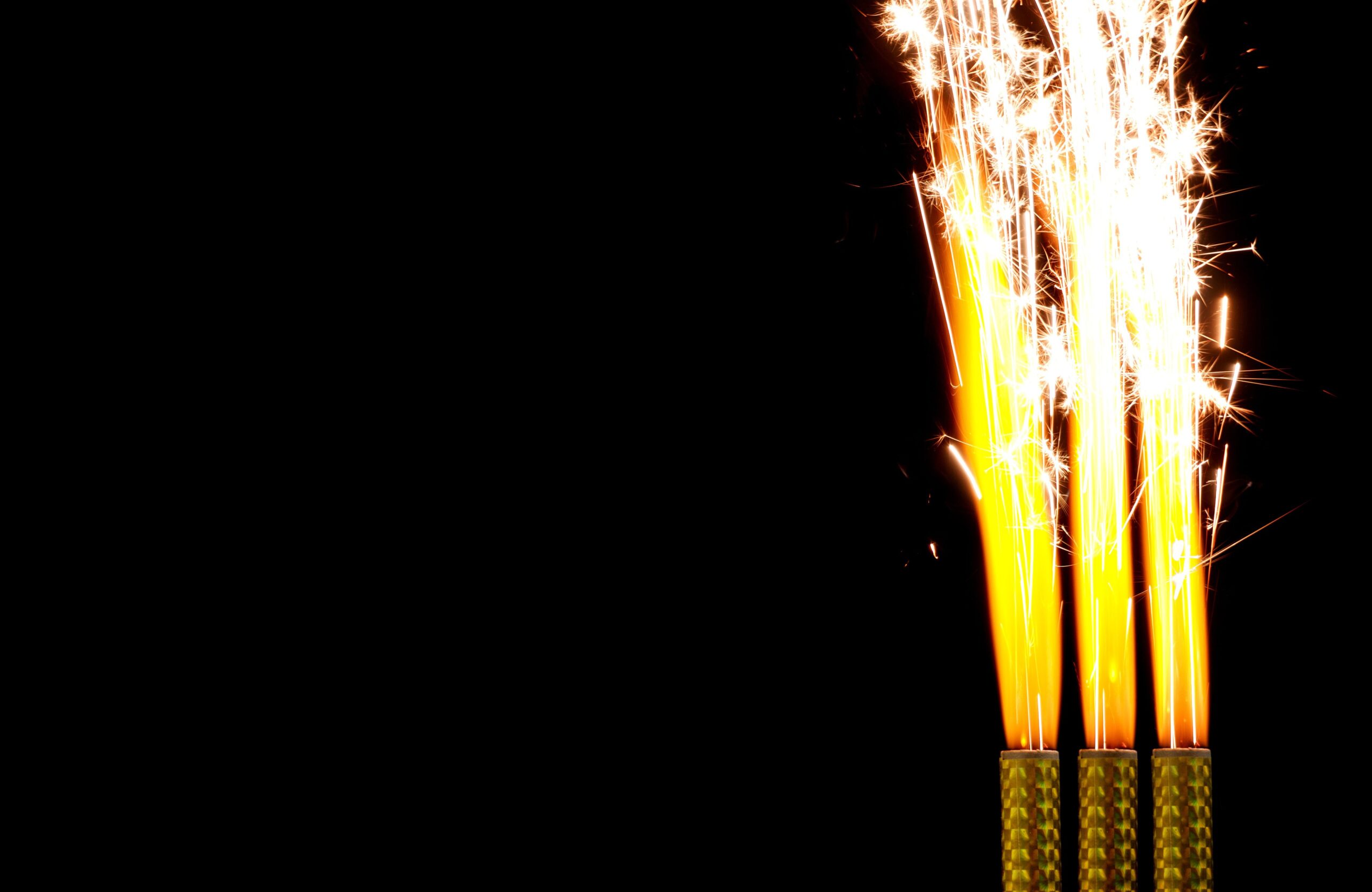
The tragedy that recently occurred in Crans-Montana, Switzerland, during a public event, put the pyrotechnic fountainsalso called pyrotechnic candles or luminous fountains. They are columns of sparks, which last a few seconds, they make no noise, they don’t explode and they don’t scare. This is why we consider them harmless, little more than bright decorations used on birthday cakes or in bottles at the disco. Even if they seem far from the classic idea of fireworks, they work thanks to a controlled combustion reaction. The quantity of the pyrotechnic mixture and the perfect dosage of the components allows for a slow burning which is directed upwards thanks to the structure of the container. Italian and European regulations classify them in all respects as pyrotechnic articlesbut those for indoor use are often classified in the lowest risk class. However, this should not make you lower your guard, because if used incorrectly or recklessly, the risks of damage to things and people are just around the corner.
How pyrotechnic candles work
A pyrotechnic fountain is a device that produces a slow and directed combustion. Unlike a firecracker or a firework that explodes, here there is not a detonation, but a reaction that burns progressively from the inside out.
Inside the fountain there is a pyrotechnic mixturethat is, a set of carefully dosed solid substances. Typically this mixture contains:
- a fueloften a finely powdered metal (such as iron, aluminum, or metal alloys);
- a oxidizinga substance that provides the oxygen necessary for the reaction;
- possible additives which regulate the combustion rate.
When the fountain is lit with a lighter or match, the initial heat starts the chemical reaction. The mixture does not explode because it is formulated to burn slowly (low burning rate), producing heat, light and gas continuously. The structure of the container forces the reaction to develop upwardcreating the characteristic “jet” of sparks.
The spark mechanism
Sparks are not flames in the usual sense of the word. They are tiny glowing solid particles. During combustion, small fragments of metal are heated to very high temperatures. At that point they start to shinejust like a red-hot iron does.
The light emitted depends on the temperature of the particle, a phenomenon known as black body radiation: the hotter the particle, the whiter the light; at lower temperatures it appears yellow-orange. This explains why many fountains produce golden sparkles. Some sparks are not smooth and continuous, but they appear to be “burst” or branch.
This happens when inside the particle gases are formed which increase the internal pressureuntil it fragments into several parts. It is a process well documented in studies on pyrotechnic metal alloys, where the internal structure of the metal and the presence of different elements favor micro-fractures and luminous ramifications.
Why fireworks candles are legal, and where
From a regulatory point of view, candles are considered in all respects pyrotechnic articlesas required by Legislative Decree 29 July 2015, n. 123which incorporates the Directive 2013/29/EU. They can only be marketed if they comply with precise safety requirements and have the CE marking. They must also report the category to which they belong, the instructions for use and the safety distances, which constitute an integral part of the permitted conditions of use.
In fact, the legislation classifies fireworks into different categories (F1, F2, F3 and F4) based on the potential riskfrom the noise and of intended context of use. Candles and pyrotechnic fountains they do not have a unique classification, because they can have different sizes and quantities of mixture, from candles for cakes to the more spectacular ones for external use.
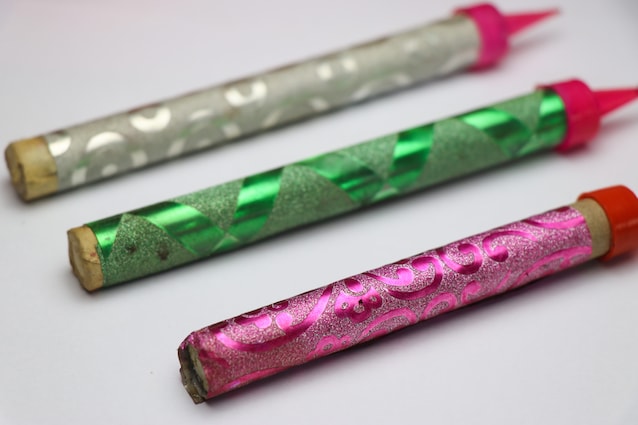
Those that are authorized for internal use are considered a extremely low riskprecisely because they have predictable physical and chemical behavior and a low quantity of mixture present. They fall within the F1 categorywhich includes items designed for a controlled combustion and for use in relatively narrow contexts.
Security, however, is not “intrinsic”: it depends on strict compliance with the instructionssafety distances and context of use.
When and in what cases are they dangerous
A pyrotechnic fountain becomes dangerous when the control it was designed for loses. This can happen in several cases:
- a container malfunction: if the structure breaks or tilts, combustion can become lateral rather than vertical. At that moment, the sparks — which remain incandescent particles — can hit people or flammable materials;
- insufficient distance. Sparks maintain high temperatures for a few moments, and at close range can cause burns or start fires, as highlighted in the safety manuals for pyrotechnic effects;
- improper use: unstable surfaces, inadequate closed environments, presence of easily flammable materials or unprotected people. In these cases, even a device designed to be “low risk” can become dangerous.
