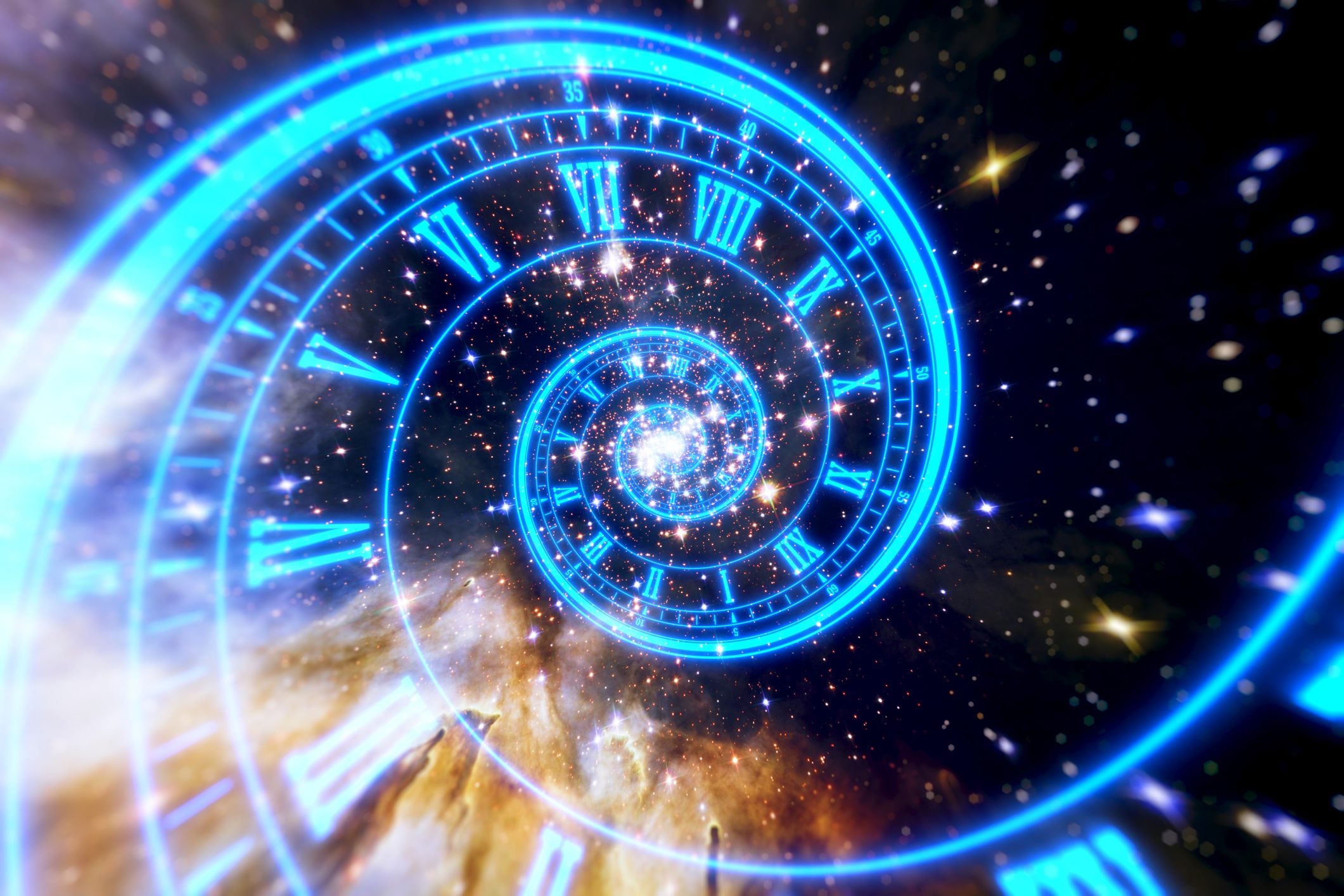
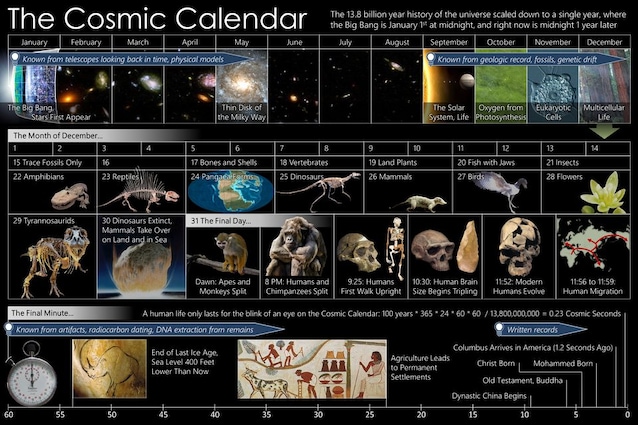
The Cosmic Calendar it is one instrument created in the 1970s by the astrophysicist and popularizer Carl Sagan, and revisited by astrophysicist Neil deGrasse Tyson in the documentary Cosmos – A spacetime OdysseyFor orient oneself in the vast times of the universe. Without going into complex astronomical calculations and formulas, today we know that from the Big Bang to today they passed exactly 13 billion and 787 million years. Planet Earth, on the other hand, “just” formed 4 and a half billion years ago. But how long they are really 13 billion and 787 million years? AND how far away they arein comparison, 4 and a half billion years?
From an early age we are used to talking about geological eras and historical eras that occurred in distant timeswhich often escape the real understanding of our mindused to thinking in “human” days, months and years. Consequently, in front of such large time scales we are only able to intuit which was a long, long time ago. But how much, exactly? The model of the Cosmic Calendar created by Sagan allows us to perceive the real temporal distance between the main events that have marked the evolution of the universe, compressing the entire cosmic history into a single terrestrial year: from big Bangwhich in the Cosmic Calendar falls on the stroke of midnight on January 1stuntil present timerepresented bylast millisecond of December 31st.
In this fascinating journey through time, the Earth appears only ad Augustwhile i dinosaurs they appear on the planet for the first time December 25, and then disappeared 5 days later. The history ofmanhowever, barely occupies 14 secondsto remind us how short our history is compared to the immensity of cosmic time.
How Carl Sagan’s Cosmic Calendar works
One of the fathers of modern scientific dissemination, theAmerican astrophysicist Carl Saganinvented a ploy to “navigate” in cosmic times: compress the entire history of the universe in a single Earth year. According to this model, called Cosmic Calendarthe Big Bang occurs at the stroke of midnight on January 1stwhile the last millisecond of the December 31st represents the present, even as you are reading this article. In this way, every month of the Cosmic Calendar lasts approximately 1.15 billion years, everyday corresponds to 40 million years, every hour it’s worth it almost 2 million years And every second about 437.5 years.
But so, if let’s leaf through this calendar, How much time has really passed since the Big Bang? And above all, when does it start (and how long) it lasts human history?
January 1st, the Universe is born
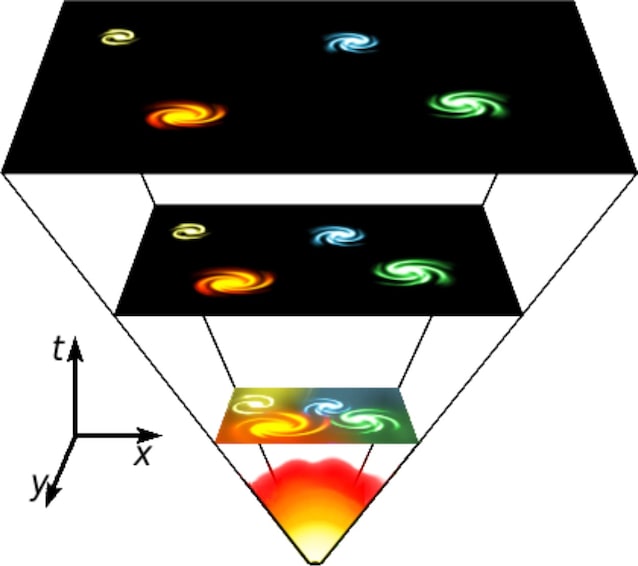
About 14 billion years ago, an extremely hot and dense state began to expand giving rise to time, energy and all matter from which the first stars. This event is what we call today big Bang. In the cosmic calendarit just struck midnight on January 1st: the precise moment the Universe was born.
March, the Milky Way originates
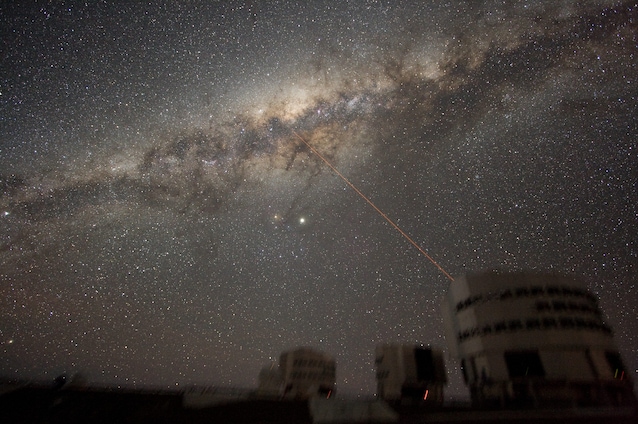
In the following ones 3 billion years, the stars of the Universe began to group together, giving rise to the first galaxies. There Milky Waythe galaxy to which ours belongs Solar system, it appeared about 11 billion years ago. In the Cosmic Calendar the March 15.
August, the Solar System is formed
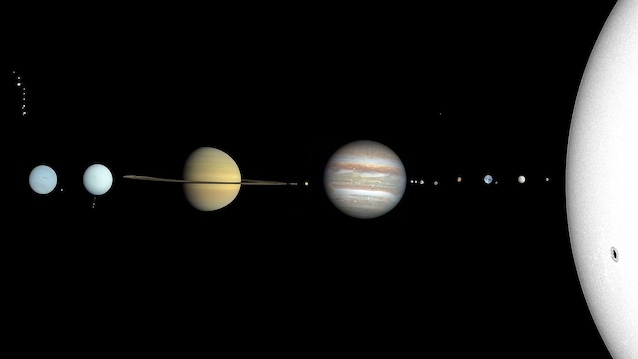
It’s just at August 31stabout 5 billion years ago, that the parent star of our Solar System, the Sun, begins to shine. At the same time, around its orbit, fragments of cosmic matter collide with each other forming i planets of the Solar System. Among these, there is also ours Earth.
September, the first living organisms
In its first million years of life, planet Earth appeared as a layer of molten rock dotted with volcanoes and with an atmosphere rich in gas incompatible with today’s life. However, around the September 20th of the cosmic calendar (approx 3 and a half billion years ago), the first ones emerged organic moleculesperhaps transported by space from a meteorite or thanks to chemical reactions occurred in a primordial broth. These molecules aggregated giving rise to first living organisms, that feeding on carbon dioxide and releasing oxygen initiated a radical transformation of our planet. The Earth’s atmosphere became enriched with oxygen, creating the conditions which would have allowed these early organisms to evolve and colonize the entire planet. From this moment, in the autumn of the Cosmic Calendar, the history of the begins life on Earth.
December, the first amphibians and mammals
The first forms of life most familiar to us appeared only inlast week before the end of the year of the Cosmic Calendar. Around December 23rd they evolved amphibians, reptiles, birds, together with the first ones trees. THE dinosaurs they appeared only in the day of Christmaswhile the first small ones mammals they were born only on December 26, about 200 million years ago.
December 30th, extinction of the dinosaurs
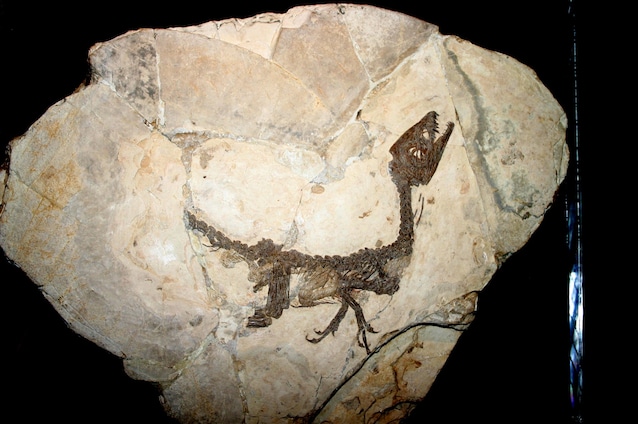
At 6.24am on December 30th of the Cosmic Calendar an event occurred that was destined to change the history of life on Earth forever: a large asteroid impacts the earth, causing theextinction of the dinosaursafter “only” 5 days of the Cosmic Calendar (and 150 millions of Earth years). From this moment i mammalswho until then lived “in the shadow” of the dinosaurs, will inherit the planet and begin the long ascent which will lead, much later, to the diversification of the various species that populate the earth today.
December 31st, man
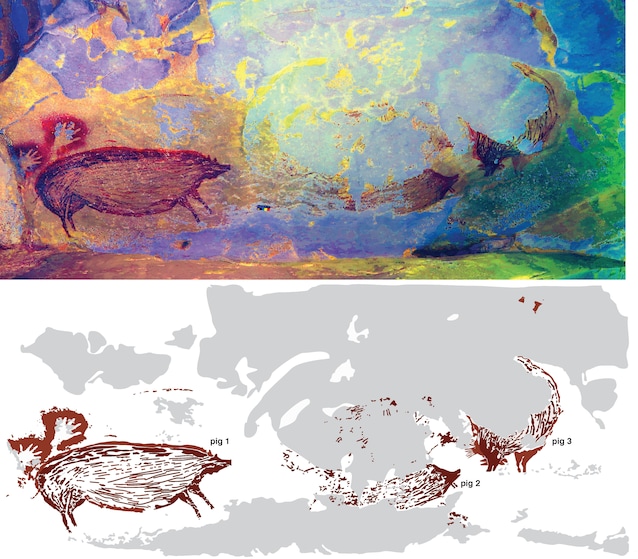
The first human being appears on Earth only at 10.24pm on December 31st. For now, it’s still not that different from a chimpanzee. But in the following hours, the neocortex, the portion of the brain responsible for the most sophisticated cognitive functions will begin to expand significantly compared to its “cousins”. From that moment, man will learn to imagine, plan and communicate in an increasingly complex way. Thus, while the tribes and the first work tools were born, in Sulawesi (in Indonesia) the first “artist” in history created the first rock paintinglaying the foundation for all art and culture that we know today. Just a few minutes before the end of the year, man thus begins his journey on Earth, giving rise to the our history.
31 December – 11.59pm, the history of man
They are the 11.59pm and 46 seconds. The countdown begins before the end of the year. There are only 14 seconds left until midnight when, just 6,000 years agoman invents the writing, leaving a written record of his steps. Thus was born history. All the kings, conquests, loves and poems that we have read in history books fit exactly into the last 14 seconds of the Cosmic Calendar.
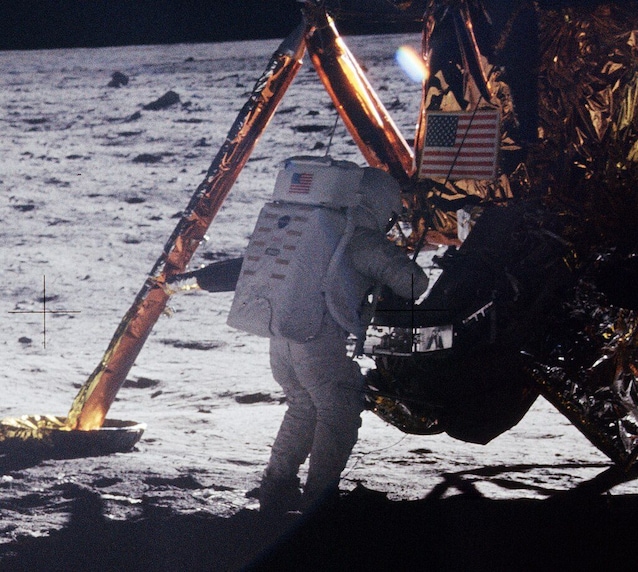
In the last 10 seconds figures such as Jesus, Julius Caesar, Muhammad and Cleopatra appear, while just 2 seconds before midnightChristopher Columbus crosses the Atlantic invading America. In the’last secondthe scientific revolution takes over: while Galileo Galilei observe new worlds with the telescope, Neil Armstrong leaves its footprints on the Moon and Tim Berners-Lee carry out the first search on world Wide Web.
December 31 – 11.59.59pm, the present
After a long journey through cosmic time, we have finally arrived at the last moment of the last second of December 31 of the Cosmic Calendar: the present. It is the exact moment you are reading these words, after having retraced 365 days (or 14 billion years) of history of the universe admiring the immensity of the cosmic timewhere the history we know endures just 14 seconds.
