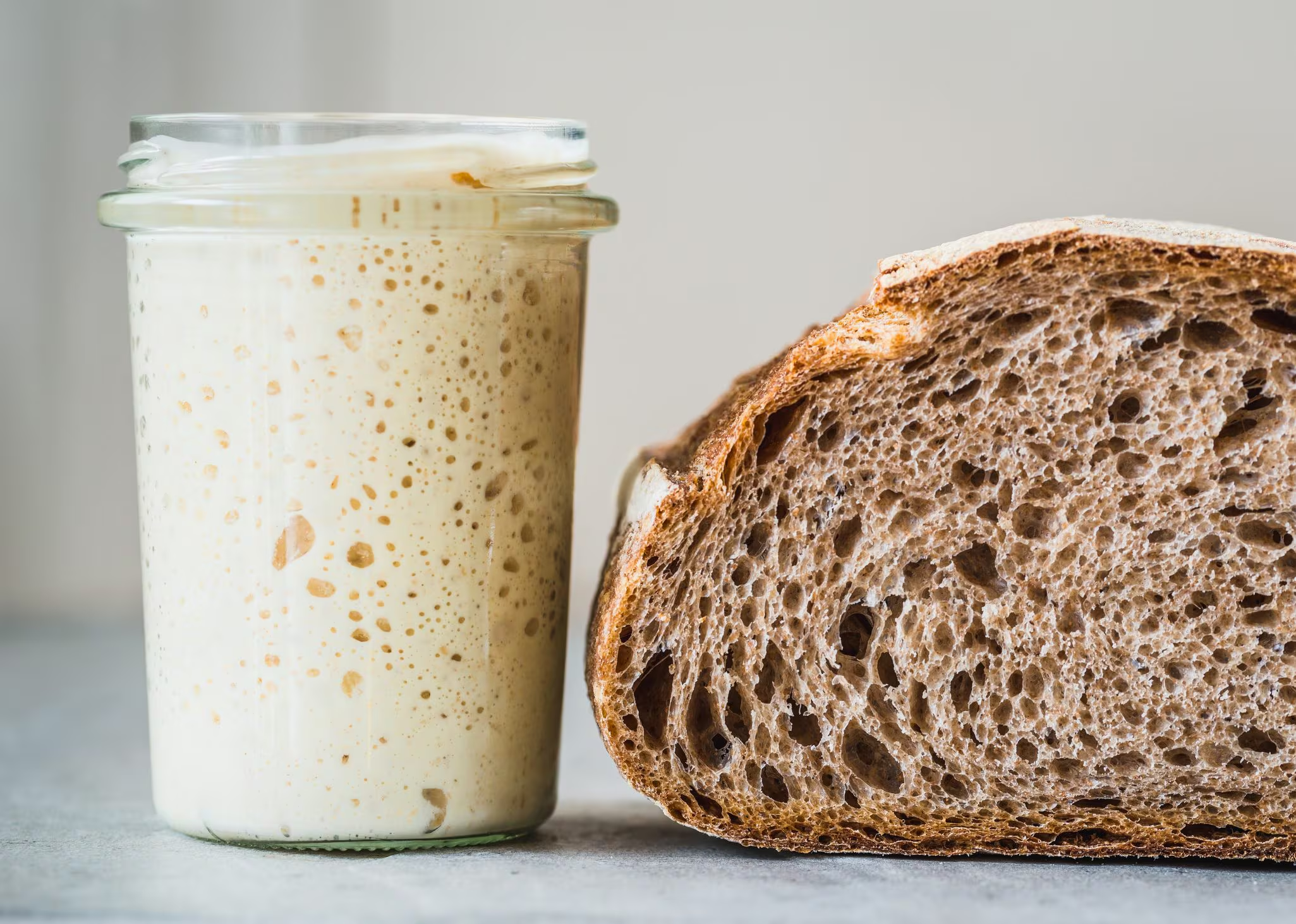
When we prepare bread, pizza or focaccia, we witness a surprising transformation: a compact mass of water and flour increases in volume and becomes soft and full of bubbles. The credit goes to yeastbut not because it directly “pushes” the dough upwards. The real protagonist is thecarbon dioxide (CO₂) that the yeast produces while it feeds on the sugars present in the dough. This gas remains trapped inside the gluten network and swells the small ones air bubbles present in the dough, which make the dough expand. Simply put, leavening is the result of two processes working together: the production of CO₂ by the yeast that consumes sugars and the dough’s ability to retain this gas.
The yeast process that turns sugars into gas
The yeast used in bread making almost always belongs to the species Saccharomyces cerevisiaea microorganism which has been used for centuries produce bread, wine and beer. Well yes: yeasts are real living beings, belonging to the kingdom of gods mushroomsexploited in industry to make leaven bread or ferment alcoholic beverages like beer.
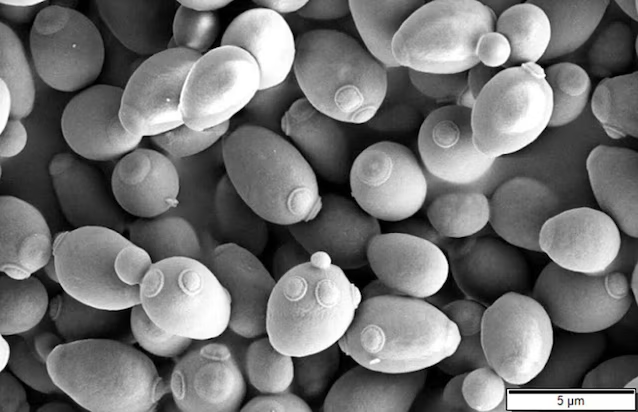
When it finds water and nutrients, a yeast begins to metabolize available sugars through the fermentation (sometimes called alcoholic fermentation to emphasize the production of alcohol, as in the case of beer). During this process, sugars are mainly converted into ethanol (ethyl alcohol) e carbon dioxidea gas. The CO₂ Yes accumulates progressively in the micro-air bubbles trapped during kneading, making them grow.
If the gas could escape freely, we would not see any increase in volume. Instead it remains trapped in the structure of the dough, giving rise to the classic growth that we observe during leavening.
Gluten is the net that holds the bubbles
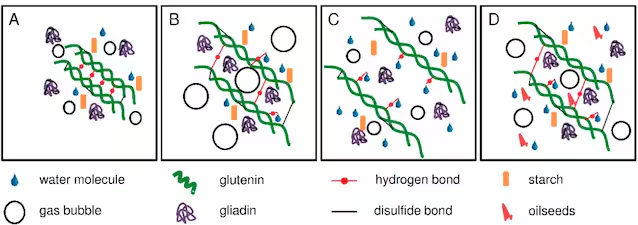
CO₂ production alone is not enough. To make the dough rise you need a structure capable of retaining gas. This structure is unique to glutenan elastic protein network that forms when water and flour are mixed.
As indicated by a study published in the journal Enzyme and Microbial Technologythe CO₂ produced by the yeast is trapped inside tiny gas cells separated by thin gluten film. As time goes by, more and more gas enters these cavities and bubbles increase in size, making the entire dough expand.
For this reason, good leavening depends on both the activity of the yeast and the properties of the dough. If the gluten is too weak, the gas escapes easily; if the network is sufficient elastic and resistantmanages to retain bubbles and the dough grows steadily uniform.
What happens when the pizza or bread dough enters the oven: leavening
In the first minutes of cooking the volume may increase further. The book Cereals in Breadmaking Of Food Science and Technology explains that this happens because the gases already present in the bubbles they expand as the temperature increases. Not only that, at the same time some of the water and ethanol produced during fermentation evaporatescontributing to increase the pressure inside the gaseous cavities, therefore to the expansion of the mixture.
Subsequently, the heat stabilizes the structure of the dough: the gluten consolidates and the starches gelatinize, fixing, once and for all, the shape and volume achieved by the dough. The bubbles thus remain trapped in the crumb and damage, in the case of breadhis typical soft and honeycombed consistency. When we prepare a dough, we see it swell because the yeast produces carbon dioxide; gluten holds this gas and allows it to expand.
