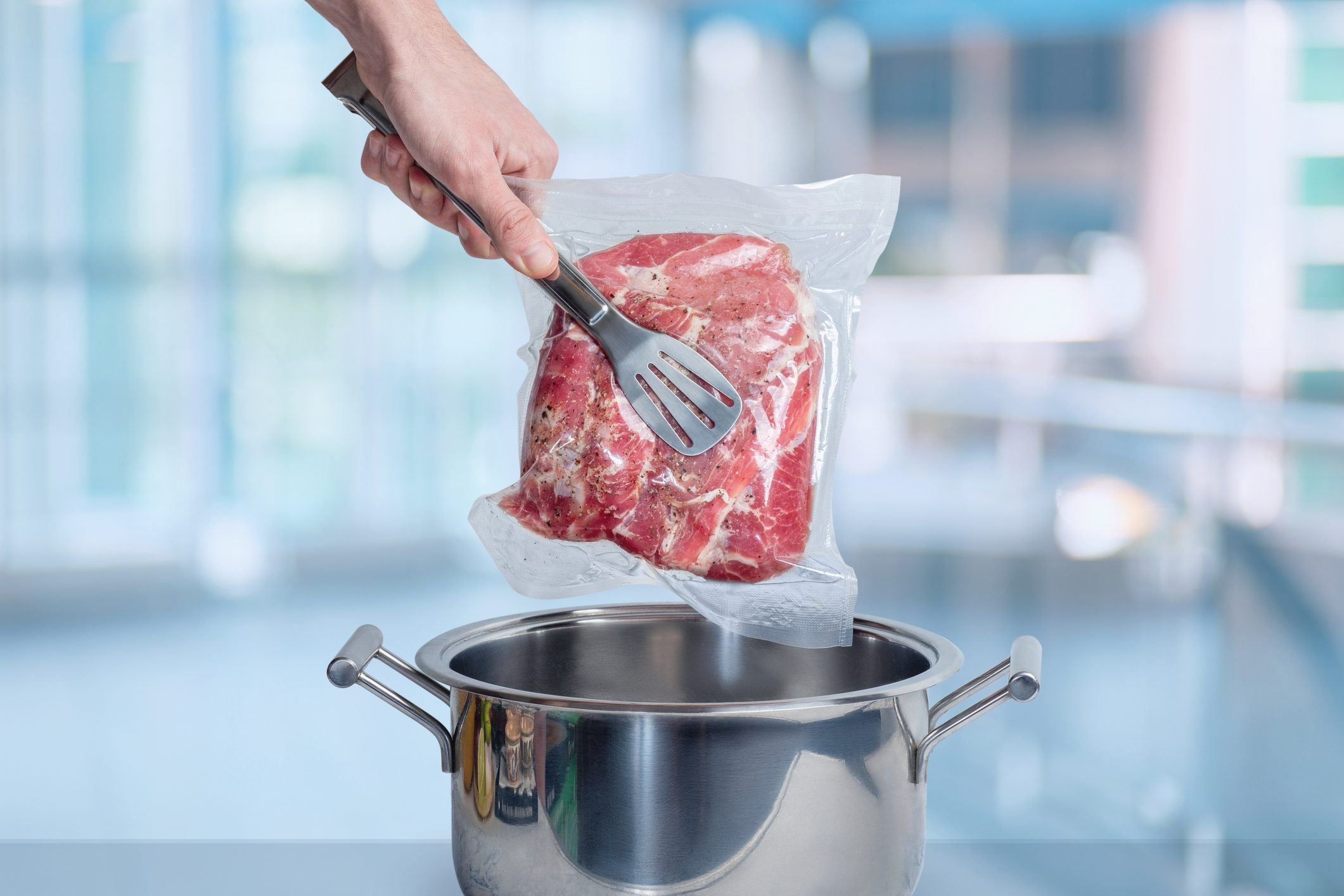
There sous vide cooking was born in the kitchens of the great restaurants of the 70s, but only in recent decades has it entered the homes and curiosity of the general public. Its principle is simple: the food comes sealed in a bag almost devoid of air and cooked slowly at a controlled temperature, immersed in water in a bain-marie or enveloped in steam. In this stable and protected environment, foods slowly change, without thermal shocks and without dispersing aromas, liquids and nutrients. Unlike traditional cooking, where the outside risks burning while the heart remains raw, sous vide distributes heat evenly. Vitamins, mineral salts and aromatic molecules are also better preserved thanks to the reduced presence of oxygen and the prevention of evaporation. The end result is a food that more faithfully preserves taste, texture and nutritional qualities.
What is sous vide cooking
There sous vide cookingalso known by the French term sous videis a culinary technique developed and widespread in restaurants since the 1970s, but became known to the general public only after 2000. This technique involves seal the food inside a special bagfrom which the air is sucked away, and then everything is cooked in a bain-marie in water, or by steam with specific appliances. The term “vacuum” derives precisely from the passage in which remove the air from the bag. Obviously a perfect vacuum state is not created, but a condition in which the quantity of air is very small compared to the external environment. This reduction has important consequences: it limits the food’s contact with oxygen and reduces exchanges with the surrounding environment.
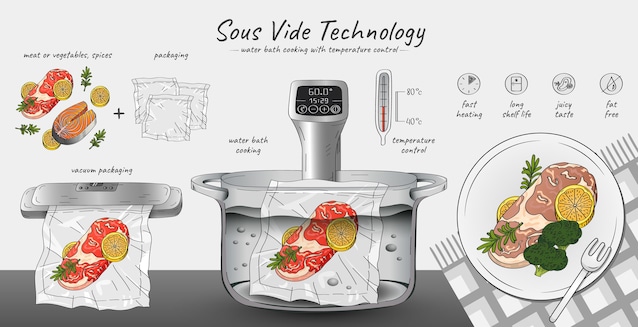
Vacuum packing attenuates the degradation of nutrients and aromas: the study published in Scientific American
The stability of the vacuum system allows you to work at lower temperatures for longer times. The transformations that make food more tender and digestible – like the protein denaturation – they still happen, but in a more gradual and controlled way. At the same time, less aggressive temperatures reduce degradation reactions that affect the nutrients most vulnerable to heat, called thermosensitive nutrientsthat is, those substances that tend to degrade or disperse when exposed to high temperatures.
In traditional methods, in fact, direct contact with air and high temperatures favor both oxidation and the evaporation of volatile compounds. In vacuum packing, however, the hermetic closure of the bag limits these phenomena: even when some aromatic molecules evaporate due to the heat, they remain trapped and are largely reabsorbed by the food, helping to preserve its flavour. The result is a food that more faithfully maintains its initial characteristics, including nutrients such as vitamins and mineral salts that would otherwise be partially lost.
A further fundamental aspect is the extreme temperature control. As also reported in an article published on Scientific Americanin traditional methods – such as frying or pan cooking – strong differences are created between the outside and inside of the food: the surface is exposed to high temperatures, while the center remains colder. This leads to the formation of “overcooking areas“, that is, the external parts that are overcooked compared to the inside. In sous vide, however, heat is transferred evenly, allowing the food to reach the desired temperature throughout its mass.
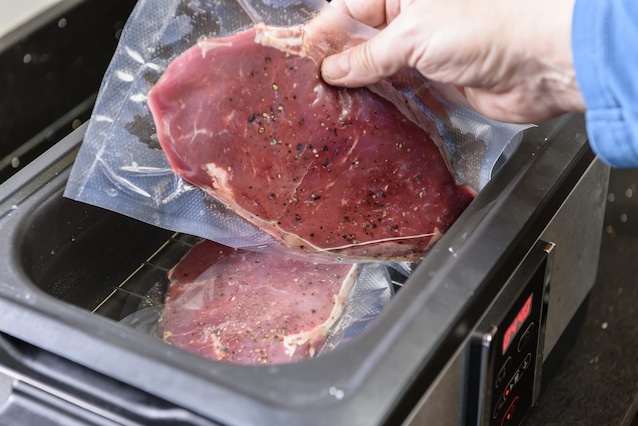
The advantages of these cooking methods on meat and vegetables: the scientific review on Foods
In the case of meat, several studies (including a review published in the international journal Foods) show how vacuum packing softens even the most “soft” cuts of meat.difficult“, such as beef ribs or horse meat. During cooking, a protein called collagen it gradually turns into gelatin, contributing to a softer texture. In parallel, the absence of evaporation limits water loss: the result is not only more tender meat, but also more juicybecause it retains a greater quantity of liquids.
Vegetables also benefit from this technique. Sous vide cooking allows you to soften the fibers delicatelyavoiding excessive cooking which could compromise its consistency. Furthermore, it keeps colors vivid and bright: pigments such as carotenoidsresponsible for shades ranging from yellow to red, are less subject to degradation. This aspect should not be underestimated: color degradation in vegetables often goes hand in hand with the destruction of important nutrients, such as vitamins. Maintaining vivid colors is therefore an indicator of both visual quality and improved nutritional preservation.
