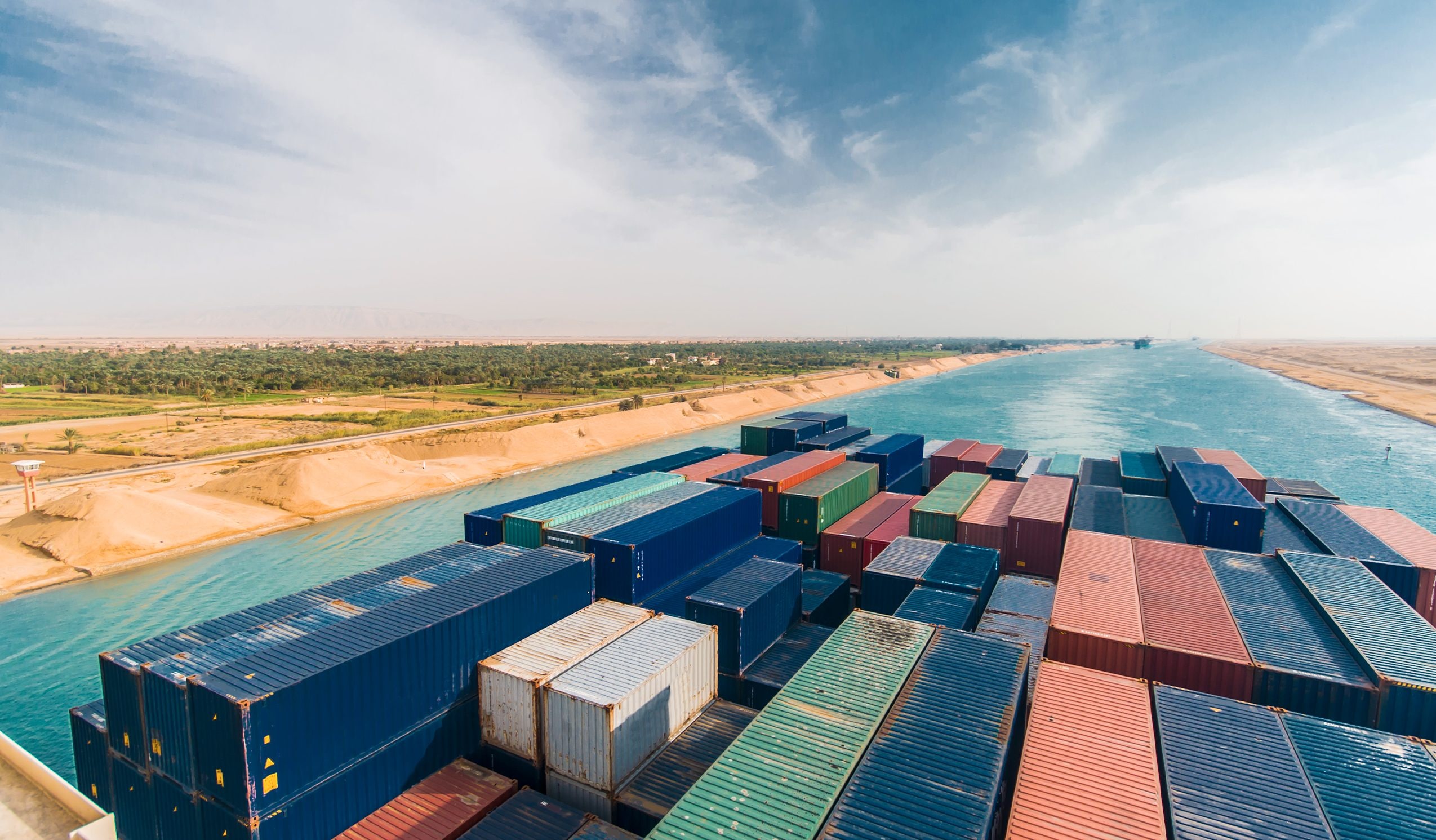
November 17th marks the anniversary of the inauguration of the Suez Canalone of the most important hydraulic engineering works ever carried out for its strategic nature and its role in civil and communicative development between continents. Inaugurated on November 17, 1869, it is a navigable canal located in Egypt near the Sinai Peninsula, which connects the Red Sea to the Mediterranean Sea. On this occasion, we retrace the fundamental stages of its construction, its evolution over time and the expansion projects that are redefining its role in global trade.
What is the Suez Canal for and why was it built
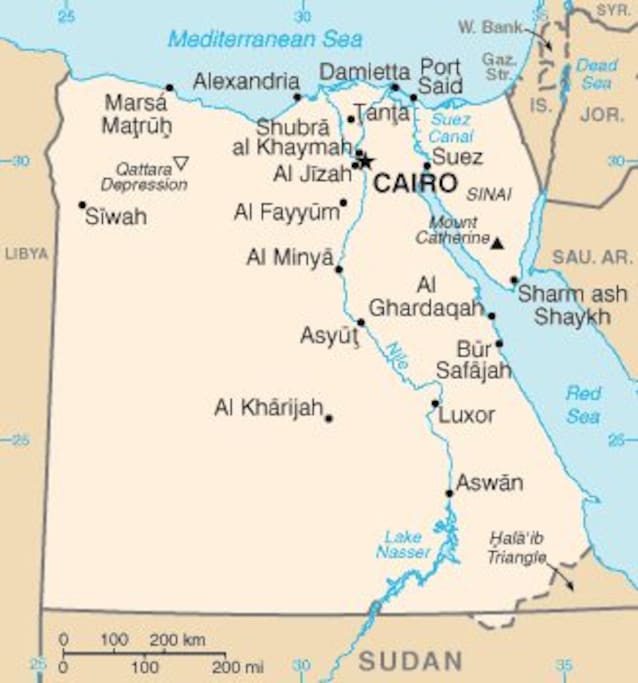
The Suez Canal is one of the most important shipping routes in the world, both from a commercial and strategic-military point of view. Connect the Mediterranean Sea (to the north, near Port Said) with the Red Sea (to the south, near the city of Suez), crossing the isthmus of the same name located in Egyptian territory.
Its main function is, today as then, to allow ships to avoid the long and dangerous circumnavigation of Africa, drastically reducing transport times and costs between Europe and Asia. It should not be forgotten that approximately 80% of world trade takes place by sea: a fact that confirms how the Suez Canal, over 150 years after its construction, remains a fundamental engineering work.
From a technical point of view, it is an artificial channel which he physically separated two portions of land to create a direct connection between two seas: this intervention has radically transformed the economic and geopolitical geography between West and East. For its construction, it was necessary to carry out one excavation of the Isthmus of Suez, simultaneously guaranteeing a connection between the Mediterranean Sea and the Red Sea. 74 million m were excavated3 of landwith an execution cost that reached 433 million francs, double the cost initially calculated.
The construction of the Suez Canal by Ferdinand de Lesseps
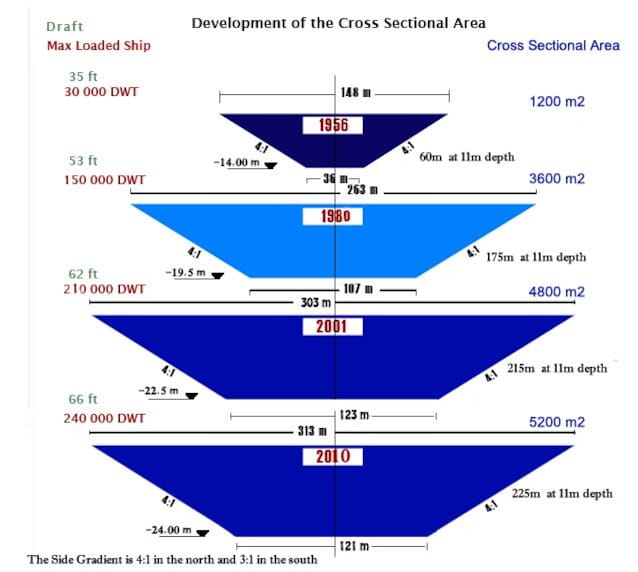
The Channel was inaugurated in 1869, after ten years of work. The project was strongly supported by France and England, and was based on the Italian engineer’s design Luigi Negrellisubsequently created under the direction of Ferdinand de Lesseps. At the time of opening, the canal had a depth of approx 8 metersa width of 22 meters at the bottom and between 61 and 91 meters on the surfacetherefore the section of the canal must be imagined as a trapezoid. This type of shape is typical of artificial canals, as it allows two particular advantages:
- It guarantees more surface area in the upper area, where the bulk of the ships is greater;
- It significantly reduces the need for important engineering works to contain the embankments, which would instead be necessary in the case of a vertical wall.
In addition to this, hydraulically this type of section it helps the outflow of a free surface currenteven during a flood, limiting the accelerations of the current and, at the same time, increasing the filling time of the section.
Despite this, the channel had a reduced width for what turned out to be the actual traffic on the route. Therefore, given its modest initial dimensions, exchange bays were built every 8-10 km to allow the passage of ships in both directions. However, between 1870 and 1884, they registered over 3000 ship groundings, making the need for expansion interventions clear. Improvement work began in 1876 and continued for decades. Currently, the canal guarantees a maximum water depth of 24 metres, with a wide section (at 11 meters deep) between 205 and 225 metres.
Channel numbers
The Suez Canal today extends for approximately 193 km and it is one of the busiest channels in the world: in fact it manages over 12% of global shipping traffic! There Suez Canal Authority (SCA) – which represents the company that administers and manages traffic on the channel – declares an average daily traffic of Approximately 51 shipswhich is a very high number if you compare it with the capacity of the canal, i.e. its flow rate, which is currently estimated to be around 70 ships per day.
As additional proof of the important flow of ships transiting the canal, there are frequent congestions on the canal, in some cases worsened by not infrequent groundings. This generates long waits for ships in transit and therefore reduces the efficiency of the canal. In some sections, the passage must take place in an alternating one-way direction due to the reduced widths compared to the simultaneous transit of large boats.
Future jobs: the 2030 strategy
Waiting times with respect to the channel congestion problem can even exceed 18 hours. For these reasons, and given the importance of the transport network for the entire Western and Eastern world, expansion works are necessary, some of which are already underway. These works aim to reduce average waiting times a 11 hoursalso enhancing the reach of channel a 100 ships per day. The expansion project concerns 72km of route, with interventions that include:
- Enlargement of some sections to facilitate the simultaneous transit of large vessels.
- The in-depth analysis of the seabed, both in the central and lateral parts, so as to allow even larger ships to pass through the canal.
- The creation of a new parallel channel (bypass) – the New Suez Canal – approximately long 37kmwhich will further improve traffic flow.
