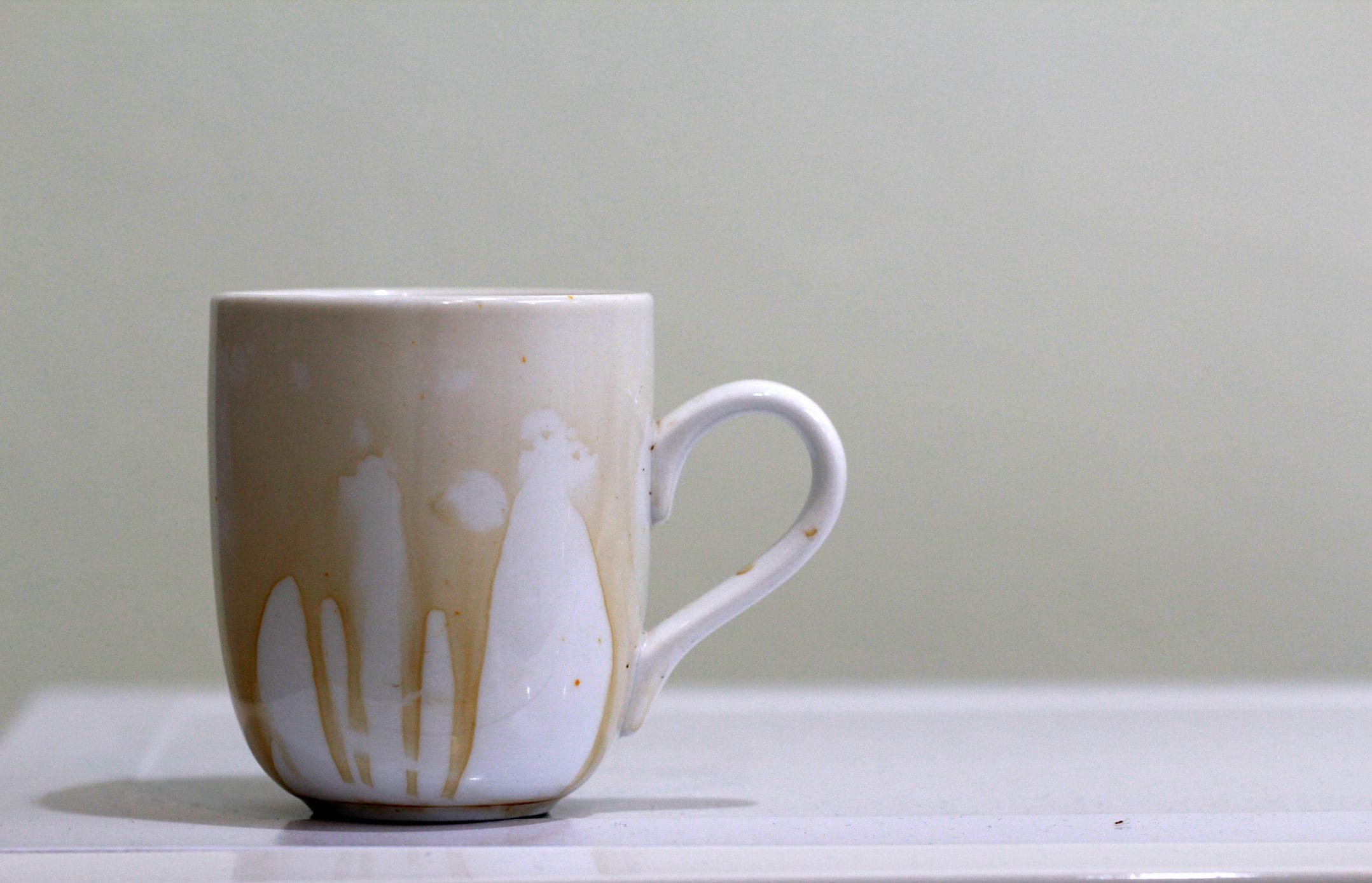
Aaah… how nice, having guests at home and bringing out the most refined set we have, the porcelain one given to me by my great-aunt many years ago. We take the cups, the teaspoons but… everyone stop! Here comes a very old tea stain that makes us look bad. It’s the fault of the gods polyphenols: Stubborn molecules contained in tea and coffee that love ceramic surfaces. If theelbow grease that’s not enough, there are simple and economical “chemical” solutions that can be useful to us. Hydrogen peroxide (hydrogen peroxide), but also simple baking soda they can be right for us: they work because they interact chemically with residues, not by magic. In short: bicarbonate “detach” the stains thanks to his abrasive powerwhile the peroxide “whitens” without affecting the ceramic surface thanks to its oxidizing power.
Why tea and coffee stain: polyphenols are to blame
Persistent stains on cups mainly arise from tanninsa class of molecules among the polyphenols present in large quantities in tea and coffee. It is precisely these compounds that bind to surfaces creating dark and tenacious pigments. It is no coincidence: polyphenols are excellent inadhere to the materialswhich is why they have also been studied in the food industry dyes.
Ceramic and porcelain surfaces are coated with one vitreous enamel very resistant, described in materials science as a surface chemically stable and not very reactivejust as desired by a ceramic manufacturer. If a surface is stable, it means that it is unlikely to be affected by potentially aggressive chemical agents, such as detergents. Generally, we can rest assured that products used for cleaning do not ruin our ceramic utensils, as long as they are not highly abrasive.
Returning to coffee stains: the problem is not the cup, but how well polyphenolsor their oxidation compounds, they fix themselves on the surface of the cups. For example, when we drink coffee and let some of it evaporate or dry out, polyphenols do they oxidize forming dark compounds: a well-documented process in food chemistry. This is why sometimes it seems like the cup is “yellowing” even after a few uses.
How to whiten cups and mugs: baking soda and elbow grease
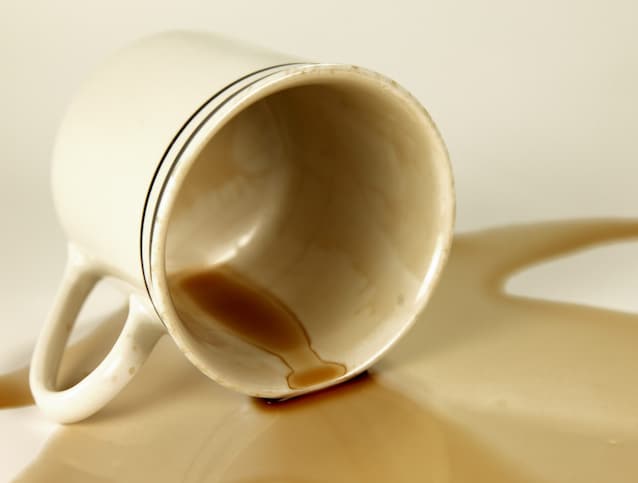
It happens that we worry too much about problems that are easy to solve. If we notice coffee stains adhering to our ceramic cups, it would be better to try a good scrubbing: sometimes the simple mechanical force enough and move on. Obviously, we avoid metal sponges or brushes with stiff bristles so as not to ruin the precious porcelain in our set, but we certainly already know this.
At home we can find substances capable of making our scrubbing much more efficient. Just take advantage of something that has a delicate abrasive power to help us achieve our goal: removing stains without ruining the ceramic. Once again the baking soda comes to meet us. Being a slightly substance abrasiveis capable of break the adhesion of oxidized polyphenols without scratching the ceramic glaze. It’s as if the bicarbonate “ate” the stains stopping at the right point when it meets the ceramic surface. The explanation is entirely chemical: ceramics, whose structure already contains stable and not very reactive bonds, are worked at very high temperaturesdeveloping, once cooled at the end of processing, a large resistance and stability potentially against chemical agents aggressive.
If dissolving bicarbonate of soda in water and applying it to the stains didn’t work, we could try something simple toothpaste. Toothpastes, in fact, are returned sufficiently abrasive to remove the most stubborn stains that stick to the teeth, but not abrasive to that extent to damage the tooth enameljust like in the case of ceramic cups.
Hydrogen peroxide: more intensive remedies
We tried elbow grease, nothing. Baking soda, toothpaste and lots of scrubbing, nothing yet. If the stain is old, stubborn or stratified, all that remains is to try a safe and very effective remedy: hydrogen peroxide (hydrogen peroxide). Hydrogen peroxide, like other peroxides, has a strong oxidizing power: is capable of oxidize further and break organic molecules. In other words, it “cuts” the stains from the inside, converting the oxidized polyphenols into colorless compounds that will no longer bother you. The same phenomenon occurs every time you use an “oxygen whitening” detergent capable of releasing hydrogen peroxide to whiten and eliminate the most annoying stains on clothes. Ceramic resists peroxide very well, while organic stains do not.
Sources
El Ouahabi, M.; Cools, C.; Rousseau, V.; Gautier, J. Different Cleaning Techniques for Archaeological Ceramics: A Review. Heritage 2025, 8,434. Kim S, Lee CH, Ma S, Park YS. Whitening Efficacy of Toothpastes on Coffee-Stained Teeth: An Enamel Surface Analysis. Int Dent J. 2024 Dec;74(6):1233-1238. Shiming L et al., Focusing on the recent progress of tea polyphenol chemistry and perspectives Tredwin, C., Naik, S., Lewis, N. et al. Hydrogen peroxide tooth-whitening (bleaching) products: Review of adverse effects and safety issues. Br Dent J 200, 371–376 (2006). Deepti Dabas, Polyphenols as Colorants, Advanced in Food Technology and Nutritional Sciences – Open Journal Xiujuan Chen et al., Formation, physicochemical properties, and biological activities of the abrowns, Food Chemistry, Vol 48 Carmen Marino Donangelo, Phenolic compounds in coffee, Brazilian Journal of Plant Physiology 18(1) Tanizawa, Y.; Abe, T.; Yamada, K. Black tea stain formed on the surface of teacups and pots. Part 1—Study on the chemical composition and structure. Food Chem. 2007
