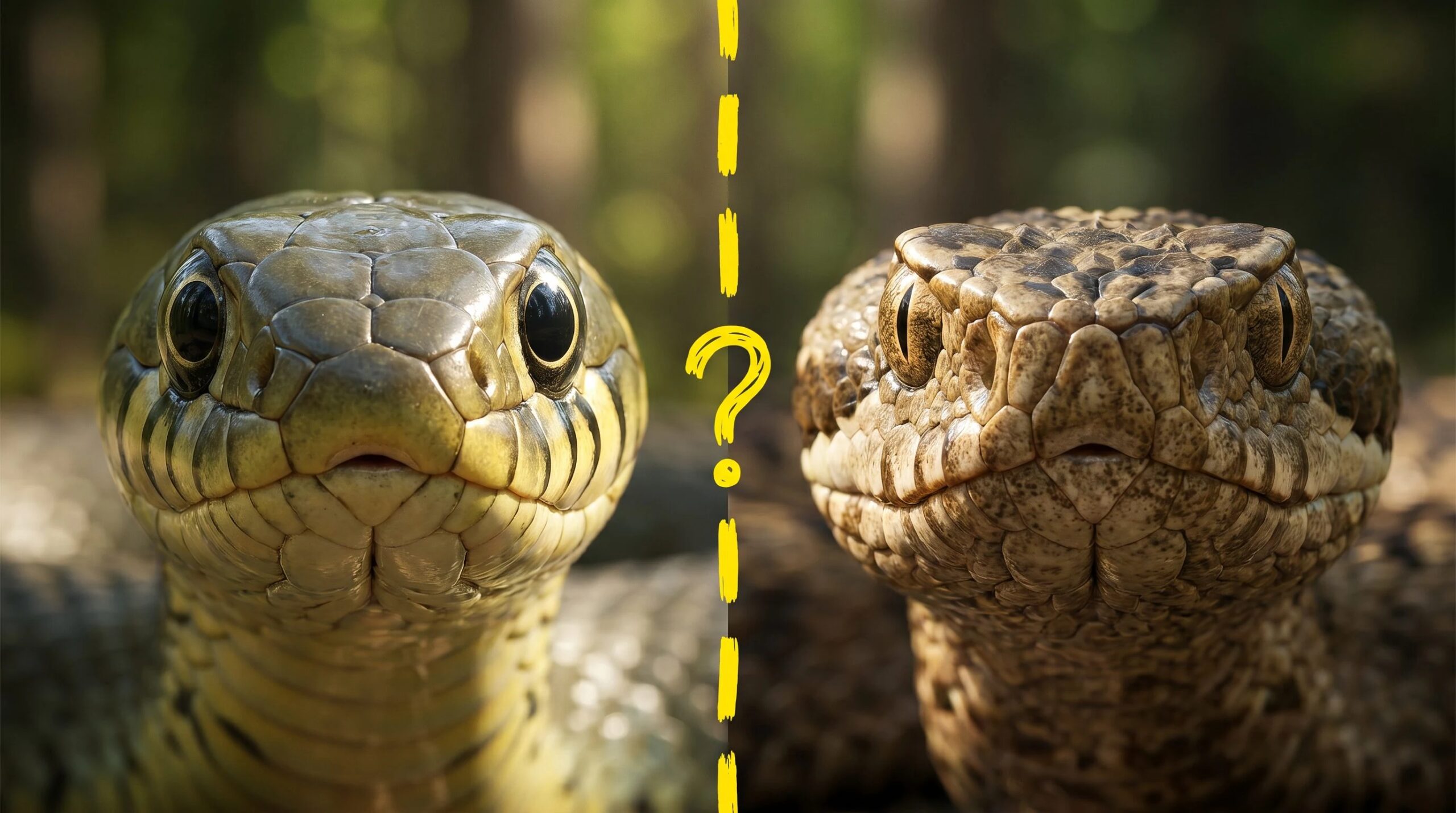
With the arrival of the summer and the inevitable outdoor trips, the probability of encountering a snake on our paths increases considerably. In Italy there are over 20 species of snakes and it is essential to know how to distinguish two very specific categories: the snakescompletely harmless, and the viperswhich are instead equipped with poison. Recognizing them at first glance is not difficult if you know the four key details that differentiate them: the shape of the pupil (round for snakes, vertical for vipers), the geometry of headthe scales and the proportions of body and tail. Learning these differences is essential not only for personal peace of mind, but also to avoid harming harmless animals that are important to thebalance of our ecosystems.
The main differences and characteristics
Distinguishing a viper from a harmless colubrid (the family to which snakes belong) is quite simple if you know where to look. There are four details to pay attention to:
- Eye and pupil: it is the most marked distinctive feature. Snakes have round pupilsvery similar to human ones. Adders, on the other hand, have one vertical and elliptical pupiljust like that of cats.
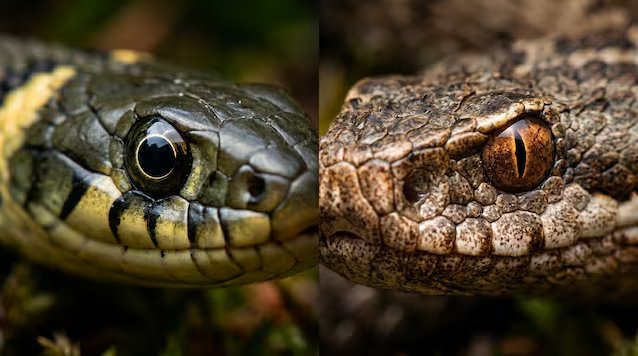
- Head: the shape of the head gives us an excellent clue. Snakes have an oval and tapered head, which follows the line of the body smoothly and continuously without clear gaps. Vipers, on the other hand, have a triangular-shaped head (with a wide base and narrow snout), clearly distinct from the rest of the body. Be careful though: although it is a good indication, it is not an absolute distinctive feature, as even some harmless snakes can flatten their heads and assume this shape if frightened.
- Scales on the head: if you look at the animal closely, you can notice that snakes have large and smooth scales, similar to plates. On the head of vipers, however, the scales are very small and numerous.
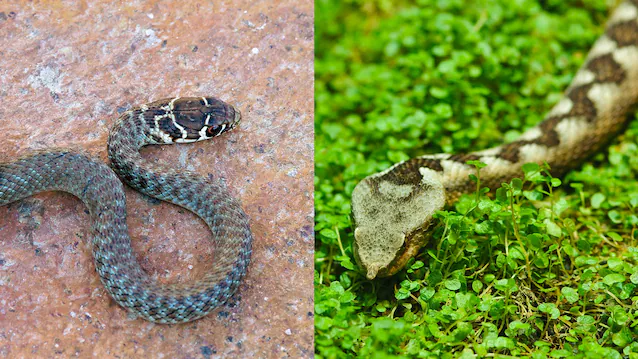
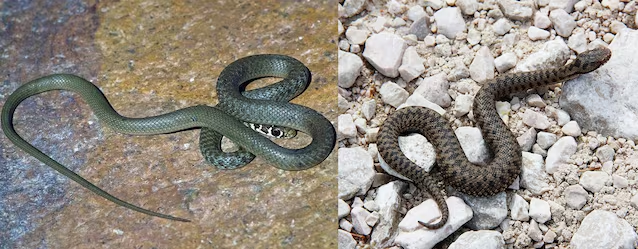
- Body and tail: snakes are agile, usually longer and slim-built, with a tail that tapers very gradually. Among the most common snakes and harmless colubrids we find the grass snake (Natrix natrix), a frequenter of watercourses, which easily reaches i 120cm longbeing able to reach 150-200 cm in the largest female specimens; similar in habitat and size (100-130 cm) is the tessellated snake (Natrix tessellata). Also very well known is the rat snake (Hierophis viridiflavus), the classic blackish or yellow-black snake of our countryside: harmless and very fast, measuring between 150 and 200 cm. Adders, on the contrary, appear much stockier and shorter, and their tail narrows abruptlyalmost as if it were an appendage separate from the rest of the body. There common viper (Vipera aspis), the most widespread species in Italy, and the marasso (Vipera berus), widespread in the Alps, measure on average just 60-80 cm. The is slightly larger horned viper (Vipera ammodytes), present in the North-East and recognizable by a small horn on the snout, which reaches 90 cm. In the central Apennines, however, lives the Orsini’s viper (Vipera ursinii), the smallest of all, which rarely exceeds 40-50 cm.
What to do in case of encounter and bite
If you find yourself face to face with one of these reptiles and you can tell from the pupils or the shape of the body that it is a grass snake (therefore not poisonous), you can rest assured: at the first noise, it will most likely run away.
However, if you realize that you are looking at a viper, you should know that they are absolutely not aggressive animals ready to chase people. Being deaf to aerial sounds but capable of excellent perception of ground vibrations, if they hear your approaching footsteps, their first and only option is always to hide and flee. These animals love to hang out sunny places with little vegetationhiding under stones or among low shrubs. The attack, therefore, occurs solely and exclusively to defend themselves: they bite if they are accidentally stepped on or if you put your hands on them inadvertently.
To prevent these inconveniences in the countryside or in the mountains, that’s enough wear appropriate clothing (closed shoes and long trousers), avoid moving stones with bare hands And use sturdy leather gloves if you collect berries or mushrooms under the bushes.
If a bite were to occur and the animal had to inoculate the poisonpoisoning will generate local and systemic effects. Initially, intense pain, swelling and redness are felt in the affected area. After about 30 minutes, general complaints such as dry mouth, headache, vomiting, tachycardia and lowering of blood pressure may appear. A similar dose of poison usually has effects of little relevance in a healthy adult individualbut it can be dangerous in a child or small pet.
In the event of a bite, the guidelines of the Alpine Rescue and the ASL Prevention Department are clear: it is absolutely necessary to stay calm and not run, because movement makes the spread of the poison in the blood more rapid. You must call immediately 112 and, while waiting, wash the wound if possible with soap and water, strictly avoiding alcohol. “Do-it-yourself” attempts to cut the wound or aspirate the poison are absolutely useless and harmful.
