The market of non -alcoholic beer It is always growing, among people who cannot drink alcohol (like pregnant women), those who do not drink because they have to drive and those who simply prefer not to take alcohol without sacrificing the taste – more or less the same – of beer. In fact, a non -alcoholic beer, as well as a normal beer, still contains Malatate cereals, hops, yeast and water. The only thing missing is theethanol. To eliminate it, you can operate both at the end of the production of alcoholic beer, eliminating ethanol by extracting alcohol through vacuum distillation or special membranes; or during the production process itself. In this case, the formation of Aannol is limited reducing the number of sugars from which fermentation could start, while another method provides for the use of “sleeping” yeasts: genetically modified so that they do not fermentation, from which the ethanol derives. In any case, No process guarantees the total absence of alcohol: In fact, Italian legislation also identifies a margin of content of ethanol (1.2%) under which beer can be considered non -alcoholic.
How to remove alcohol from normal alcoholic beer
It is possible to produce non -alcoholic beer simply by removing the ethanol in post-production of alcoholic beer. This process allows you to obtain a beer as similar as possible to a normal beer, even if in any case it is inevitable that there are some Read organoleptic differences. The methods to remove alcohol are mainly two: vacuum distillation and membrane techniques
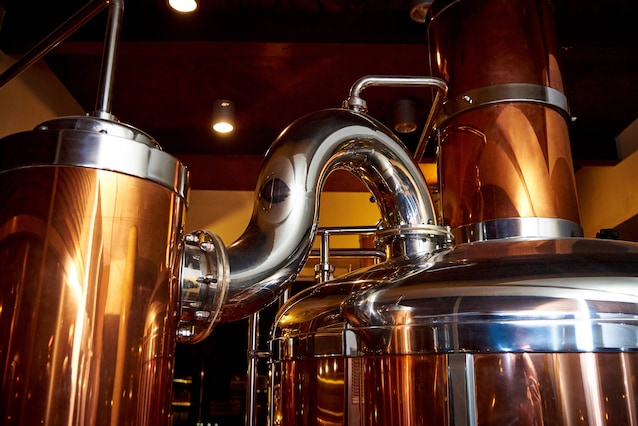
Vacuum distillation for the evaporation of the ananol
The elimination of alcohol takes place thermally thanks to theEvaporation of the Aannerol. The boiling point of the ananol is 78 ° C, but it is possible to lower it by reducing the pressure, up to 45-50 ° C. That’s why we talk about vacuum distillation: the drink is heated in an environment a low pressure Where ethanol evaporates and creates precisely the “emptiness”. Thanks to this method it seems possible reduce the alcohol content up to 94% and on average obtaining a concentration of ethanol at 0.5%. The disadvantage of this method is that some volatile compounds such as thecarbon dioxidewhich can be subsequently reintroduced.
Membrane techniques for the separation of alcohol
The beer is pressurized to pass it through one organic semi -permeable membrane which retains alcohol. In the most common variant the process takes place for dialysis: the alcoholic molecules pass through the membrane thanks to the difference in different concentration between the two liquids divided by the membrane. The membrane is structured with gods pores of the right sizes To pass only what we want and exclude ethanol. Also in this case, however, it is inevitable to lose some compounds in the process that determine the color flavor of the drink.
In some cases the alcohol that crosses the membrane is simply separated (dialysis, inverse osmosis); In other cases, however, evaporate (pervaporization).
Limitation of ethanol formation during the production of beer
These techniques limit the production of ethanol even before it forms, intervening on the biological agents involved in the beer production process through changes during the production of the must or during the fermentation process.
Changes during the production of the must
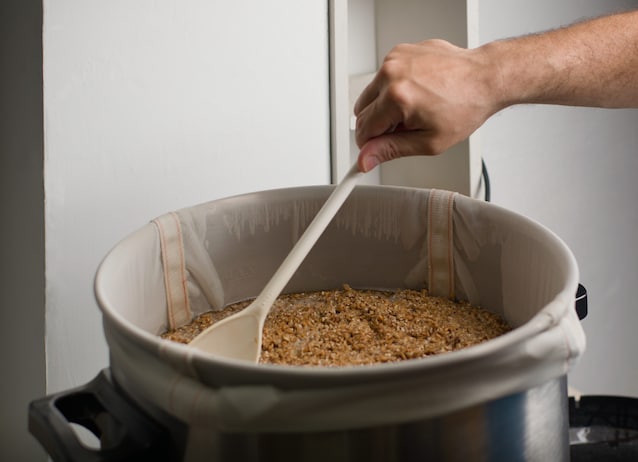
To avoid the production of ethanol you can use warables that have a reduced quantity of fermentable sugars. In the normal production of beer, the malgato barley is reduced to flour and mixed with hot water: at this point the enzymes that degrade the starch in simpler sugars are activated.
This step takes the name of amount and takes place at temperatures of about 60-80 ° C. To produce soft beer, the goal in our case is to prepare a must with less sugars than the norm (to then avoid fermentation and alcohol production). The roads are 2:
-
- It operates to higher temperatures of normal (75-80 ° C) in order to activate less enzymes. At these temperatures only a few enzymes remain active, the α amlasi, only the one that is enough to break down the starch into smaller fragments, but not enough to start the fermentation and production of ethanol.
- It operates to lower temperatures than normalalmost with “cold” water, at temperature less than 60 ° C. In this way, color and aroma are extracted but the extraction of complex carbohydrates that would act as a base for fermentation are limited.
Changes during the fermentation process
The elimination of alcohol in this productive step can be made in several ways, but the goal is always the same: change the metabolism of the yeasts and make sure they are not very fermentable.
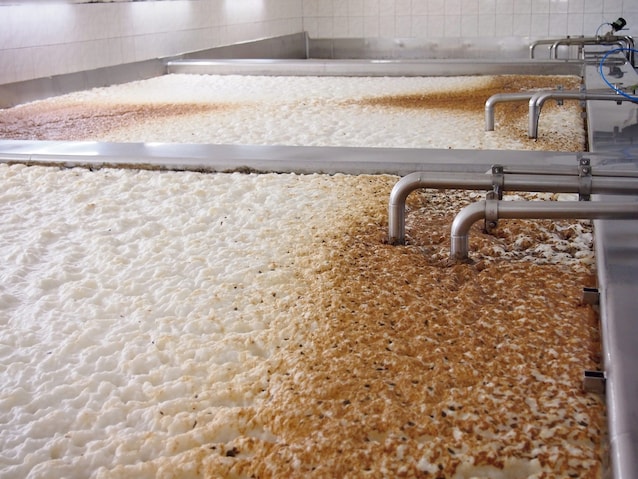
After the amount, the must is brought to a boil. Meanwhile, the hop. The mixture is centrifuged and let it cool and then the yeastto start the phase of fermentation. Here the beer becomes alcoholic because the yeast, reproducing itself, feeds on the sugars present and produces carbon dioxide and ethanol.
And here we intervene again. With the Change of fermentation conditions or inactivating the yeasts Alcohol production can be avoided. The most common way is that of cool The beer, bringing it up to 1 ° C before or during fermentation, at the right time to “block” the formation of ethanol. Another way is to modify genetically The yeasts to make them “lazier” to the formation of ethanol.
Does soft beer really have zero alcohol? Not exactly
Citing the current legislation in Italy, according to article 2 of the decree of the President of the Republic (Presidential Decree) 30.6.98 n. 272:
The denomination “non -alcoholic beer“It is reserved for the product with Plato Grado not less than 3 and not exceeding 8 and with a volumric alcoholic title not exceeding 1.2%.
For grade piche We mean the quantity in grams of dry extract contained in 100 grams of the must from which the beer is derived (art. 35 articles 1, 2, 3, 4 DLVO November 27, 1992, n. 464). There is therefore talk of quantities of sugars present in the must before fermentation. There is no precise correspondence between alcoholic degree and Plato degree, but we know that they are two directly proportional values.
So, non -alcoholic beer has very low alcoholic content (maximum 1.2% in Italy) but not zero.
