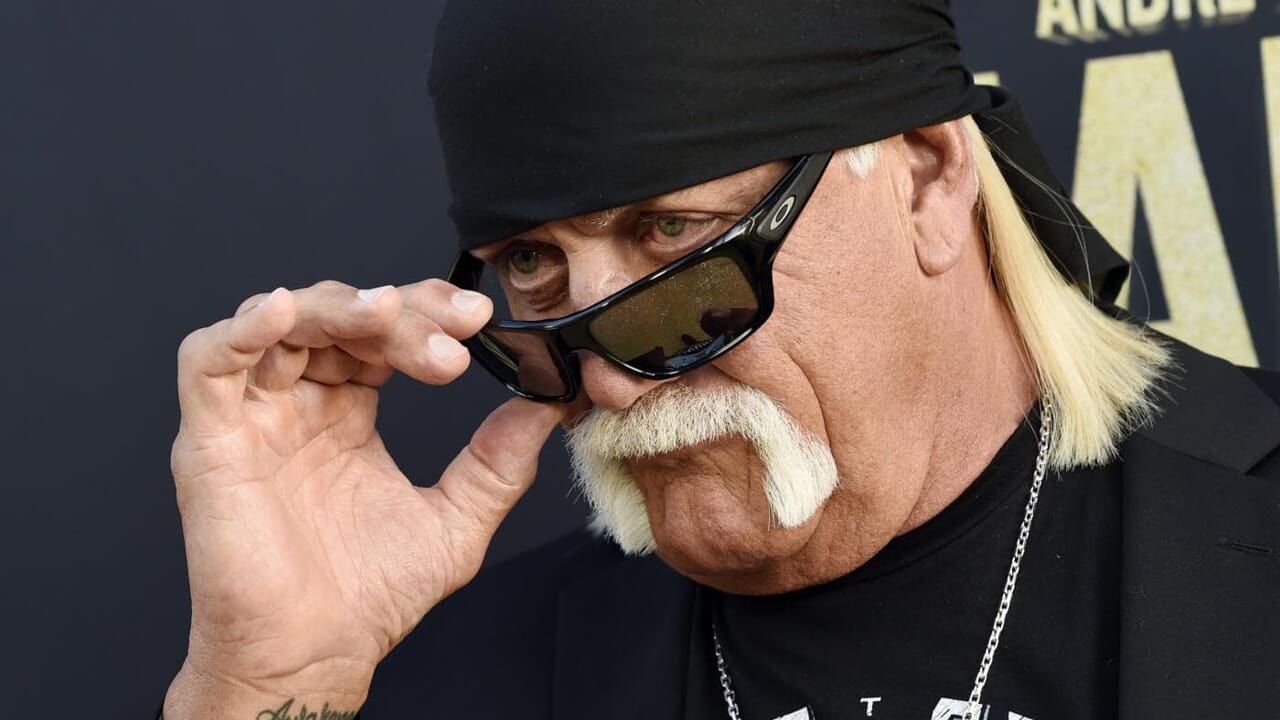
Hulk Hogan is dead: a life between glory, scandals and redemption
The death of Hulk Hogan, struck down in his home in Florida by a heart attack at 71, a bit like that of Ozzy Osbourne a few days ago, marks the end of an era. Not only for wrestling, but for all that pop culture of a clear American matrix that transformed the 80s and 90s into a colored theater of muscles, bandans, screamed slogans and soap opera in slow motion. The triumph of the glam.
With its disappearance, the world loses one of the most recognizable – but also more controversial – figures that the sports entertainment has ever produced. Hogan was not just a wrestler. It was a brand, a symbol, a gigantic media construction. But it was also a man full of contradictions.
Hulk Hogan, the superhero that wrestling needed
Recorded at the registry as Terry Gene Bollea, born in 1953 in Augusta in Georgia, Hogan became a global giant long before the digital era. It was the absolute icon of World Wrestling Federation (Wff), The good, muscle but above all patriotic face of a America that had a desperate need for heroes in shoes.
At the time the US iconography was all marked by the magniloquence of the country of freedoms. The US was everyone’s homeland, the bulwark of self -determination: the place where anyone could become what he wanted to become. Aspects that the TV proposed with full hands also with its television series (hunger) and its films (Rocky). In a world that was deeply changing and in which the world proposed many ‘bad’, Hulk was the good hero to whom anyone who aspired to a free, pure and unassailable homeland should have been inspired.
Unfortunately, like the whole world, it has understood over the decades one thing is the story. But narrative did not always respect reality: even for a certain self -referentiality of narrators.
The same thing goes for Hogan, whose career, as well as his life, was made of sensational successes, dizzying heights but also of collapses, of dazzling reflectors who left heavy shadows behind.
The man who transformed wrestling into global show
Hulk Hogan was, first of all, an innovator. Before him, professional wrestling was a phenomenon of niche, regional, often marginal. Country fair stuff. The shows were few: on TV only the best went and only once in a while. The so -called storylines were almost impossible and wrestler earned mainly in the arenas, and traveling. Mexico, Japan, Korea. And every evening a different American sports hall, very often in the provincial city. Then the TV came, and changed everything.
With Hogan’s entry into the WWF (today WWE), and under the visionary guidance of Vince McMahon, wrestling became a global industry. The turning point was Wrestlemania I who in 1985 was just a pale idea of what the most important show ever would become.
Hogan paired with Mr. T against Rodddy Piper and Paul Orndorff. An event that was broadcast in pay-per-view, with celebrities such as Muhammad Ali and Cyndi Lauper in the ring, at the time at the height of his fame thanks to Girls Just Want to Have Fun. The lauper, few know it, is a great wrestling enthusiast, and in the video of her song she had wanted a wrestler, Captain Lou Albano. Which would also appear in Goonies and in She Bop. That edition of Wrestlemania was not much to the truth. But he gave a signal. Wrestling had become commercial.
Which McMahon sensed perfectly: thanks above all to the extraordinary charisma of Hogan. The American audience – and then the global one – fell in love with his exaggerated physicality, of his shouted “Promos”, of the famous arrocchito cry “Whatcha Gonna do when Hulkamania Runs Wild on you?”. But Hogan was also the first athlete who really overcome the perimeter of the ring: he became an actor, in unlikely films such as “Suburban Commando” or “Mr. Nanny”, certainly not of the blockbusters, however making a lot of money as an advertising testimonial and television character. It was everywhere.
Rocky III: the film debut and the meeting with Stallone
One of the most famous anecdotes of his career out of the ring concerns the film “Rocky III” (1982), in which he played the role of Thunderlips, thundering lips, the giant wrestler who faces Rocky Balboa in a charity match. Sylvester Stallone, at the time at maximum success, chose him personally for the part. During the filming, Hogan accidentally hit stallion with too real move, causing him some bruises and bruises. Stallone asked him to be a realistic: but the ribs hurt him for a couple of days and had to suspend the filming.
Later, the actor declared that the blow had “flying three meters further” and that Hogan’s strength was absolutely authentic. Just as he was completely unable to collect and cushion. In that segment Hogan literally makes Stallone pale: to the point that in the first projections it is said that the protagonist was sincerely worried … “He put me in the shade …” said Stallone.
That role was fundamental to consolidate the popularity of the wrestler, which from that moment also became a well -known face of Hollywood pop cinema and culture. Even without ever giving life to such significant roles.
The religion of the muscle
Wrestlemania inevitably generates Hulkamania, which becomes more than a fashion. It was a simplified philosophy in four precepts: eat well and take vitamins, say the prayers, believe in yourself and trained hard. A simple message, suitable for a young audience, but conveyed with a disruptive effectiveness. Hogan represented the victory of the good on evil, of the man who gets up after each blow and points his finger at the sky by invoking a higher force. It was theater, of course. But a theater that has marked an entire generation.
A great victory, an extraordinary defeat
The two moments that characterized Hogan’s life more than any other were a victory and a defeat. The victory against the monstrous André The Giant, a very kind and very polite nobleman of Franco-Bulgara origin sick of acromegaly. The WWF made one of her most impressive characters. His name was André Roussimoff and McMahon was convinced that one with those hands, as big as badils, and those dimensions, 2.25 in height for almost 250 kilos of weight, could not be good.
The feud between André and Hulk is written in the stone. In Wrestlemania III Hogan raises him and crashing in the Retroit silverdome ring, conquering the WCW and WWF belts. Who will then lose against The Ultimate Warrior, Jim Hellwig. Here McMahon was convinced that neither of them could be bad: therefore he made them win both. The warrior physically, back Hogan in a clean way, which has not happened for over seven years. And the Hulkster morally. Raising the arms of his opponent in a warm embrace that remains one of the strongest and most exciting images of the wrestling of that generation. It was Wrestlemania VI, 1990, Toronto.
Shadows and crisis
From there the image of Hogan tied to the ring begins to lose some blows. Also due to some contradictions and a public image that hid many shadows. For years Hogan denied the use of steroids, only to admit it to court in 1994 during the WWF trial. His testimony was crucial and devastating: he revealed a toxic environment, where doping was endemic and the well -being of athletes an illusion. It was a first great crevasse in the image of the idolless idol.
The evolution: from hero to villain
Hence one of the most surprising turns of Hogan’s career in the 90s, when he landed at the WCW and reinvented himself as “Hollywood Hogan”. He abandoned the yellow and red bandana, and tinged his beard black. It was the face of the New World Order (NWO), a rebellious faction that wanted to subvert the dynamics of mainstream wrestling. From hero to bad, but always absolute protagonist. To hate the McMahon plot that was becoming a landowner and bought one by one all the rival companies by inserting the acquisitions in the storylines.
The audience understood up to a certain point, certainly hated him, but he could not help but follow him. It was yet another successful transformation.
Reality show and scandals
In the 2000s, Hogan returned in the spotlight thanks to the reality show “Hogan Knows Best”, who showed him in the guise of Father-Padrone, clumsy but also extremely caring against his first wife Linda, married in 1983, and of his sons Brooke, blonde to scream with vility as a singer, and nickname, ungrammatical son with a great passion for fast motorcycles and cars, contravention.
Even that parenthesis ended up in a media tragedy: he cheats on his wife with one of his daughter’s producer, Linda gives him up, his son Nick causes a serious road accident and ends up in jail.
The scandal of some videos, leaked in 2015, in which Hogan pronounced very heavy racist insults, only comes later. But it is devastating. The WWE immediately cuts it from each apparition, removing its name even from the virtual hall of hunger on its site. Only after many years of Limbo is “forgiven” and will it be allowed to return to the ring, as a performer and testimonials. But it is no longer the same thing.
Styled and grieved for his personal events, Hogan will recite a character ever closer to a cartoon in which he almost perhaps no longer believes him.
The latest images see him keep up with a stick. It has an artificial hook and knees in pieces. He gives himself to politics: Donald Trump, another great wrestling enthusiast, of whom he has been a friend for unsuspected times, supports force.
Beyond the character, the contradiction
Hogan was a giant. But also a man often victim of his own image. For every child who looked at him like a superhero, there is an adult who has learned to distinguish the actor from the character. For each “leg drop” that inflamed the arenas, there were chronic back pains, dozens of operations, addiction to painkillers. For every smile in front of the cameras, there were family fractures, silences, accusations. And a dark pain that not even two other weddings will help to keep under control.
“Suicide? Of course I thought about it. When you live a life like mine, you’re not in the way, and you don’t want to accept silence, the people who turn your shoulders …” he said in a dramatic interview a few years ago.
The inheritance
Of Hulk Hogan today remains a very powerful visual legacy: the arm raised, the gesture of the hand in the ear, the triumphant revenues with the music of “Real American” in the background. There remains an icon that brought wrestling to the houses and hearts of millions of people. But there is also a man with limits, wrong choices, ruinous falls. Wrestling, reinterpretation of life and his paradoxes, guaranteed him lights and shadows. Because even the idols, sooner or later, have to deal with reality.
