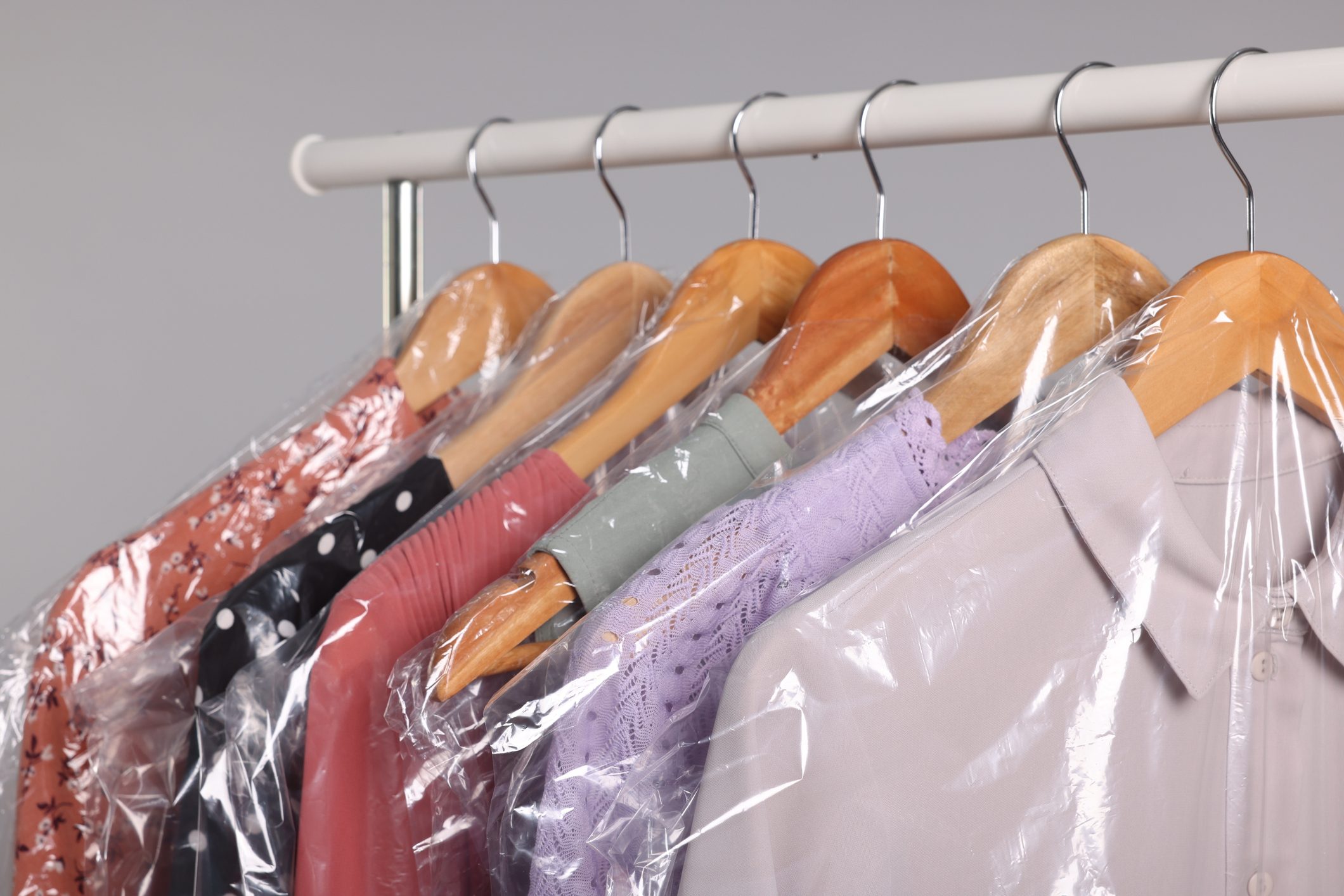
The term “dry cleaning”, or dry cleaning in English, indicates a fabric cleaning process carried out in non-aqueous solvents. Even if it makes us think of our clothes being “magically” washed without liquids, as if only gas or strange cleaning tricks were used, there is nothing magical about it. Actually, dry cleaning is not liquid-freebut it is free of water. This cleaning process, very similar to that of traditional washing machines, uses alternative chemical solvents to water, but still liquids, such as perchlorethyleneto clean fabrics, especially delicate ones. The name “dry” therefore only serves to distinguish this method from traditional domestic washing, which uses water. But be careful: the perchlorethylene brings with it numerous environmental and health risks for operators. For this reason, over the years, technologies such as dry cleaning withliquid carbon dioxideto reduce the impact on the environment and our health.
Because it is called “dry” if the laundry uses a liquid
In dry cleaning, water is replaced by a other liquid capable of dissolving dirtespecially that one fatone of the most “difficult” dirt to remove. A bit like when we try to wash a greasy pan: water alone is difficult, but a specific detergent works better. Now, we know well that in classic washing machines soap is also used in addition to water, but often the two may not be enough and we have to carry that particular t-shirt in laundry because there is a stain that just can’t be cleaned. That’s why we need another one solventalways liquid, but which is not water.
The term “dry”, therefore, it does not describe the physical state of the processwhich is not “dry” at all, but the fact that water is not used as a washing medium. It’s a definition historical and technicalnot literal.
How dry cleaning works and what the symbol is
The process of dry cleaning is actually very similar to a washing machinewith the clear difference that this time, instead of water, the basket contains a non-aqueous liquid solvent. The garments are immersed, moved gently and then the solvent comes recovered, filtered and reused. A real process designed ad hoc.
After the cleaning phase, the solvent is removed from the fabrics via controlled evaporation. In the end, the clothes turn out dry, clean and ready for ironingas if they came out of a washer and dryer at the same time. Hence the illusion arises that nothing was used, but in reality the liquid was definitely thereexcept it wasn’t water and we didn’t realize it.
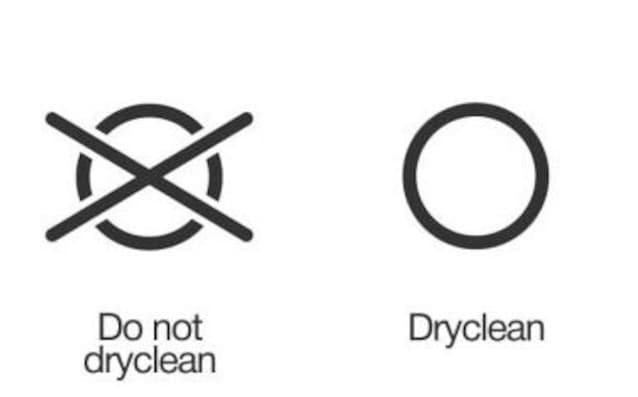
On the linen there are symbols that specify whether an item is suitable for dry cleaning or not, these are an empty circle and a circle crossed out with an
What solvents are used? Effectiveness and risks of perchlorethylene
In dry cleaning, for many years il has been used as a solvent perchlorethylene (or tetrachlorethylene), a liquid very effective in removing oils and greases without actually wetting the fibers of the fabrics as the water we are used to would do. This allows you to avoid common problems as shrinkage, deformation or felting delicate fabrics, such as wool, silk or structured clothes.
Despite its high effectiveness in washing, perchlorethylene has been widely used over the years criticized due to its harmful effects on the health and the environment. According to bodies such as the EPA (US Environmental Protection Agency), exposure to the vapors of this solvent can be harmful to humansin particular for laundry workers, leading to the regulation of its use in closed places. Not only that toxic substancetoday perchlorethylene is referred to as real suspected carcinogen. In short, a substance to avoid.
In addition to the health aspects, one important aspect should also be highlighted environmental problem: perchlorethylene can disperse into the air and contaminate soil and groundwatermaking the cleanup of the affected areas difficult and expensive.
Alternatives to perchlorethylene for more sustainable methods
These critical issues have pushed the dry cleaning sector to search more sustainable alternative methodscapable of reducing the impact on humans and the ecosystem.
Among the modern alternatives we find systems that replace perchlorethylene with other less dangerous liquids or with different technologies, such as dry cleaning based on liquid carbon dioxidedesigned to limit toxicity and environmental pollution. The fundamental principle remains the same: no water is usedbut a alternative liquid medium to protect delicate fabrics. Even in this case, however, there are risks, given that carbon dioxide remains the main greenhouse gas responsible for global warming, but the systems are often designed closed circuit to minimize, if not eliminate, its dispersion into the environment. There is no escape, if we want to replace water we will have to deal with a liquid of a different nature but which, inevitablywill give us problems that we didn’t have before: the objective is to reduce environmental and toxicity risks to the bare minimum.
