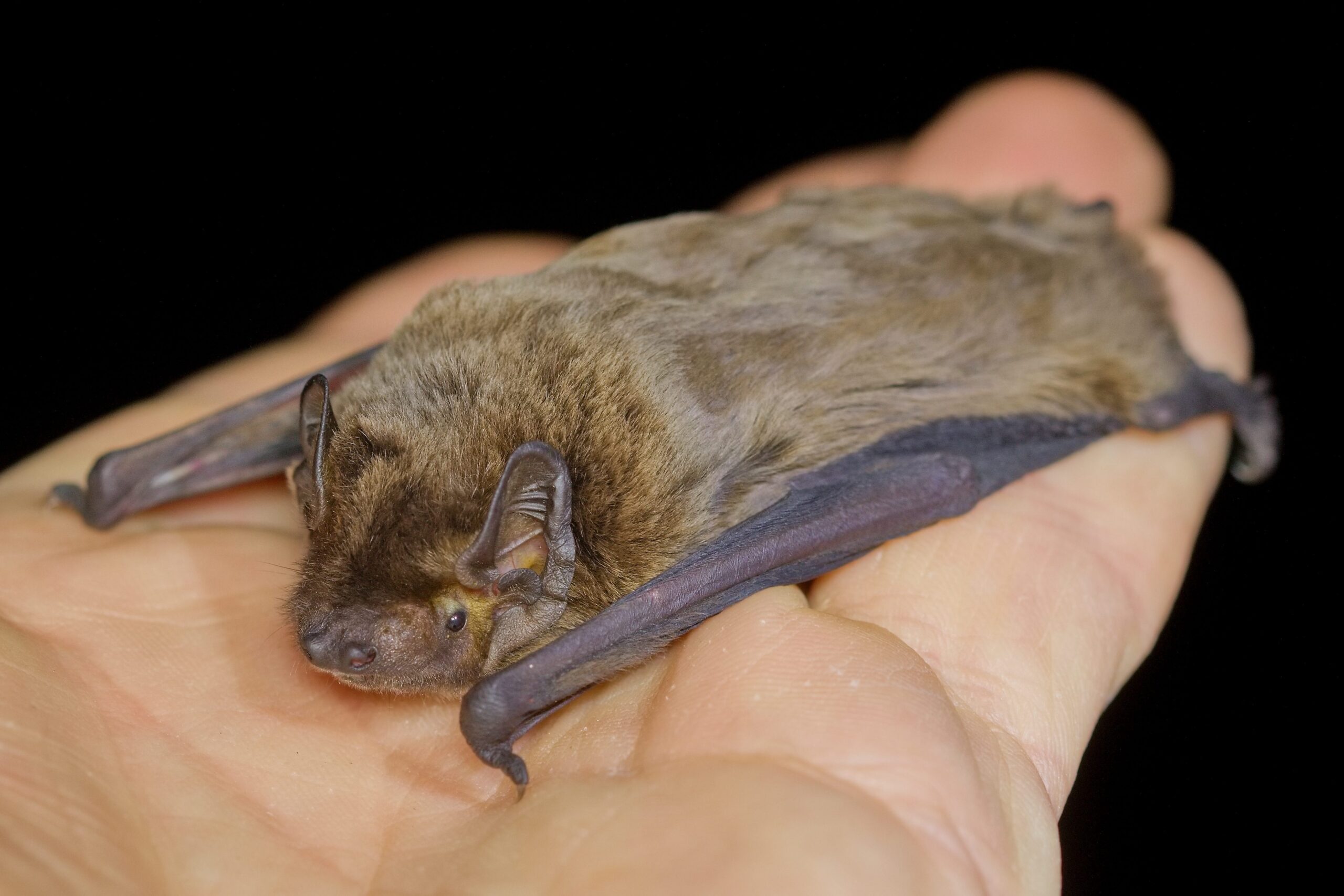
It is one of the most popular beliefs in the West: i bats attack the hair (in particular the female ones) During the flight, and once grasped, they do not give up the grip, to the point of having to resort to scissors to detach them. A popular legend apparently very ancient, but without any foundation: the bats do not fly intentionally towards the hair, and if they pass near our head it is because they are on the hunt for some insects that flutters us, thanks to the combination. It is not impossible that a disoriented bat goes to bang against your head, but this eventuality is rare and the animal it would immediately give up the griphaving no interest in remaining attacked. The bats, nocturnal creatures frombizarre In our eyes, they are among the most demonized and misunderstood animals, protagonists of numerous other popular beliefs: the idea that they can infect us with anger with simple contact, but this is one is also very widespread. false belief.
Bats that stick to the hair: between myth and reality
Among all the legends associated with bats in the western world (seeing them flying on certain occasions would be an omen of bad luck or even death, their urine drops the hair…) The one that stick to the women’s hair and who do not leave the grip is one of the most common. In the rest of the world, this belief does not seem to be widespread, at least not in the same way, and the attitudes towards these animals, sometimes positive, sometimes negative, are influenced by their respective cultures and superstitions: in Western Asia, for example they are seen as demonic creatures carriers of unfortunate, while in China and Indonesia the opposite happens, and of the bats that nest near a rice field are considered hope of a good harvest.
Like many legends it is not clear exactly when it originated, but in all likelihood it is the result of misunderstood observations. The bats are Excellent flyerscapable of changing direction suddenly to pursue insects, which identify and trace thanks to their sophisticated eco -termination. This flight, which In our eyes it appears chaotic And uncontrolled, it offers the false impression that bats can slam us at any moment.
When they lower suddenly, the bats give the impression of flying “against us”, but it is very likely that they are interested in the insects that are around us: by emitting a lot of body heat and co2 With our breathing, we attract many night insects, especially mosquitoes. A study by Netherlands Institute of Ecology He also showed how artificial lights, around which many night insects accumulate, the activity of the bats also increasethus increasing the chances of an accidental clash with a human being.
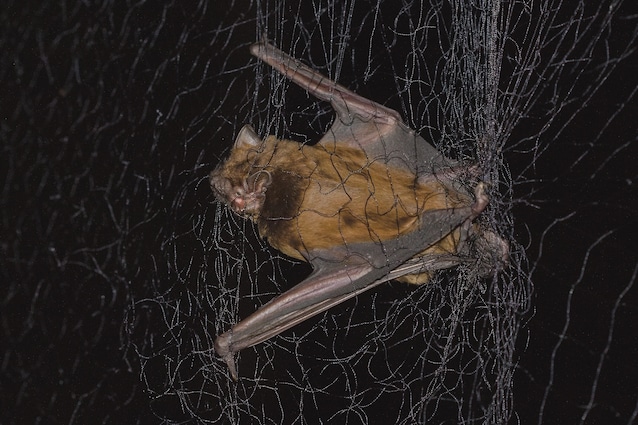
Another widespread belief, associated with the previous one, is that all the bats are infected with anger And that they transmit it to only contact with man. Although many species of bats are bearers of pathogens (it is one of the animals most associated with the phenomenon of the Spillover, the jump of one disease between one species to another) this too is nothing more than an exaggeration. There anger is transmitted with the biteor the passage of saliva on an open wound, and not with a momentary and superficial contact. A study on colonies of Italian bats carried out by the Experimental Zooprophylactic Institute of the Venezie has monitored the presence of Lyssavirus for eight years, a family of pathogens that also includes anger and considered potential candidates to also infect our species. However, the study did not reveal the direct presence of the anger virusand therefore no risk of transmission to the human being. Anger has in fact been declared absent in the Italian territory Since 2013: neither bats nor other animals can transmit it to us.
The experiment to dispel the legend of the chiroteri who tease the hair
So the bats do not fly to our hair to fly, but it is true that if they happen to us by mistake, would they not give up the grip? To test this statement, between 1958 and 1961, the naturalist Gathorne-Hardy, Quinto Duke of Cranbrook. Then president of the English Mammal Society, he recruited two young girls, One short and curly hair, the other with long hair wavy and tied in a chignon. The duke placed four different bins of bats on their headscommon throughout Europe: NYCTAUS NOCULULA, Plecotus Auritus, Myotis Natterri And Myotis Daubentonii. The all cases, the bats did not make the grip nor were stuck in the hair of the volunteers, and They took flight alone in a few moments. The experiment was repeated several times with the same result. Even if it is from the only scientific study carried out on the subject (and with a rather small sample) it is still an element that allows us to dispel this myth. Furthermore, there is no reason why a bat should be interested in our hair, or consider them a safe place to nest.
