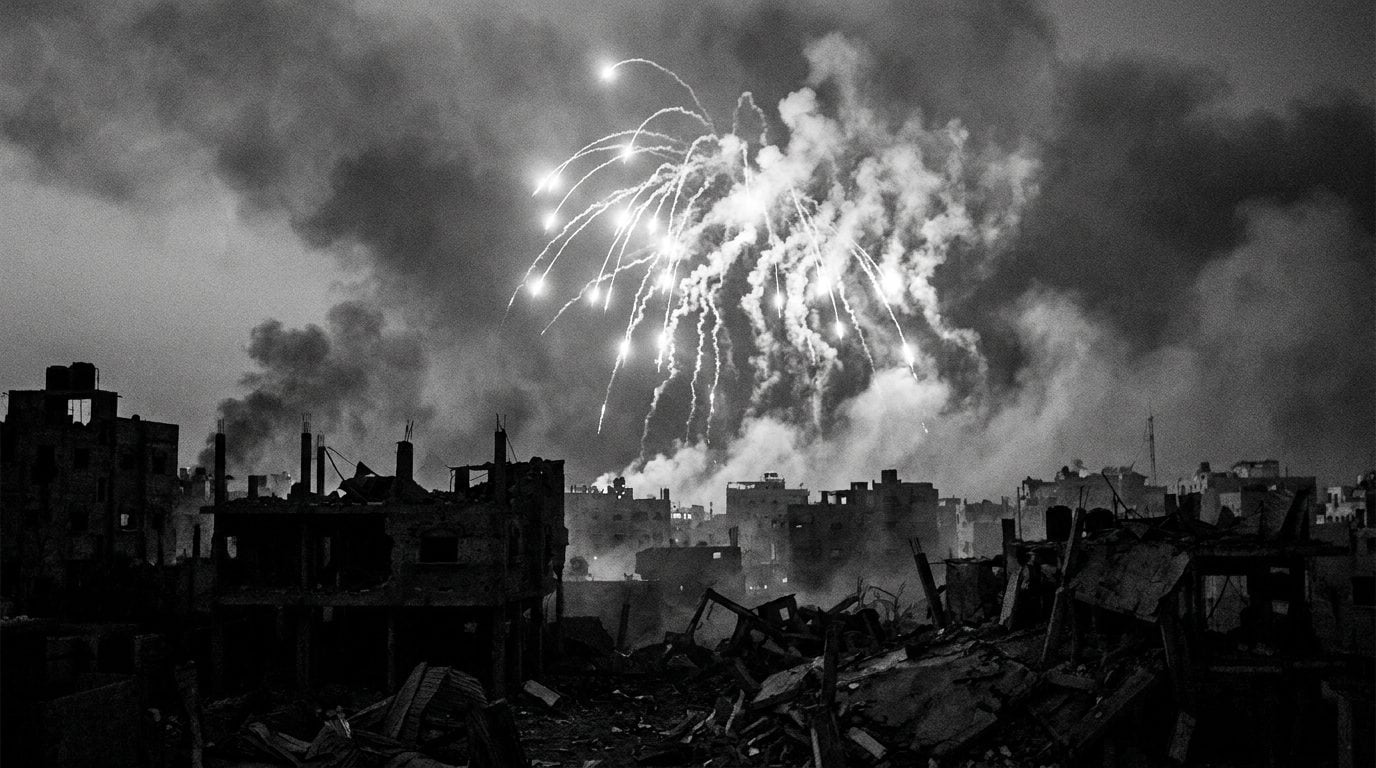
Israel he was again accused of using white phosphorus weaponsan extremely harmful incendiary substance, over densely populated areas of Lebanon during its conflict against Hezbollah. The use, reported by experts and humanitarian organizations such as Human Rights Watchhas also been documented by New York Times, who collected and verified video evidence where the characteristic smoke trails of this type of munition were most recently observed on May 30 in Nabatieha city of about 40,000, as Israeli forces captured Beaufort Castle.
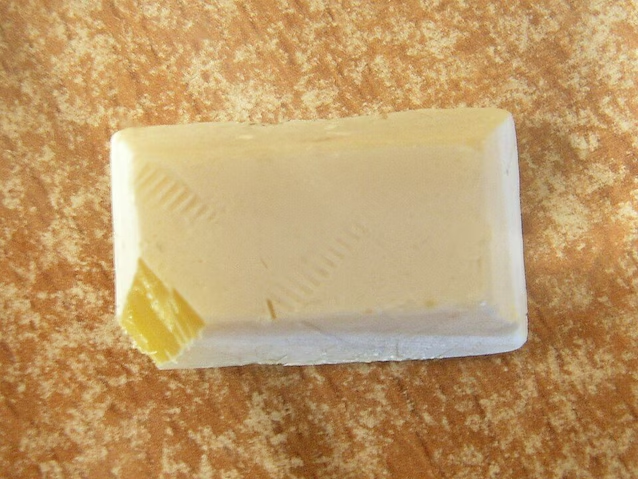
White phosphorus is a chemical component characterized by the fact that it burns very violently when exposed to air and other external elements. Because of his pyrotechnic characteristics it found one wide range of use in the military sectorbut i serious side effects that it can cause, from extremely painful wounds that do not heal, to death, have also led to its use being regulated at an international level. In this context, the repeated accusations made against the State of Israel of having used white phosphorus ammunition in Lebanon (and beyond) must be treated with the utmost seriousness.
Israel’s latest accusations over the use of white phosphorus munitions in Lebanon
Already the March 9, 2026 a few days after the start of the Iranian War and the reopening of Lebanese frontpreviously frozen albeit very precariously afterwards the fighting of 2023-2024, Human Rights Watch he accused the Israel Defense Forces (IDF) of having used ammunition loaded with white phosphorus against populated areas of southern Lebanon.
In particular, the non-governmental organization, which deals with the defense of human rights at a global level, has published photos relating to at least two attacks carried out by Israeli artillery in the Yohmor village area. Apparently the targets were buildings located in residential areas.
Also last May 30th, as documented and verified by New York Times, in Nabatiehduring the conquest of Beaufort Castle by Israeli forces, was deployed in an area populated by approximately 40,000 people.
These represent only the latest in a long series of accusations made against the State of Israelwho would have used white phosphorus ammunition also in the past conflicts that took place on Lebanese soil, but also during the series of wars fought around Gaza. Since these are geographically well delimited areas and characterized by a notable density of civilian population, the casual use of such weapons in these contexts can be considered a war crime.
Why these weapons are prohibited in inhabited areas: the effects
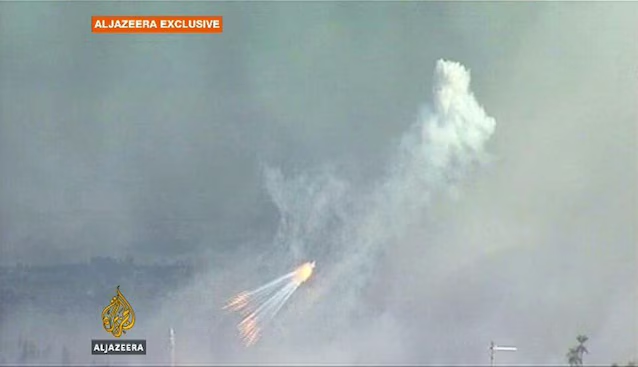
Starting from First World War up to now, white phosphorus has had a variety of uses in the war sector, come on tracer projectiles until smoke grenadespassing through i illuminating projectiles and without forgetting the real ones incendiary devices. Precisely the use made of it as an incendiary weapon during the conflicts of Cold Warespecially the Vietnam Warpaved the way for its inclusion in the group of chemical weapons but not all countries of the international community have implemented this classification.
It is an extremely toxic substance for humans and which at room temperature can react with oxygen extremely violently, igniting. There is ample photographic evidence of the devastating injuries that white phosphorus can cause once it comes into contact with the skin and subcutaneous tissues of peoplehowever up to now it has not been possible to set up any type of effective international initiative aimed at obtaining its prohibition on a global scale, while underlining its prohibition of use in areas characterized by a massive presence of civilian populations.
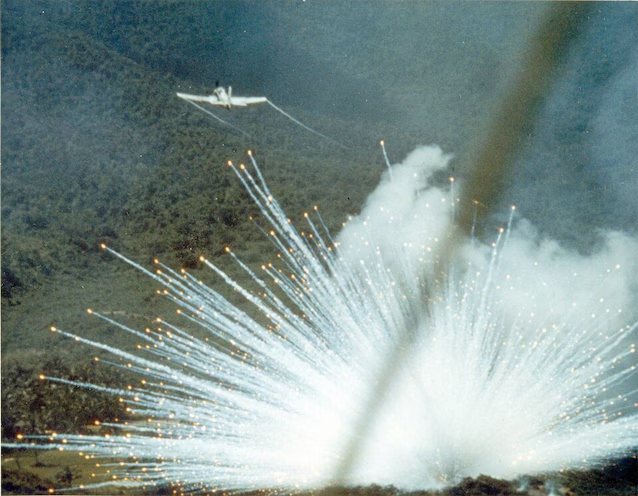
In addition to the State of Israel, other countries have also been accused of having used and are still using white phosphorus improperly, occasionally or systematically, in a myriad of conflicts (not least the Russo-Ukrainian War.
