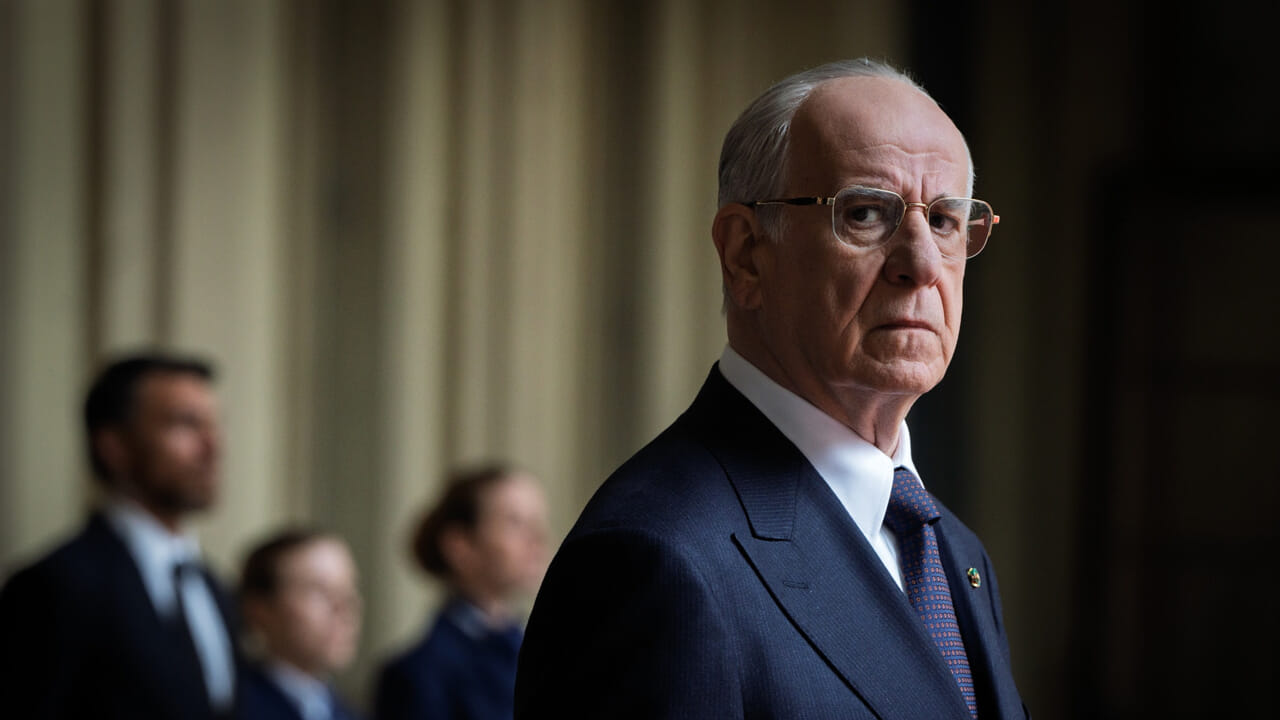
It is speaking of euthanasia and love that Sorrentino opens to the great Venice 2025
Paolo Sorrentino opens the Venice Festival 2025 speaking of euthanasia, but not only. “La grace”, this is the title of his latest film in competition in Venice 82, is a complex, intense, sensitive reflection on life, on the time that passes, on the memory, on love on betrayal, on moral integrity.
The Neapolitan director with this film that features, in addition to Anna Ferzetti, his great ally Toni Servillo, is not denied, in terms of Bravura. By now they are to their seventh collaboration on the big screen and swear that they have never had a dispute. “Ours is an unconditional love”, they revealed us in a press meeting and seeing them together seems to be so.
Euthanasia, doubt, love: so Sorrentino kicks off at the Festival
In “La Grazia” Toni Servillo plays the role of an imaginary President of the Republic (perhaps inspired by Sergio Mattarella?) Near the end of his mandate and struggling with the latest decisions to be made, including the debated law on euthanasia.
He does not know if it is right or not to sign this law – “If I do not sign I am a torturer and if I sign I am a murderer” he says in the film and so he wonders and makes us question what the best choice is, what the truth, what the method to be adopted to be able to make a decision of this type.
The subject of the film, which also speaks very well of the parents-child relationship, comes from a fact that really happened and linked to one of the choices made by Sergio Mattarella during his mandate as President of the Republic: “He granted grace to a man who killed his sick wife of Alzheimer’s and this thing affected me”, says Sorrentino who reveals, moreover, that the idea for this film dates back to four years ago, well before “
So Sorrentino brings to the Venice Festival the same theme that last year had made the Golden Lion win to Pedro Almodovar with “The next room”. But the approach to the topic Euthanasia, in this case, is without moralisms, less obvious, and for this reason even more impactful than that proposed by Almodovar.
Paolo Sorrentino: the arrow to journalists at the Venice Festival
The state of grace of Toni Servillo
Toni Servillo does an exceptional job in entering the body and mind in his character: a man struggling with difficult choices but who continually holds himself by remembering his wife, who disappeared, and trying to understand who, 40 years earlier, was his lover.
And it is precisely by becoming his character that Servillo shows us, with great generosity, what it means to lose passion for life, to always have to do the right thing, how inevitable but also beautiful generational clash with those who are still at the beginning and still dream of a future. He shows us the man behind the institution and how difficult it is to be responsible, correct and never take a false step.
In this film Servillo is in his state of grace to the point that, live, the actor from the character is barely distinguished but, perhaps, this is precisely the ultimate goal of those who play, giving himself completely to art.
You laugh, we cry, but above all it is reflected
Get ready to laugh with “La Grazia”, because unlike how much you can imagine, you laugh a lot in this film that chooses irony as a key to reading the dilemmas of life, but you also move and you have pushed you to reflect a lot. This, after all, is one of the key elements of Sorrentino’s cinema which is always very recognizable and extremely deep in its cinematographic expressions.
In fact, Sorrentino’s hand is found everywhere in this film. It is in the shots always attentive to aesthetics, in the refined direction, in the music that features the rap of Guè but also in the dialogues where each word is weighed and important for the purposes of history.
Sorrentino can be seen in the slowness of the story, which is the very part of his unmistakable style, and in that desire to reflect on the inner worries of human beings and go up to the deepest points of the soul.
With “La Grazia” the Venice Festival opens with great sensitivity, it gives us the story of an Italy grappling with the necessary changes of its contemporaneity and the rates of its conservative thought that shake off is not so easy.
When he comes out in cinemas, on January 15, 2026, “La Grazia” will surely make himself talk about himself and probably already dreams of the Oscars, even if Sorrentino – perhaps superstitiously – says he does not want to think about it.
Go watch this movie next year but know that to be able to appreciate all its shades you will have to let yourself go totally to every single emotion that this film can give.
After all, isn’t this why we watch movies?
VOTE: 7.5
The most anticipated films of the Venice Festival
