“La Preside” propaganda by TeleMeloni? A simply grotesque controversy
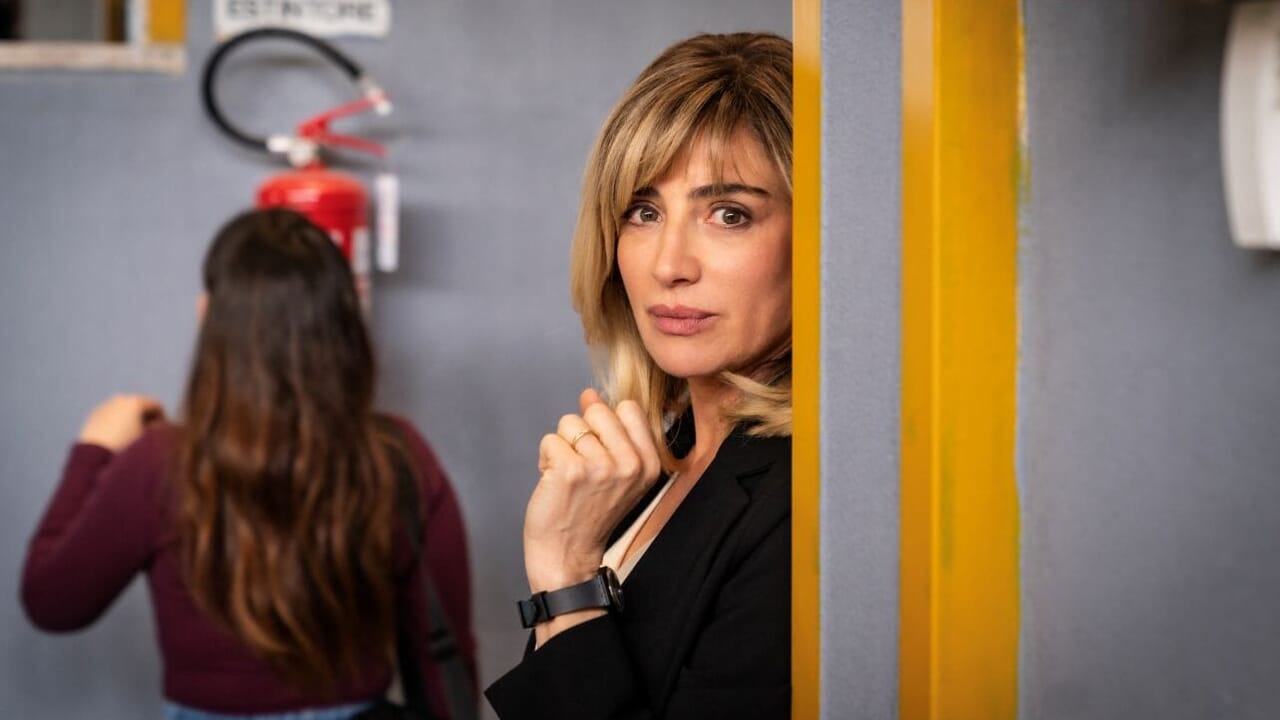
Almost 5 million Italians, to be precise 4,800,000 watched the first episode of the drama “La Preside” on Rai Uno on Monday 12 January. An event series, previewed during the Rome Film Festival, and freely inspired by the story of the school director Eugenia Carfora, serving at the ITIS Morano in Caivano, after having worked for a few years in another school in the same, difficult area, Viviani. The creator of the drama was producer Luca Zingaretti, who met the figure of Eugenia Carfora while watching the second documentary dedicated to her by Domenico Iannacone.
In this documentary, entitled “My Children”, Iannacone told of this principal who had rolled up her sleeves to fight against school dropouts, bothered anyone to enforce rules and assert rights, had funds recognized to clean up and improve the school, fixed up classrooms and laboratories, created synergies with local and non-local entrepreneurs who could offer work to the children at the end of their studies and much more, starting from the most urgent thing: taking her students to school every morning. Which also meant picking them up from house to house. An approach to work and life, which requires considerable energy, but also great patience as well as determination, and a tireless commitment which, after years, has truly led to an improvement in the situation. Among the witnesses listened to by Iannacone in the documentary were not only the kids from the school, but also teachers and people who work in that same area to improve things, like Don Patriciello.
Obviously, fiction is a different language from that of documentary and is freely inspired by this story, having no pretense of telling it in every detail: it is still fiction, which starting from a real and inspirational figure, wants to send an edifying message (we are still talking about a Rai Uno series). And what’s wrong? Taking a look around social media in the last few hours, it would seem that several errors have been made, both in terms of evaluation and narrative choices, not to mention the biggest accusation of all: this beautiful story only serves to make government propaganda, the usual TeleMeloni product in short, the kind we have been accustomed to in recent months. On the other hand, in the country of 60 million national team coaches, at least 30 million could easily also be directors or producers.
The idea for “La Preside” dates back to 2019, the year in which Zingaretti and Ranieri decided to test the waters by contacting Dr. Eugenia Carfora, with the intention of making her story a television product. In 2019 the Caivano Decree was still far away, just as the Meloni Government and the resulting TeleMeloni were far away. Yet, in the last few hours, controversies have exploded on social media that confuse dates and intentions, personal characteristics and narrative ideas.
Luisa Ranieri and Luca Zingaretti, the unreleased video of the house party for the first episode of “La Preside”
The (absurd) controversy: “Launched together with the Caivano Decree”
What set fire to the dust was the long post on Facebook by a trade unionist of the school, taken up by many other profiles, who writes, among other things: “Yet another celebratory fiction is about to be broadcast on Rai 1: the story of the “Caivano headmistress”. An artfully constructed story, which has nothing to do with the real complexity of the school and which serves, rather, to politically legitimize the so-called Caivano Decree. An outcry has been created around this figure disproportionate, a heroic aura functional to a very clear message: there are “strong men and women” who, together with repressive decrees, can magically solve the problems of the so-called border schools. A reassuring, romantic, but profoundly false narrative. The heroic aura built around the Caivano principal is just smoke and mirrors. It serves to convey the idea that the Caivano Decree, together with alleged “heroes”, is the winning recipe for creating a loved and respected school”. The post continues, saying that Eugenia Carfora’s authoritarianism would have put ATA teachers and staff on the run, with whom there would no longer be any disputes.
Below the post are comments from people who, in addition to having seen the drama, remember Iannacone’s documentary, students and former students who side with the principals, but also teachers who raise the contrasts and the alleged “individualism” of the principal and confirm the friction. In short, we understand that we are talking about a divisive personality, but what does this have to do with fiction?
The accusations dismantled, one by one
This controversy seems grotesque and based on initial confusion.
If it is true that it is never to be hoped that a people needs heroes to assert their rights, it is also true that heroes are needed for TV series and furthermore, as mentioned, the accusations confuse temporal planes, politics, reality, fiction and personal, trade union and bureaucratic issues, in a jumble that does not seem to make much sense.
Eugenia Carfora told Iannacone that, after a few months of starting work, they said she was “crazy”, and she never denied that her methods were quite direct. On the other hand, just the idea of going to look for pupils from house to house does not appear to fall exactly within the ministry’s guidelines. So what to do? One of the concerns that the principal underlines most in her interviews is that of “not wasting time”, “not wasting even a minute” and the reason is, again, practical: compulsory schooling in Italy ends at 16 years of age, until that moment there is the possibility of recovering a child and bringing him back to school, then no more and the times of bureaucracy are often too slow compared to those of life, especially the life of adolescents for whom a moment is enough to go astray. This obviously does not mean contempt for the rules, given that Principal Carfora, always adhering to her words, has made legality the basis of all her actions. But again, this is not the point, the point is to pretend that a fiction “freely inspired” by a true story can really tell the complexity of one of the many Italian border schools. What we do with the series starring Luisa Ranieri is simply tell a story that can inspire, above all, to get busy changing things, not sitting there waiting for someone to do it for us, and indeed, if someone is paid to do it for us, demanding that they do it (which, too, requires infinite patience and a lot of energy), not settling into resignation, not even in the most difficult contexts where everything seems lost. To convey this message, the example was taken of a woman, who is certainly a human being, who therefore will have, we imagine, strengths and weaknesses, but who managed to get people talking about herself and her school, and about that part of Caivano, as a place regenerated with the energy of her will, of dedication to her work, of the claim to assert her own rights, those of the school and the children, also at the price, perhaps, of who knows what personal sacrifices.
Therefore, if we can say nothing about the person without knowing him, as well as about his possible disagreements with the staff with whom he collaborates, we limit ourselves to remembering, with respect to the accusations of “individualism”, that Eugenia Carfora, during the press conference to present the series, said that we must tell “what is behind the opening of a school gate every morning, we must remember that there are many little ants: teachers, ATA staff, managers who all work together”, just as she underlined that “change does not happen in a day, the The work of school is a work of patience, like raising a child.”
The most grotesque part of the story
The most grotesque part of the whole issue is certainly the political controversy: if it is true that Caivano gave his name to a decree heralded as a great victory for the current government, it is also true that the idea of the fiction was born in unsuspecting times, that authors and journalists who are not exactly close to the current majority have been interested in this story and that this is a story that talks about social redemption, which should be a theme that interests everyone, and in theory, historically, it should interest more the forces that are currently find themselves in opposition.
But isn’t it true that this is a country that only appreciates heroes if they are negative? Could it be that those who manage to do something good, demonstrating that it can be done and therefore facing some of our responsibilities, always annoy us a little, not only in reality, but also simply represented on TV? We have seen TV series dedicated to the Banda della Magliana, Gomorrah, Vallanzasca and so on and now we should get annoyed by The Principal who rolls up her sleeves, rebels and with an attitude, yes, perhaps individualistic and quite energetic (but we don’t feel like we are witnessing the representation of a dictator honestly), turns reality on its head to give some chances to kids who don’t have any, becoming a heroine, stylized like any fictional character, but still positive? What should Rai produce if not a series like this? This is a story that deserves the attention that public service is giving it, regardless of whether it is the era of TeleMeloni, TeleKabul or TeleBiancofiore.
