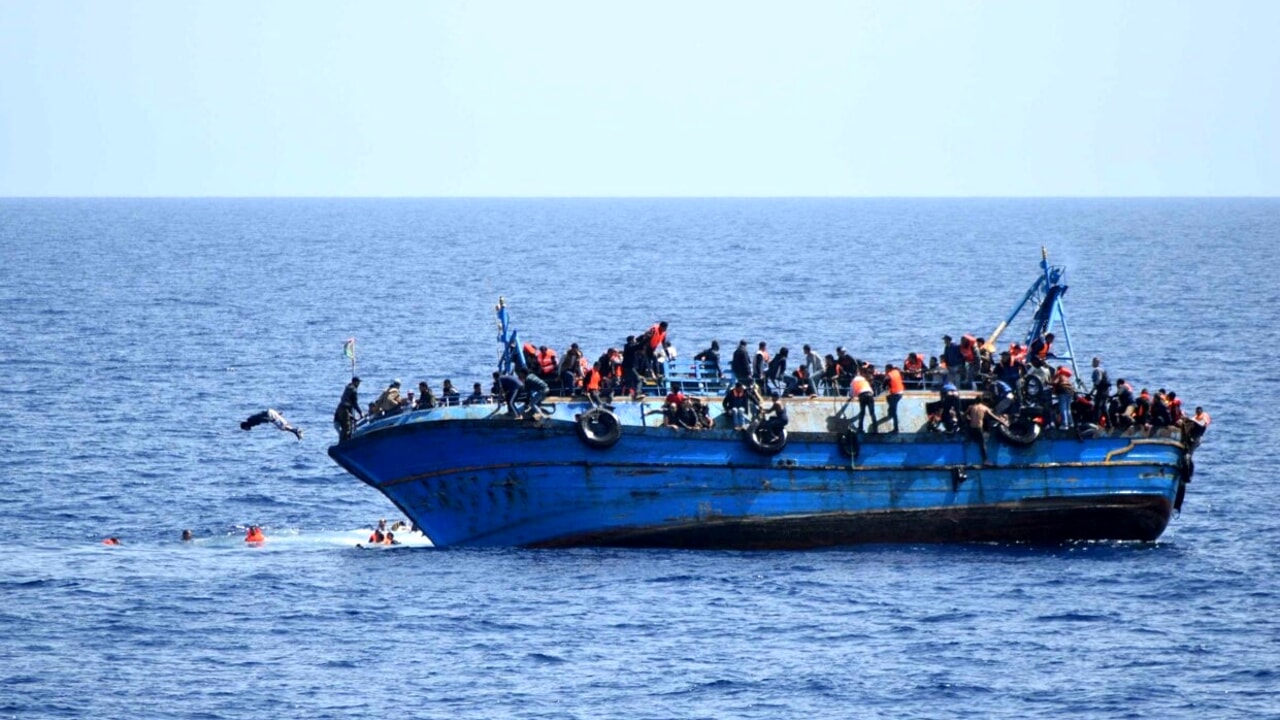
The European Council has given the green light to the agreement that defines the criteria for the so-called “safe countries” for the repatriation of migrants. Interior ministers of member countries have approved regulations identifying both countries of origin and third countries considered safe, paving the way for faster repatriation procedures.
The measure did not pass unanimously: Spain, Greece, France and Portugal voted against it, but the opposition was not enough to block it, thanks to the achievement of a qualified majority. The text will now have to be negotiated with the European Parliament, a necessary step for final approval.
What changes
The new regulation which reviews the concept of safe third country – explains the Council in a note – will broaden the circumstances in which an asylum application can be rejected for inadmissibility. The Council also completed an important element of the 2024 Compact on Migration and Asylum, agreeing on the first common EU list of safe countries of origin, which will allow Member States to process applications for international protection more quickly.
With the updated rules, an acceleration and simplification of the repatriation procedures of people staying illegally in the Member States is expected. Furthermore, procedures are established at EU level to repatriate migrants, imposing obligations on those who do not have the right of residence and preparing cooperation tools between States.
Help for migrant centers in Albania
The provision also allows countries to establish repatriation centers in third countries. The reform therefore also paves the way for the creation of so-called “return hubs”, repatriation centers located outside the EU, on the model of the one signed between Italy and Albania.
Which countries are considered safe: the list
In addition to those candidates for EU membership, the new common list includes Bangladesh, Colombia, Egypt, India, Kosovo, Morocco and Tunisia to which the 27 will then be able to add their own national lists. In fact, new procedures will be applied to those coming from these countries which provide for an accelerated examination of applications for international protection or the possibility of the application being examined in a non-EU third country from which they have transited.
The safe third country concept allows EU Member States to reject an asylum application as inadmissible, i.e. without examining its merits, when asylum seekers could have requested and, if eligible, obtained international protection in a non-EU country considered safe for them. According to the updated rules agreed by the Council, Member States will be able to apply the safe third country concept based on the three options. The first: there is a link between the asylum seeker and the third country. However, “linkage will no longer be a mandatory criterion for using the safe third country concept.” Under the second option, the asylum seeker transited through the safe third country before reaching the EU. Third option, there is an agreement or understanding with a safe third country that ensures that a person’s asylum application is examined in the third country in question. The application of the concept of safe third country on the basis of an agreement or understanding, specifies the Council, “is not possible in the case of unaccompanied minors”.
An asylum seeker who appeals against a decision of inadmissibility to asylum based on the safe third country concept will no longer have the automatic right to remain in the EU for the duration of the appeal process. However, the right of the asylum seeker to apply to a Court to have the right to remain recognized remains in force.
The concept of a safe country of origin
The safe country of origin concept allows Member States to establish a special system for examining applications for international protection. Under the 2024 Asylum Procedure Regulation, adopted under the Compact on Asylum and Migration, Member States must apply an accelerated procedure for applicants from a safe country of origin and can carry it out “at the border or in transit zones”.
Safe country of origin rules are based on the assumption that applicants from that country enjoy sufficient protection against the risk of persecution or serious violations of their fundamental rights. Non-EU countries can only be designated as safe countries of origin if they reach a “high safety threshold”, according to the Council. Member States will still be able to have their own national lists of safe countries of origin, with the addition of third countries other than those present in the EU list.
The Council also approved the Commission’s proposal to accelerate the implementation of some provisions of the Pact on Migration and Asylum, previously scheduled for June 2026. The two agreements reached today allow the Council to start negotiations with the European Parliament to agree on a definitive legal text.
