
Many describe Napoleon’s retreat from Moscow as a long agony made up of frosthunger and endless marches. But it was enough to listen to the witnesses of the time to understand that, among those exhausted ranks, there was something more subtle than the cold: fevers that appeared in waves, violent diarrhea, bodies that suddenly gave way. A study just published on Current Biology reconstructed by Barbieri and colleagues for the first timethanks to ancient DNA, what was really hidden behind those symptoms. By analyzing the teeth of thirteen soldiers recovered from a mass grave in Vilnius, the authors found genetic traces of two bacterial agents: Salmonella enterica, serotype Paratyphi C, responsible for paratyphoid feverAnd Borrelia recurrentiswhich causes the relapsing fever transmitted by lice. The results show that four soldiers were infected with Salmonella and one – maybe two – from Borrelia. The analyzes however exclude the presence of Rickettsia prowazekii (typhus) e Bartonella quintana (trench fever), who for years had been considered the main suspects. That mosaic of infections, combined with tiredness and the climatemay have hastened the collapse of Napoleon’s Grande Armée.
Napoleon Bonaparte’s defeat in Russia and the study of two bacteria
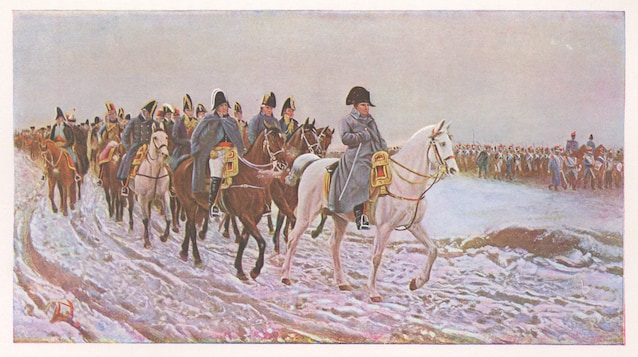
In June 1812 Napoleon left for Russia with 500,000–600,000 men. The retreat, which began on October 19th and ended on December 14th, left approximately 300,000 soldiers. Reports from doctors of the time – such as that of Dr JRL de Kirckhoff – describe fevers, diarrhoea, dysenterypneumonia and jaundice. Arriving in Lithuania, many soldiers drank the liquid from salted beets stored in barrels in homes (“buraki kwaszone”), a practice which, according to Kirckhoff, severely irritated the intestines. A condition perfectly compatible, today we know, with a possible paratyphoid infection.
To understand what diseases affected the soldiers of the Grande Arméethe researchers started with surprising material: i teeth. They analyzed it Thirteenall from the large Vilnius mass grave, a huge site containing over 3,269 individuals. The best preserved DNA is extracted from the teeth, including that of any infectious agents which circulated in the blood at the time of death.
Once the DNA was extracted, each sample was transformed into millions of tiny sequences (called “reads” in technical jargon: approximately 20 million “reads” for each soldier. At that point it was necessary to understand if within this mixture of fragments there was the sign of some pathogenic bacteria. The first step was to have the data analyzed by a software called KrakenUniqwhich compares each fragment to huge genetic databases. The authors then cross-referenced the results with a list of 185 bacterial species known to cause disease in humans. To avoid false alarms, they established a simple rule: consider only those microorganisms that appeared with at least 200 unique fragments. Below this threshold, the risk was that it was environmental contamination.
From this first filtering they emerged 14 possible pathogensbut most didn’t have enough consistent features to be considered reliable. After further checks, only two remained, who returned both with the numbers and with the symptoms described by the doctors of the time: Salmonella enterica (serotype Paratyphi C) e Borrelia recurrentis.
The symptoms of the two diseases that affected French soldiers
There Salmonella entericaserotype Parathypi C, is the cause of paratyphoid feverand is transmitted through water or food contaminated with infected feces. In environments where hygiene is compromised or the water supply is precarious, a quick drink or meal is enough to come into contact with the pathogen. Without treatment, the disease can last for weeks and become dangerous, because it affects the intestine deeply. Paratyphoid fever is an infection that begins slowly, almost gradually: first a sense of tiredness which doesn’t go away, then fever that rises day after day, headache, little hunger. Sometimes the digestive tract is the first to fail: someone has constipation, others diarrhea, others still nausea or stomach cramps. In some cases, small pink spots appear on the skin that do not last long.

The agent Borrelia recurrentishowever, is a bacterium that lives in the human body louse, and is responsible for recurrent fever. But the problem isn’t so much the parasite itself: they are the conditions that favor it. Dirty clothes, constant exchanges of clothing, people crowded together and the impossibility of washing create the perfect environment for the louse to proliferate and the disease to spread rapidly. In situations like this, precisely those in which the soldiers lived during the winter retreat, a single infection can turn into an outbreak in a very short time. Relapsing fever has a completely different trend compared to paratyphoid fever. Here the fever comes suddenly, highaccompanied by chills that shake the whole body, intense pain in the bones and muscles, and often sudden weakness. Then, almost inexplicably, the symptoms disappear: for a couple of days it seems to feel better. But it’s just a truce. The fever returns, and then drops again, and so on, until the infection is treated.
The two bacteria superimposed
The study does not pretend to attribute the entire Grande Armée catastrophe to the two bacteria identified: 13 samples they are too few compared to the others 3,000 skeletons present on the site. However, the contemporary presence of malnutrition, extreme frost, forced marches, paratyphoid fever, relapsing fever transmitted by lice, composes a credible picture of the actual decimation of Napoleon’s Great Army. In fact, Borrelia recurrentis alone it is not always lethalbut in an already debilitated soldier it could be devastating. And paratyphoid, with its gastrointestinal symptoms, could accelerate the collapse of an army already in crisis.
