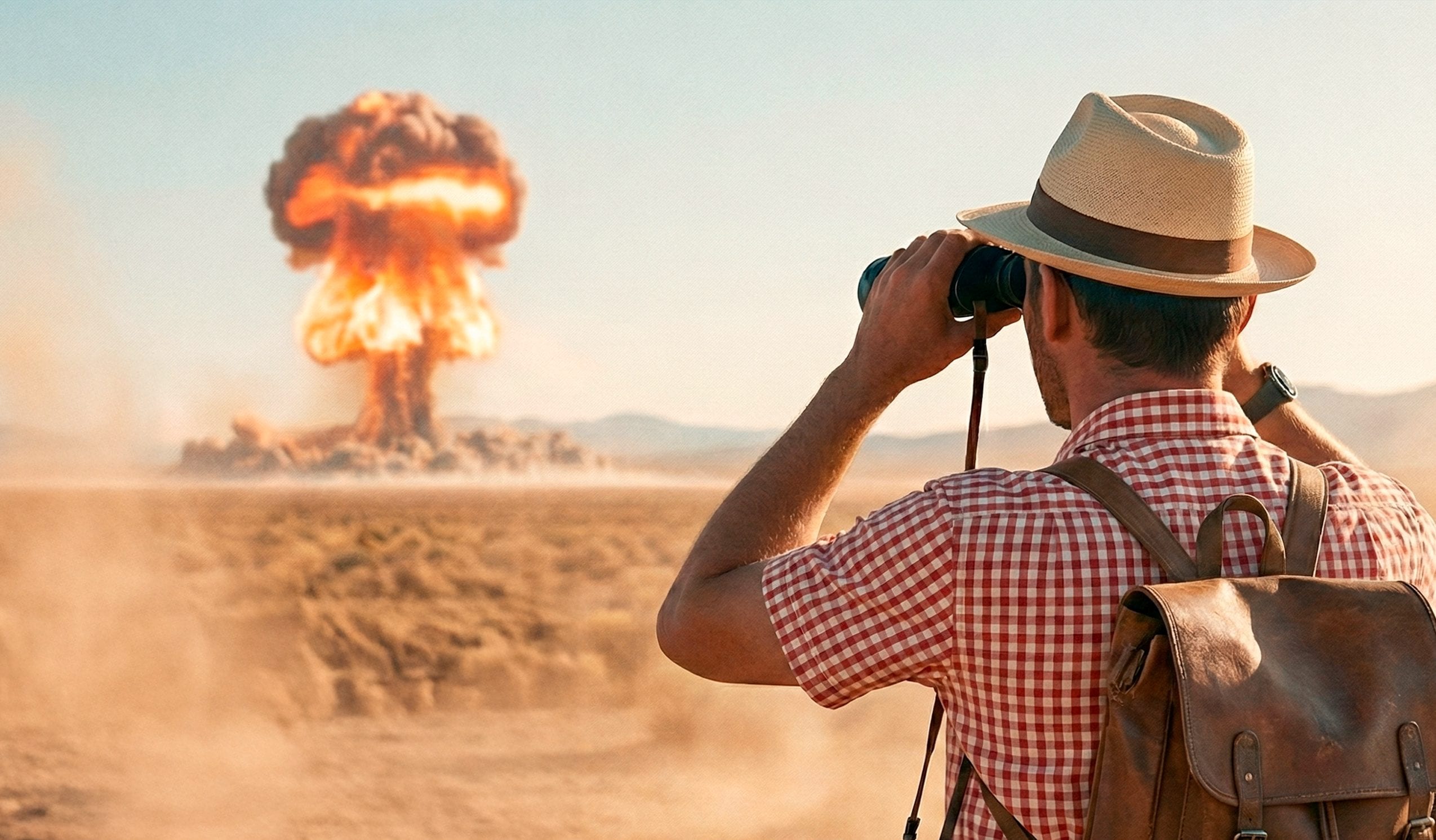
Las Vegas is recognized internationally as the world capital of gambling and of theentertainmentbut what not everyone knows is that around the middle of the last century it also became the main point of reference for the so-called “atomic tourism“. The city in fact promoted i nuclear tests which the government carried out a few dozen kilometers away, in the Nevada desert, inviting customers to admire the explosions from the panoramic terraces and balconies of hotels and casinos.
But why did they decide to focus on this unusual type of tourism? To understand this we need to take a small step back in time.
The Las Vegas expansion plan
At the turn of the 1930s and 1940s, the city of Las Vegas wanted to impose itself by force as principal tourist destination not just Nevada, but the entire United States. For this reason, new casinos were built and the shows began to involve increasingly important personalities.
In the 1950s, however, things changed: the local authorities were warned that, about a hundred km from the city border, in the Nevada desert, the American army would carry out atomic weapons tests.
For many this would have been devastating news, demolishing a business project that was now well underway. Who would ever want to visit a city so close to repeated atomic tests?
Well, the members of the Las Vegas Chamber of Commerce were quite astute (or maybe crazy?) to turn the issue in their favor. The bomb was not in fact announced as a threat, but sponsored as a unique and unrepeatable attraction, which only Las Vegas tourists could admire in all its splendor.
Atomic tests as a tourist attraction
The January 27, 1951 the first test was conducted and the city used the opportunity to sponsor the event, advertising it as one of the many attractions proposed by the city of sin.
It was precisely in this way that, for the subsequent tests, the first tourists began to arrive, so much so that the city was gradually created calendars relating to the scheduled tests, specifying for each one the best spot to admire the explosion. Hotels And casino they also began to organize the so-called “Dawn Bomb Party“, during which guests could watch the tests on panoramic terraces, sipping atomic-themed cocktails – such as theAtomic, the most popular, whose recipe was based on vodka, brandy, sherry and champagne.
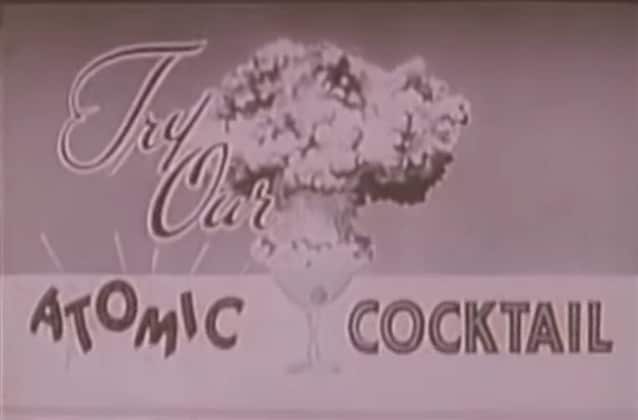
For the more daring, real events were also organised packed lunches which allowed you to eat a bite while admiring the detonation of the weapon, positioning yourself at the minimum distance required by law. It is no exaggeration to say that atomic explosions were a real craze: in that period in the city it was not uncommon to find souvenir shops atomic themed postcards and gadgets.
From an economic point of view all this turned out to be extremely profitable, in addition to the fact that the army, to carry out these tests, paid into the coffers of Nevada at least 176 million dollars of federal funds – two-thirds of which ended up in Las Vegas coffers.
The end of atomic tourism
Over the next 12 years, approximately one hundreds of tests and, for those wondering, scientists at the time stated that the city was at such a distance that it was not directly affected by the fallout of radioactive material – in addition to the fact that the tests were only carried out on days with ideal weather conditions.
However, things changed drastically in 1963, when the Limited Test Ban imposed a ban on carrying out tests of this type on the surface, officially putting an end to atomic tourism in the city.
