
Playing a tool along the arch of life helps keep the brain younger. This is what emerges from a study recently published in the magazine Plos Biologywho analyzed how much to study a musical instrument in the course of life would help to preserve the cognitive performance and the brain functionality in tasks related to listening in old age. The elderly musicians involved in the research have been able to recognize the sounds much better than their peers non -musiciansand their brain activity was much more similar to those of young adults.
Although it is a small number of participants, these results are added to the amount of studies that suggest that the study of a musical instrument from young people can encourage the development of the cognitive reserve: that set of strategies and adaptations that allow the brain of compensate for the physiological changes related to age“Orchestrale” in a harmonious way its functions also in old age and slowing down the natural decline of cognitive skills.
What the study says
The researchers of the Baycrest Academy for Research and Education and the Chinese Academy of Sciences compared three groups of participants: 25 elderly musicianswith at least 32 years of experience in playing an instrument, 25 non -musician elderly (both groups around 65) and 24 young adult.
All subjects were subjected to a task particularly demanding: recognize a syllable masked by a background noise Similar to an indistinct vocio, an activity in which the elderly generally show difficulties. At the same time, the researchers have Measured brain activity through Functional magnetic resonance imaging (FMRI), a technique that allows you to measure the variations of the blood flow in the brain to identify the areas that activate during the execution of a specific task.
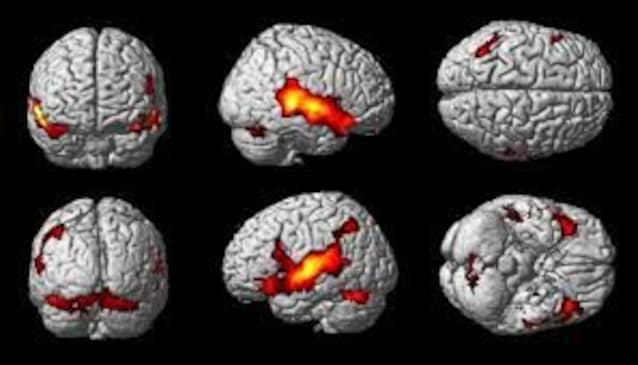
The results were clear: the elderly musicians not only they recognized the syllables better Compared to non -musician peers, but showed cerebral activity pattern much more similar to those of young adults. In non -musician elderly, for compensate the listening difficultiesthe brain tended to activate a region called more Uditive dorsal flow (a key network in the perception of sounds). On the contrary, the brain of the elderly musicians maintained a more efficient overall activation It is close to that observed in young people, making them capable of efficiently resolving the task of listening without “squeezing the meninges too much”.
This observation suggests that playing a tool during life contributes to preserve neuronal integrity and architecture In some regions of the brain involved in the auditory processing, attenuating the effects of aging on cognitive abilities related to listening. A bit like a good oil allows you to keep lubricated The gears of an engine, improving its performance and slowing down its natural wear.
The cognitive reserve allows you to delay the physiological decline of the brain
This study adds an important piece to the understanding of how the our brain changes with the advance of age and what strategies can help him to remain young. Over the years, in fact, the brain meets a physiological and gradual decline: neuronal circuits work with less efficiency, The volume of brain matter it is reduced And the connectivity between the nerve cells changes compared to that typical of a young brain. All this translates into a drop in cognitive performance. That’s why activities that we carry out almost without thinking as children, how to memorize information or learn to use a new technological device or a new language, over time, they can become more demanding and tiring.
However, just like constant exercise helps to keep the body toned despite the years, they also exist habits that preserve brain health. Dedicate time, along the arch of life, to mentally stimulating activities (such as study, reading or playing an instrument), practicing sports and cultivating quality social relationships, contributes to creating a real “brain pigs“To be spent when we are further on with age. In scientific terms, this reserve is known how cognitive reserve.

The cognitive reserve acts as a Decline shock absorber: on the one hand it slows down the loss of neurons and efficiency of the connections, on the other it allows the brain of identify alternative brain circuits, When the preferential paths typical of the youth age are no longer practicable, allowing to maintain cognitive performance closer to those of young people. A bit like when the navigator offers a secondary path to the main one, which perhaps will require a few more minutes, but will still allow you to reach the goal. Thanks to these mechanisms, the elderly with high levels of cognitive reserve they get significantly better performance In cognitive tasks with respect to peers with reduced reserve, thus managing to keep a longer healthy, active and vital brain.
